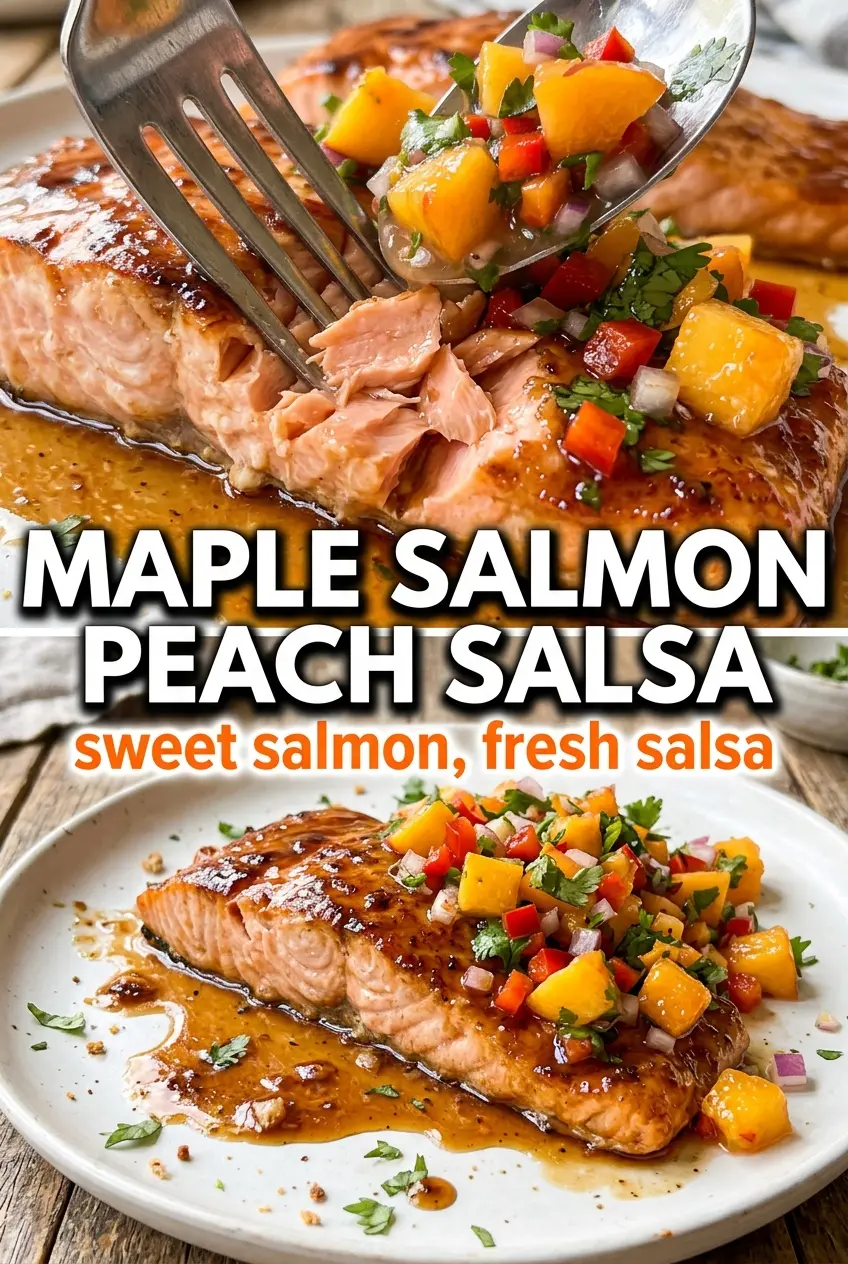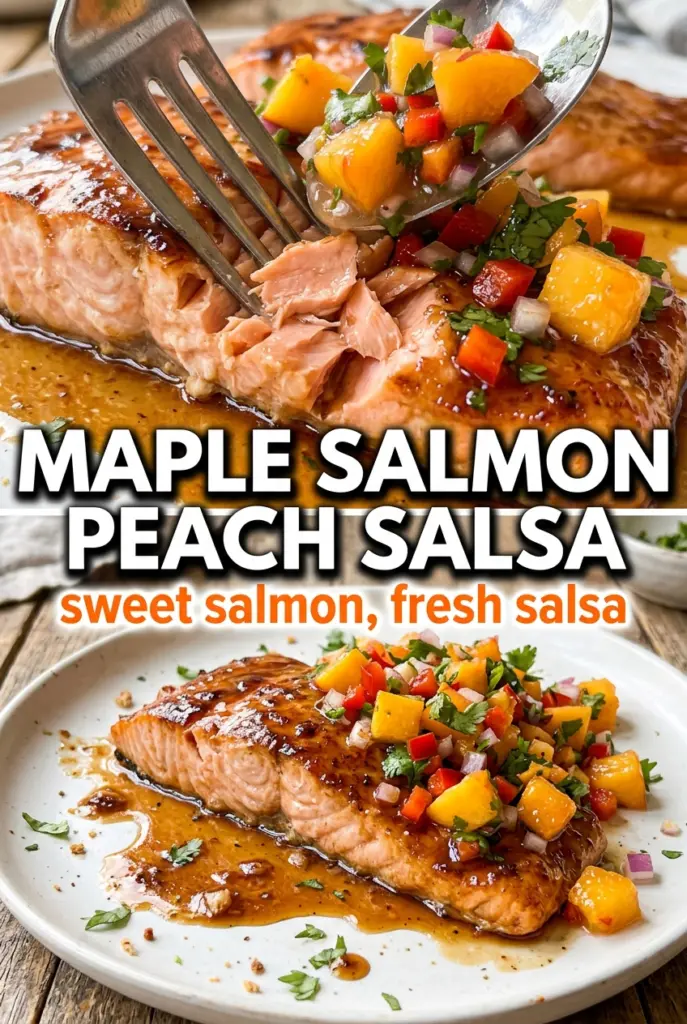
Caramelized maple-glazed salmon with a bright peach salsa is the kind of dinner that lands on the table looking restaurant-polished, but it still comes together fast enough for a regular weeknight. The salmon gets a sticky, glossy crust in the skillet, then the cold, juicy salsa cuts straight through the richness with lime, cilantro, and just enough jalapeño heat to keep each bite lively.
What makes this version work is the balance. Maple syrup gives the fish that deep, burnished finish, but it’s paired with soy sauce and olive oil so the glaze clings instead of scorching. The salsa stays raw on purpose. That contrast matters: the warm salmon needs something fresh and sharp on top, and peaches deliver sweetness without making the dish feel heavy.
Below, I’ll walk through the part that matters most with salmon in a skillet: getting the glaze caramelized without overcooking the center. I’ve also included a few smart swaps for the peach salsa so you can keep the same idea going even when the fruit changes.
The salmon picked up a beautiful caramelized crust, and the peach salsa stayed crisp and juicy on top. I loved that the glaze didn’t burn, and the lime in the salsa kept the whole dish from feeling too sweet.
Maple-glazed salmon with peach salsa is the sweet-savory dinner worth keeping on repeat.
The Part That Keeps Maple Glaze from Turning Bitter
The trouble with maple-glazed salmon is usually heat. Maple syrup looks forgiving, but once it hits a hot pan it can go from glossy to bitter fast if the glaze is too thick or the burner is too aggressive. The soy sauce and olive oil in this version loosen the syrup enough to brush on evenly, and that thin coating caramelizes instead of burning before the salmon is cooked through.
The other piece that matters is timing. Don’t flood the pan with glaze at the start and walk away. Brush on a light layer, let it set, then add more during the last minutes of cooking. That builds a shiny crust with deeper color, and it keeps the sugars from sitting on the heat long enough to scorch.
What Each Ingredient Is Actually Doing in the Pan and the Salsa
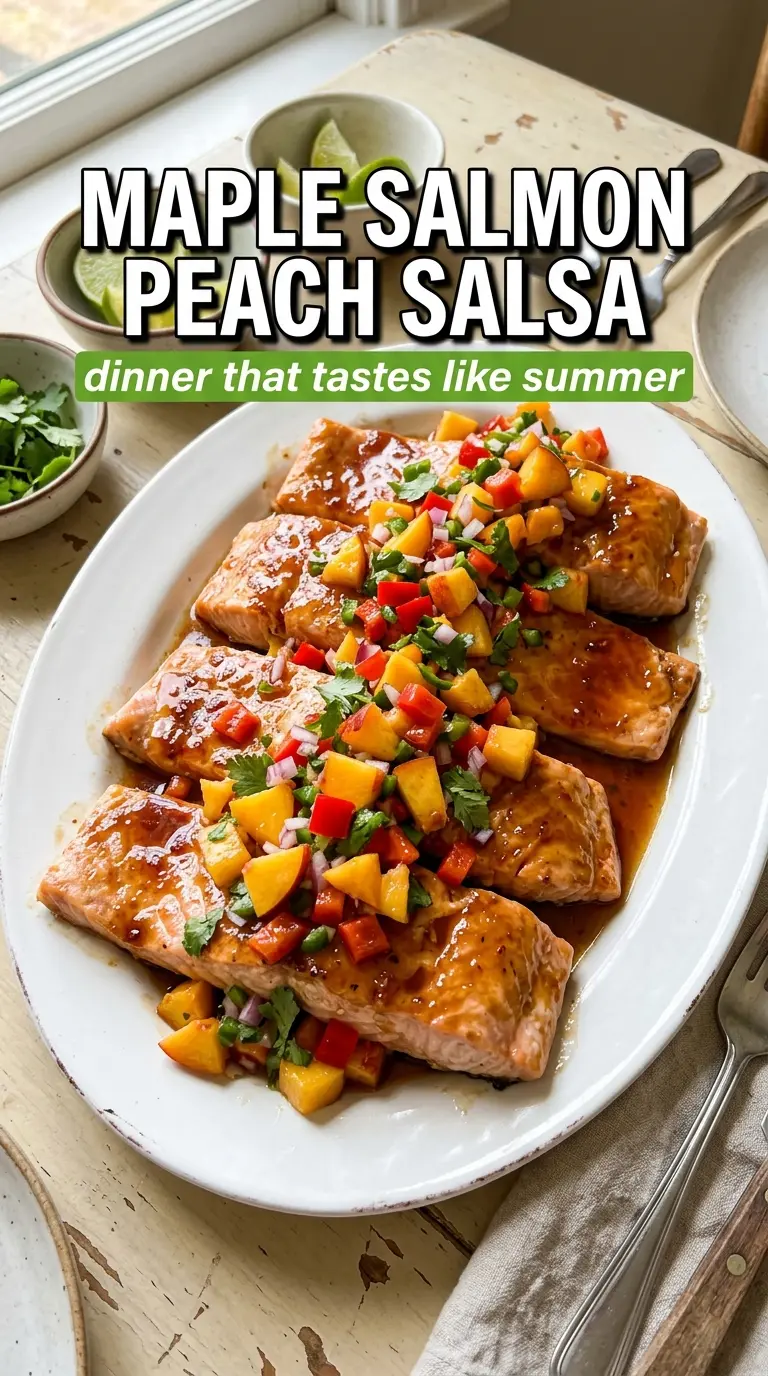
- Salmon fillets — Use fillets with similar thickness so they finish at the same time. Skin-on works fine and helps protect the flesh from overcooking; just start skin-side down if your fillets have skin.
- Pure maple syrup — This is the flavor foundation for the glaze. Use real maple syrup, not pancake syrup, or the glaze won’t caramelize in the same clean way.
- Soy sauce — It adds salt, depth, and color. If you need a gluten-free version, tamari works the same way and keeps the glaze balanced.
- Olive oil — A small amount helps the glaze spread and keeps the maple from sticking in one sugary patch on the pan.
- Peaches — Ripe peaches are the whole point of the salsa. They should be fragrant and juicy, but still hold their dice instead of collapsing into mush.
- Jalapeño, cilantro, and lime juice — These are the freshness and lift. The lime wakes up the peaches, cilantro keeps the salsa from tasting flat, and jalapeño gives the sweet fruit a little edge.
Getting the Salmon Glazed, Seared, and Finished Without Drying It Out
Making the Salsa First
Start the peach salsa before the fish hits the pan. The salt and lime juice draw out a little juice from the peaches, which gives you a light, spoonable salsa instead of a pile of dry diced fruit. Refrigerating it while you cook keeps it crisp and makes the contrast against the warm salmon even better. If your peaches are extra soft, dice them a little larger so they hold their shape.
Brushing on the Glaze
Mix the maple syrup, soy sauce, and olive oil until the glaze looks smooth and slightly loose. Brush it generously over the salmon, but don’t dump a thick puddle on top; too much glaze in one place can burn before it has a chance to caramelize. Season the fish with salt and pepper first so the glaze seasons the surface while the salmon itself stays clean and rich.
Cooking Over Medium-High Heat
Heat the skillet until it’s hot enough that the salmon sizzles when it lands, then cook it for 4 to 5 minutes per side depending on thickness. If the glaze starts to darken too fast, lower the heat a touch rather than moving the fish around constantly. You’re looking for a deep golden crust and salmon that flakes at the edges but still looks slightly glossy in the center when you press it lightly.
The Final Spoonful
Let the salmon rest for a minute or two before topping it with the peach salsa. That short pause keeps the juices inside the fish and keeps the salsa from getting cooked down by carryover heat. Spoon the salsa on generously, then serve right away with rice or salad and extra lime wedges for a sharper finish.
How to Adapt This Salmon When the Fruit or Diet Changes
Use nectarines instead of peaches
Nectarines swap in cleanly and give you the same sweet-tart bite without peeling. They’re a little firmer, which makes the salsa hold up nicely if you prep it a few minutes ahead.
Make it gluten-free
Swap the soy sauce for tamari or coconut aminos. Tamari keeps the glaze closest to the original flavor, while coconut aminos taste a little sweeter and softer, so you may want a small pinch more salt.
Turn up the heat
Leave some of the jalapeño seeds in the salsa or add a pinch of red pepper flakes to the glaze. That gives the dish more edge without changing the sweet-savory balance.
Make the salsa with stone fruit that’s past its peak
If the peaches are softer than ideal, dice them smaller and add the lime juice a little earlier so the mixture tastes bright before the fruit breaks down too much. You’ll get more of a spoonable topping, which still works beautifully over the salmon.
Storage and Reheating
- Refrigerator: Store the cooked salmon and peach salsa separately for up to 2 days. The salsa will soften as it sits, but the flavor stays good.
- Freezer: The salmon freezes better than the salsa. Freeze the cooked fish without topping for up to 2 months, and make the peach salsa fresh when you’re ready to serve.
- Reheating: Reheat the salmon gently in a 275°F oven or in a covered skillet over low heat until just warmed through. High heat dries it out fast and makes the glaze taste too dark.