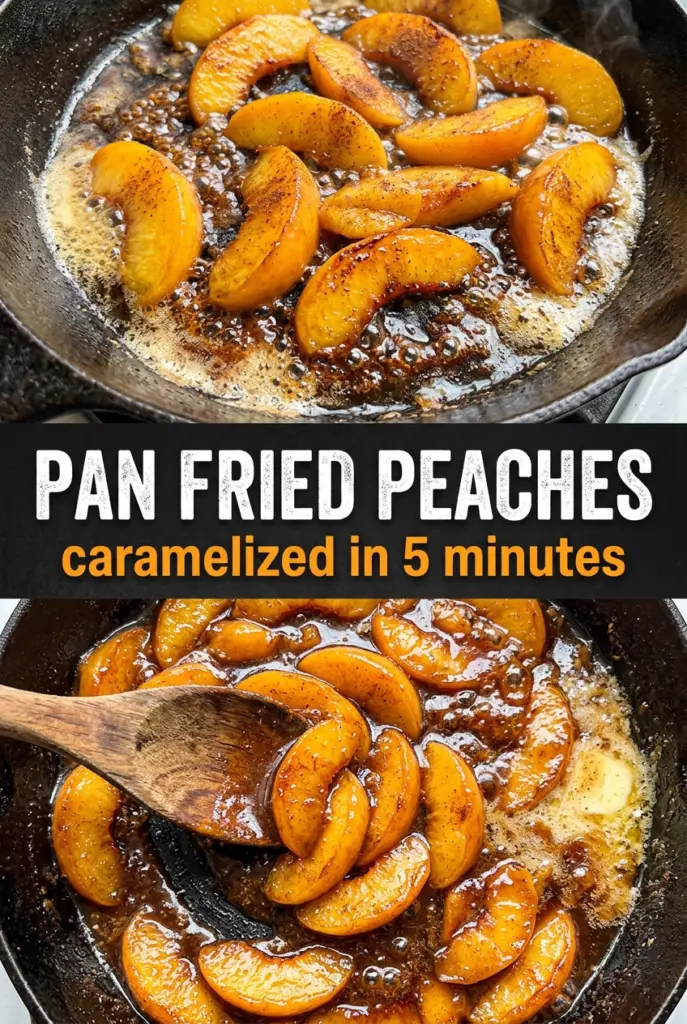
Brown butter pan fried peaches land in that sweet spot between dessert and skillet fruit compote: the slices soften just enough to keep their shape, while the edges turn sticky, amber, and lightly caramelized. A good pan of peaches should taste like the fruit got a head start on its own best self — warm, fragrant, and glossy with just enough sugar to pull out the juices without turning mushy.
The trick is using ripe peaches that still have some structure and letting the first side sit untouched long enough to pick up color. Stirring too early breaks the slices and keeps them pale. Browning the butter first adds a nutty depth that plain melted butter can’t give you, and the brown sugar finishes the job by melting into the peach juices instead of clumping on the surface.
Below, I’ll show you how to keep the peaches from turning to jam in the pan, plus a few smart ways to serve them when you want dessert to look like you tried harder than you did.
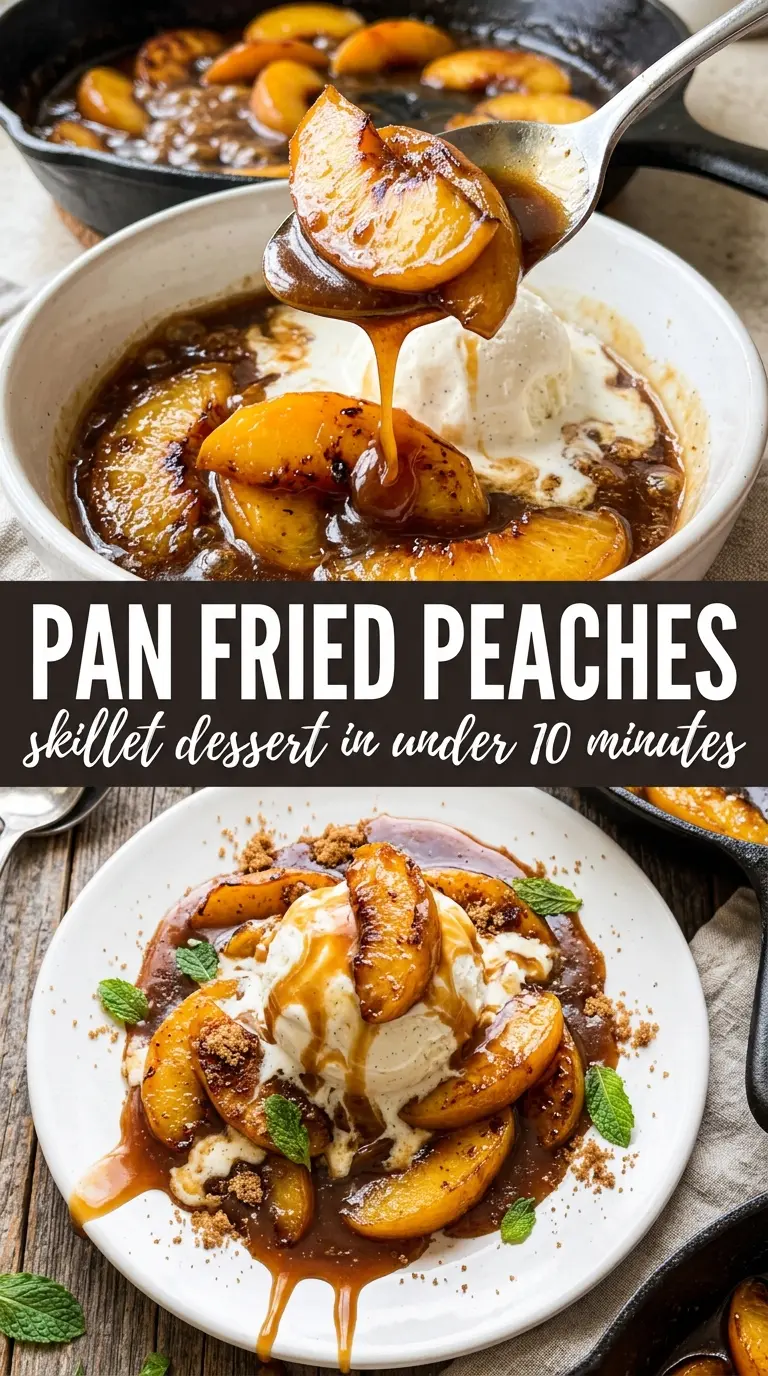
The peaches caramelized fast and stayed in nice slices instead of falling apart. I spooned them over vanilla ice cream and the brown butter sauce thickened up just enough to coat everything.
These brown butter skillet peaches turn sticky, golden, and perfect for spooning over ice cream or waffles.
The Secret to Caramelized Peaches That Still Hold Their Shape
Most skillet peaches go wrong for one of two reasons: the pan is too cool, or the fruit gets moved around too soon. Peaches release juice fast, and if that juice sits in a shallow puddle before the sugars start to brown, you end up steaming the fruit instead of caramelizing it. The goal is a hot skillet, a single layer, and enough patience to let the first side color before you touch it.
Brown sugar helps, but only after the peaches have picked up some color on their own. If you add it too early, it melts into syrup before the fruit has a chance to sear. A little salt keeps the sweetness from tasting flat, and vanilla goes in at the end because it disappears into the butter sauce instead of cooking off in the pan.
What Each Ingredient Is Actually Doing in This Dish
- Ripe peaches — Use fruit that gives slightly at the stem end but still feels firm enough to slice cleanly. Overripe peaches collapse before they caramelize, while underripe peaches stay tight and bland. If your peaches are very juicy, slice them a little thicker so they hold up in the pan.
- Unsalted butter — This is where the browning starts. Unsalted butter gives you control over the seasoning, and letting it foam before the peaches go in adds that nutty, brown butter note. If you only have salted butter, use it and skip the pinch of salt until the end.
- Brown sugar — This doesn’t just sweeten the peaches; it melts into the pan juices and forms the glossy coating. Light brown sugar works fine, but dark brown sugar brings a deeper molasses edge. Sprinkle it after flipping so it can dissolve into the fruit without burning on the pan.
- Cinnamon and vanilla — Cinnamon warms up the peaches without overpowering them, and vanilla rounds out the browned butter. Vanilla extract should go in off the heat or right at the end, since the aroma stays brighter that way.
- Peel or not to peel — Peeling is worth it if the skins are thick or fuzzy, because the texture stays silkier once the peaches soften. If the skins are thin and tender, you can leave them on for a more rustic finish. Either way, slice the fruit evenly so the wedges cook at the same pace.
How to Build the Pan Sauce Without Turning the Peaches to Jam
Let the butter brown before the fruit goes in
Melt the butter over medium-high heat and wait for the foaming to settle into a deeper color and a nutty smell. You’re looking for pale gold with toasted specks, not dark brown sludge. If the butter is still just melted when the peaches go in, the fruit steams before it sears.
Give the peaches a real first side
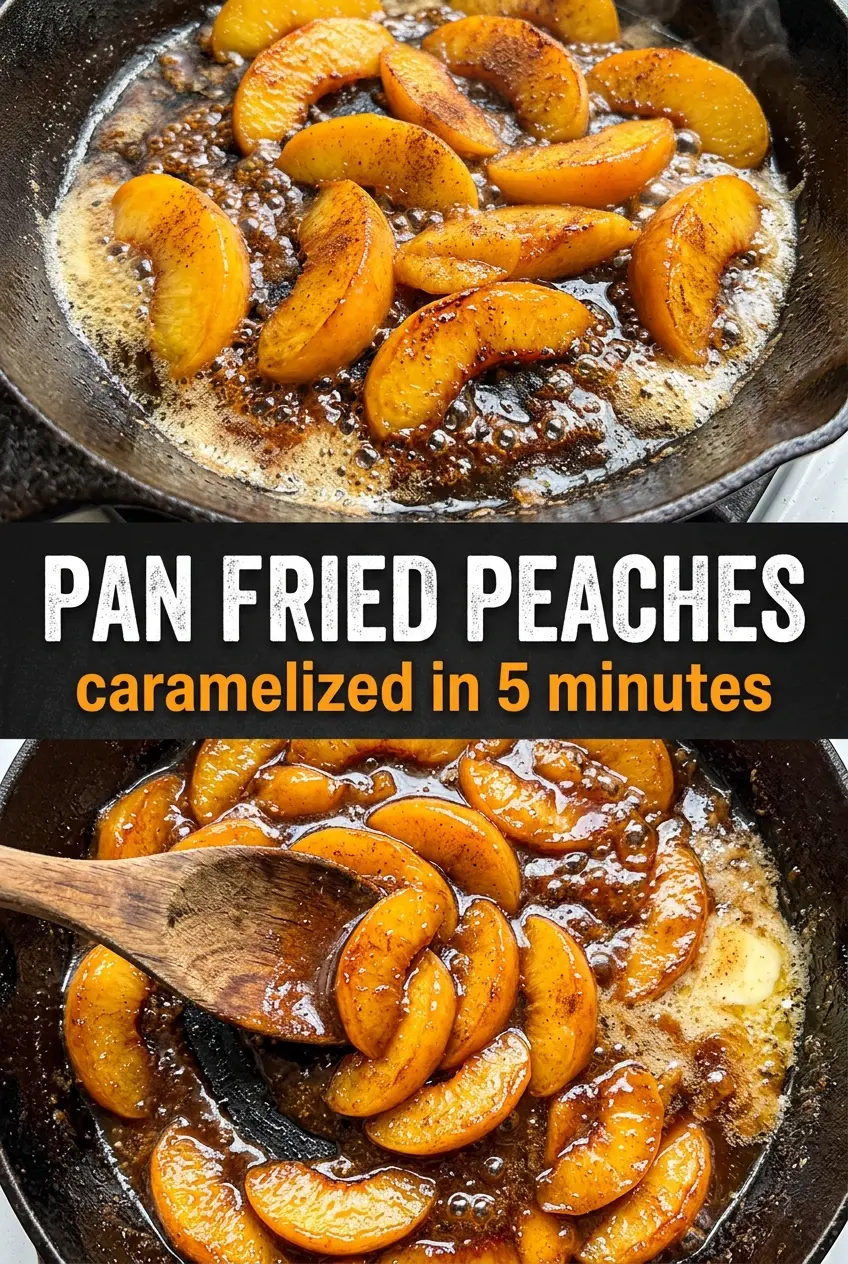
Add the slices in a single layer and leave them alone for 2 to 3 minutes. That quiet time is what creates the golden edges and keeps the slices intact. If you start nudging them around, they’ll leak juice across the pan and lose the chance to caramelize.
Use the sugar after the flip
Once the bottoms have color, turn the peaches and scatter the brown sugar, cinnamon, and salt over the top. The sugar will dissolve into the hot juices and form a shiny glaze as the peaches finish cooking. If the pan looks dry, the fruit wasn’t ripe enough or the heat was too low, and you’ll need a touch more time rather than more stirring.
Finish with vanilla off the heat
Pull the skillet from the burner and stir in the vanilla extract at the end. That keeps the vanilla fragrant and prevents it from cooking off in a hot pan. The peaches should be tender with browned edges and just enough syrup left behind to spoon over whatever you’re serving.
Three Ways to Adapt These Skillet Peaches
Dairy-Free Skillet Peaches
Swap the butter for a plant-based butter that browns well, or use coconut oil for a different but pleasant aroma. You’ll lose a little of the nutty depth from browned dairy butter, but the peaches will still caramelize and glaze beautifully.
Less-Sweet Version for Breakfast
Cut the brown sugar to 1 tablespoon if you’re serving these over pancakes, waffles, or yogurt. The peaches will still release enough juice to make a light syrup, but the finished dish tastes brighter and less dessert-heavy.
Gluten-Free Dessert Topping
The peaches themselves are naturally gluten-free, so the only thing to watch is what you serve underneath. Ice cream, plain yogurt, or gluten-free pancakes all work well and let the caramelized fruit stay the main event.
Storage and Reheating
- Refrigerator: Store leftovers in an airtight container for up to 3 days. The peaches soften more as they sit, but the flavor stays good.
- Freezer: They can be frozen, but the texture turns much softer after thawing, so I only do this if I plan to use them in oatmeal or baked goods later. Freeze in a single layer first, then transfer to a container.
- Reheating: Warm them gently in a skillet over low heat until just heated through. Microwaving too long can make them watery and break the slices apart.
Answers to the Questions Worth Asking
Pan Fried Peaches
Ingredients
Equipment
Method
- Melt the unsalted butter in a large skillet over medium-high heat until it begins to foam and brown slightly, with toasted flecks forming in the pan.
- Add the peach slices in a single layer and cook undisturbed for 2-3 minutes until the bottoms caramelize, looking golden-brown at the edges.
- Flip the peach slices and sprinkle the brown sugar, cinnamon, and salt over the tops.
- Cook for 2-3 more minutes until the sugar melts, the peaches are tender, and the wedges are deeply golden with a glossy, slightly sticky look.
- Remove from heat and stir in the vanilla extract, then let the pan sauce briefly thicken and turn fragrant.
- Serve immediately over vanilla ice cream, waffles, pancakes, or pound cake so the peaches stay hot and the caramel coating clings to the fruit.