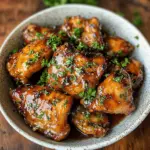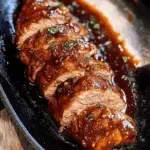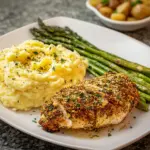
Peach balsamic grilled chicken lands on the plate with sticky, caramelized edges, smoky grill marks, and a glaze that tastes sweet first and then finishes with a clean tang. Bone-in thighs give you enough fat to stay juicy over the fire, and the peach-balsamic coating turns glossy instead of watery when it hits the heat the right way.
The trick is in the balance. Fresh peach puree brings body and natural sweetness, but balsamic vinegar keeps the marinade from tasting flat. Honey helps the glaze lacquer the chicken as it cooks, while garlic and thyme give it enough backbone to taste like dinner, not dessert. Because the chicken marinates before grilling, the surface takes on flavor all the way through instead of sitting on top like a sauce.
Below, I’ll walk through the small choices that matter most, from getting the glaze to cling instead of burn to the best way to use ripe peaches if you have them on the counter right now.
The glaze thickened up beautifully on the grill, and the chicken stayed juicy even with those sticky peach edges. My husband asked if I could put it on next week’s menu too.
Save these peach balsamic grilled chicken thighs for the nights when you want char, sticky glaze, and juicy meat without turning on the oven.
The Part That Keeps the Peach Glaze From Burning
The biggest mistake with a fruit-based grill glaze is treating it like a plain marinade and letting it sit over screaming heat for too long. Peach puree and honey both carry sugar, which means they brown fast. On chicken thighs, that can work in your favor, but only if the grill is at medium-high and you keep turning the meat so the glaze darkens in layers instead of scorching in one spot.
Bone-in, skin-on thighs are the right cut here because they stay juicy long enough for the glaze to caramelize. If you use boneless thighs or breasts, the timing changes and the margin for error gets smaller. The goal is a deep mahogany surface with sticky edges, not a blackened shell hiding undercooked chicken.
- Peach puree — This gives the marinade body and natural sweetness. Fresh ripe peaches work best because they break down into a thick puree that clings to the chicken instead of running off.
- Balsamic vinegar — This is what keeps the glaze from tasting candy-sweet. A decent balsamic is enough here; you don’t need the expensive syrupy bottle, but you do want something with a rounded tang.
- Honey — Honey helps the glaze set and shine on the grill. It also encourages browning, so don’t raise the heat trying to speed things up or the sugars will burn before the chicken finishes.
- Bone-in, skin-on chicken thighs — These are more forgiving than breasts and hold up better to the sticky marinade. The skin also protects the meat and gives you more flavor where it hits the grates.
What Each Ingredient Is Actually Doing in This Recipe
- Primary ingredient (the star) — Quality matters most. Choose the best you can find.
- Cooking medium (oil, butter, or broth) — This carries flavors and prevents dryness.
- Seasonings (salt, pepper, spices, herbs) — Layer flavors so nothing overpowers. Build depth gradually.
- Aromatics (garlic, onion, herbs) — Cook with fat to bloom flavors. Become the foundation.
- Supporting ingredients — Complement the main ingredient without overpowering it.
- Sauce or liquid (if applicable) — Brings flavors together. Balance richness with acid.
- Acid (lemon, vinegar, wine, or other) — Brightens and prevents flat-tasting results.
- Final finish (garnish, glaze, or sauce) — Prevents one-dimensional taste and adds visual appeal.
Building the Marinade So It Clings Instead of Sliding Off
Blend the peach base until it is smooth
Puree the peaches with the balsamic, oil, honey, garlic, thyme, salt, and pepper until the mixture looks even and slightly thick. You want a marinade that coats the back of a spoon, not a thin dressing that runs straight to the bottom of the bowl. If the peaches are under-ripe and a little fibrous, blend a bit longer so the texture doesn’t stay stringy on the finished chicken.
Give the chicken enough time to pick up flavor
Coat the thighs well and refrigerate them for at least 30 minutes, or up to 4 hours. Short marinating gives you surface flavor and helps the glaze start working immediately on the grill; longer marinating deepens the peach and balsamic notes. Don’t leave it overnight, because the vinegar can start softening the outside too much and the chicken can lose that clean grilled texture.
Turn often for even caramelization
Preheat the grill to medium-high and place the chicken skin-side down first. Turn the thighs every 5 minutes so the sugars can darken gradually instead of sticking and burning on one side. The chicken is done when the internal temperature reaches 165°F and the surface has a shiny, deeply browned glaze with visible char marks under it.
Let the juices settle before serving
Rest the chicken for 5 minutes after it comes off the grill. That short pause keeps the juices from spilling onto the plate the second you cut in. If the glaze looks extra sticky when it comes off the grill, that’s a good sign; it will tighten slightly as the meat rests.
Three Ways to Adjust the Glaze Without Losing the Point of the Dish
Use boneless thighs for faster grilling
Boneless thighs cook faster and are easier for weeknights, but they brown more quickly because there is less protection from the bone and skin. Pull them a little earlier and watch the glaze closely so the sugars don’t darken before the center cooks through.
Make it dairy-free and gluten-free without changing anything
This recipe already fits both of those needs as written, which is one reason it works so well for a crowd. Just serve it with naturally gluten-free sides and skip any bottled finishing sauce that contains wheat.
Swap in nectarines when peaches are out of season
Nectarines puree into a nearly identical glaze, with a slightly sharper fruit note and no fuzzy skin to trim away. Use ripe fruit so the marinade still has enough sweetness to caramelize; underripe stone fruit will taste flat and won’t glaze as well.
Add a little heat if you want more edge
A pinch of red pepper flakes or a small spoonful of hot sauce gives the sweet peach glaze more contrast. Keep it restrained so the heat lifts the fruit instead of covering it up.
Storage and Reheating
- Refrigerator: Store leftovers in an airtight container for up to 4 days. The glaze stays flavorful, though the skin softens a bit.
- Freezer: It freezes well for up to 2 months, but the skin won’t stay crisp. Wrap the chicken tightly and freeze with any juices so it reheats more evenly.
- Reheating: Warm it gently in a 325°F oven, covered, until heated through. High heat dries out the thighs and turns the glaze sticky in a hard, almost tacky way.
Questions I Get Asked About This Recipe

Peach Balsamic Grilled Chicken
Ingredients
Equipment
Method
- Blend pureed peaches with balsamic vinegar, olive oil, honey, minced garlic, dried thyme, salt, and black pepper until smooth.
- Marinate the bone-in skin-on chicken thighs in the peach balsamic mixture for 30 minutes to 4 hours in the refrigerator.
- Preheat the grill to medium-high heat.
- Grill the chicken thighs for 20-25 minutes, turning every 5 minutes, until the internal temperature reaches 165°F and the glaze caramelizes and darkens to a deep mahogany.
- Let the chicken rest 5 minutes before serving so the juices settle.
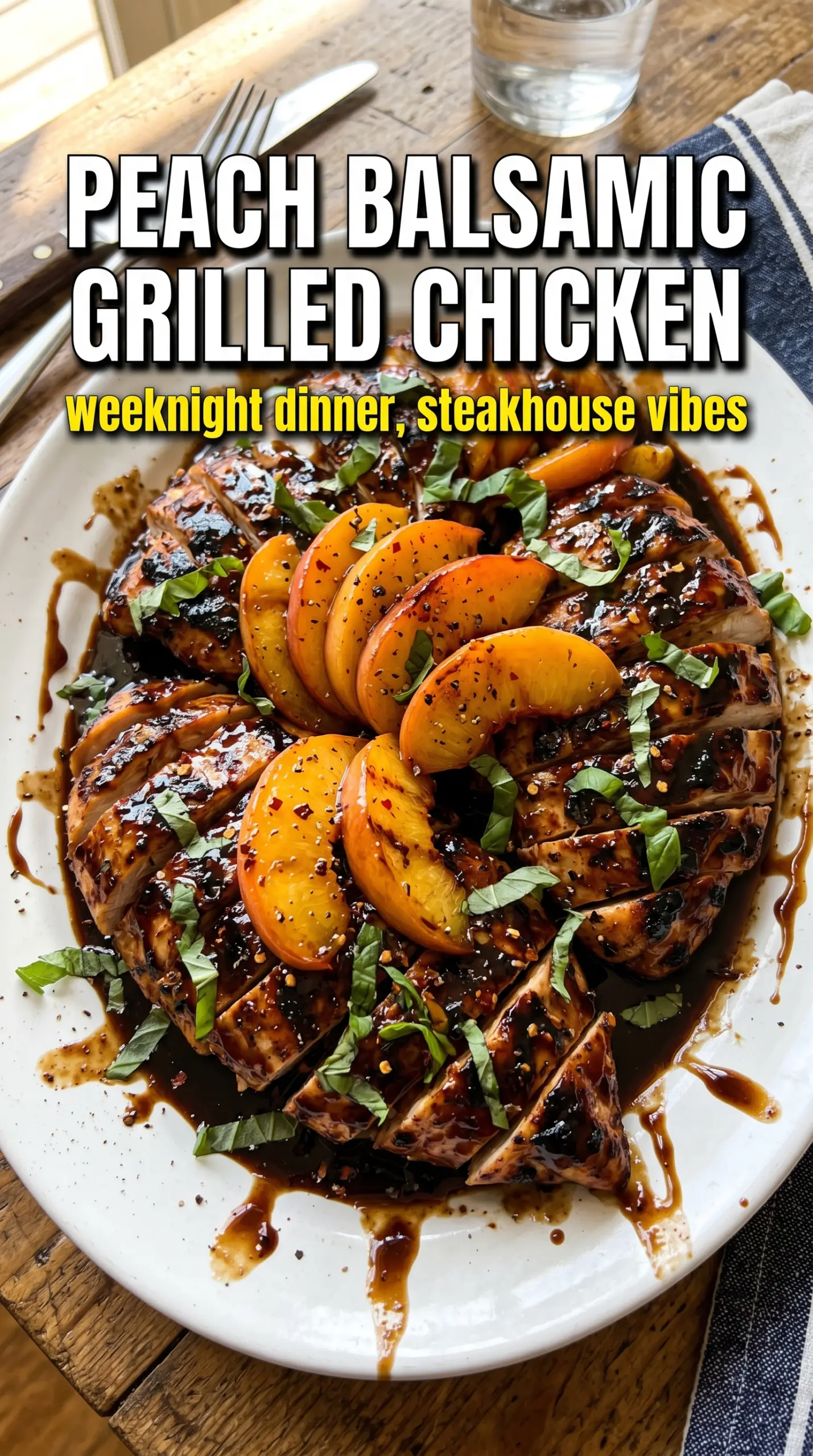
- Garnish with fresh basil and serve with grilled peach halves if desired.