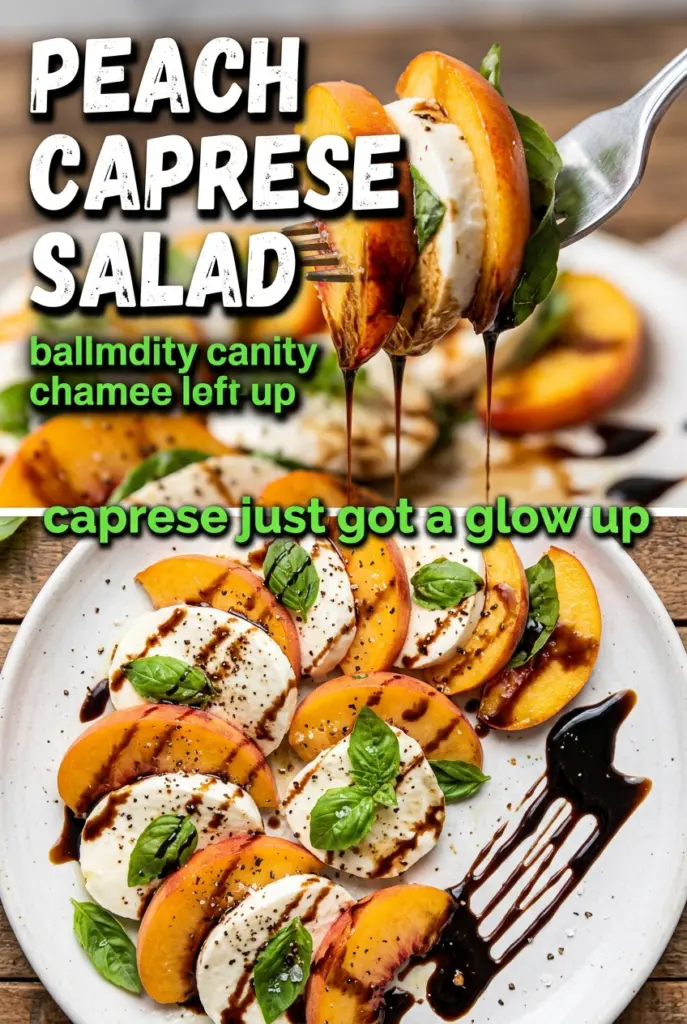
Peach Caprese Salad hits the table with the kind of contrast that makes people pause before the first bite: cool, milky mozzarella; juicy tomatoes; and peaches that bring a soft sweetness without turning the whole plate into dessert. The best versions taste balanced, not busy, and every slice should still read clearly on the fork.
The trick is choosing fruit and tomatoes that are ripe but not collapsing. If the peaches are too firm, they taste flat. If they’re overripe, they turn mushy and bleed into the cheese. I like to use a good balsamic glaze instead of thin vinegar because it stays where you drizzle it and gives the salad a deeper, sweeter finish without watering down the platter.
Below you’ll find the exact layering pattern I use for the prettiest presentation, plus a few practical notes on swapping ingredients, serving temperature, and what to do if your peaches aren’t quite perfect yet.
The peaches stayed firm enough to slice cleanly, and the balsamic glaze tied everything together without making the platter watery. I brought it to a cookout and it disappeared before the burgers were done.
Save this Peach Caprese Salad for the days when ripe peaches, tomatoes, and fresh mozzarella can do all the work.
The One Thing That Keeps This Salad from Getting Watery
Most peach caprese salads fail because the fruit and tomatoes are cut too far ahead of time and left sitting around. Once those juicy slices are exposed, they start pooling liquid fast, which dulls the basil and makes the mozzarella slippery instead of clean and creamy. The fix is simple: slice everything close to serving and assemble right away on the platter you plan to use.
Another small but important detail is how you cut the fruit. Wide, even slices hold their shape better than thin wedges, and they make the alternating pattern look deliberate instead of crowded. You want each bite to land on sweet, salty, milky, and acidic notes all at once, not a muddled pile of juice at the bottom of the plate.
What Each Ingredient Is Actually Doing in the Bowl
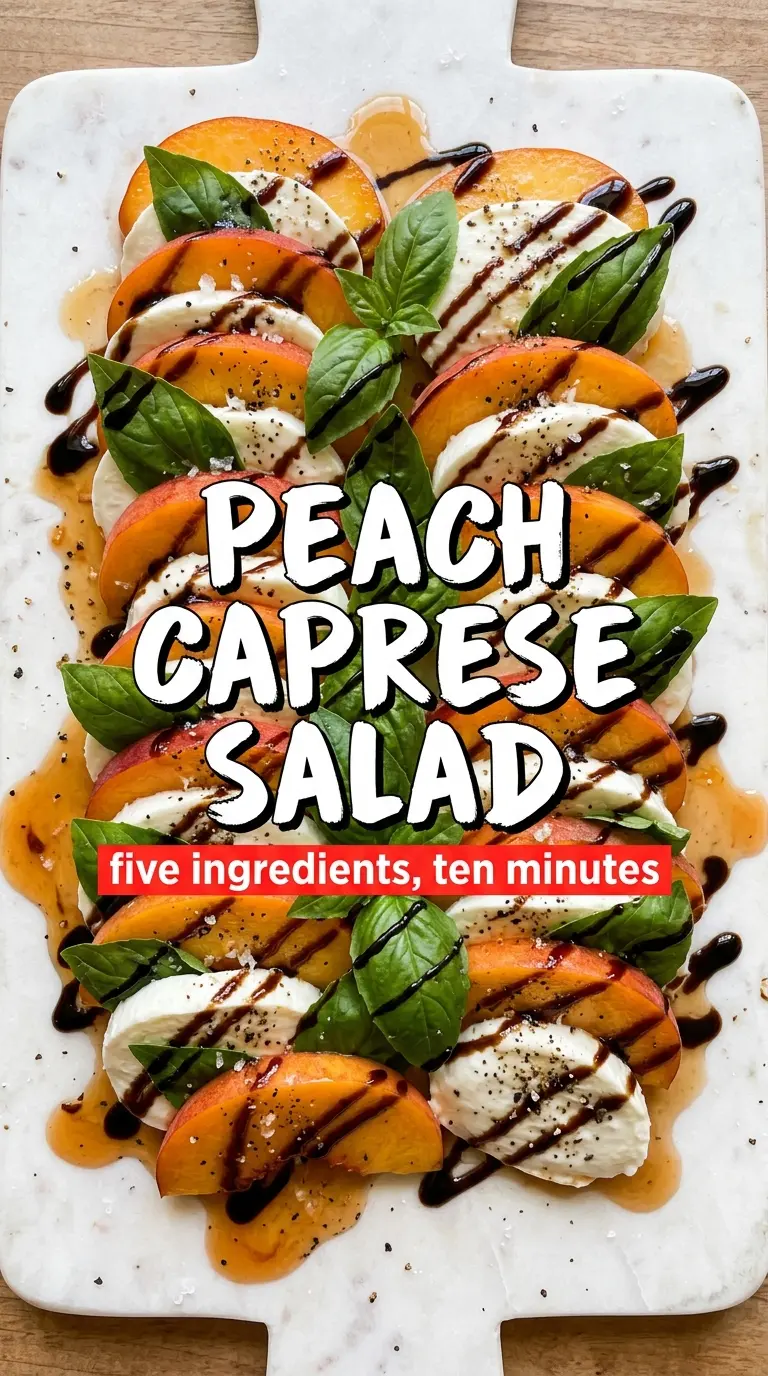
- Peaches — Use ripe but still slightly firm peaches so the slices hold their shape. Freestone peaches are easier to work with, but any ripe peach will do if you cut around the pit cleanly. If your peaches are underripe, let them sit at room temperature for a day or two before slicing.
- Tomatoes — Choose tomatoes with real flavor, not just color. Heirloom, vine-ripened, or any tomato that tastes sweet and juicy works here. If your tomatoes are especially wet, slice them and let them sit on paper towels for a few minutes so they don’t flood the platter.
- Fresh mozzarella — This is the creamy anchor of the salad, and it needs to be fresh mozzarella, not the low-moisture block kind. Slice it thick enough to stay soft and visible between the fruit. Burrata can work in a pinch, but it changes the salad from tidy slices to something much looser and creamier.
- Balsamic glaze — Glaze clings to the salad in a way regular balsamic vinegar can’t. It adds sweetness and depth without running everywhere. If you only have vinegar, reduce it lightly in a pan first so it thickens enough to drizzle properly.
- Fresh basil — Tear large leaves if they’re oversized, but leave small leaves whole. Basil bruises fast, so add it right before serving for the cleanest flavor and the prettiest look.
Building the Platter So Every Slice Stays Distinct
Start With the Pattern
Arrange the peach, tomato, and mozzarella slices in alternating rows or a fan pattern on a large platter. Keep the slices slightly overlapped so the salad looks abundant, but don’t pack them so tightly that the cheese gets buried. If the platter is crowded, the juices have nowhere to go and the whole thing turns messy fast.
Tuck in the Basil Before the Drizzle
Slide basil leaves between the slices and around the edges of the platter, not just on top. That way the basil perfumes each section instead of sitting in one clump. Add it after the produce is arranged, because once the oil goes on, the leaves stick where they land.
Finish at the Table
Drizzle the olive oil first so it gives the salad a glossy base, then follow with balsamic glaze in a loose zigzag. Season with flaky salt and black pepper at the end so the salt lands on the fruit and cheese instead of dissolving into the board. Serve immediately at room temperature, because cold mozzarella and chilly peaches taste dull and the texture goes a little waxy.
How to Adapt It for Different Tables and Pantry Situations
Dairy-Free Version With the Same Bright Contrast
Swap the mozzarella for thick slices of ripe avocado or a dairy-free fresh-style cheese. You lose the clean milky bite of mozzarella, but you keep the creamy balance that lets the peaches and tomatoes shine.
Make It More Savory for a Main-Salad Feel
Add a handful of arugula under the arranged slices and finish with extra black pepper. The peppery greens cut the sweetness of the peaches and turn the platter into something that works as lunch, not just a starter.
When the Peaches Aren’t Peak-Ripe
If the peaches are a little firm, let them sit at room temperature until they give slightly at the stem end. Avoid chilling them to force the issue; cold fruit never develops the same sweetness, and the texture stays blunt instead of lush.
Swap the Drizzle for Something Sharper
If you want more bite, use a light balsamic reduction or add a few drops of aged balsamic alongside the glaze. That gives you a deeper tang, but don’t overdo it or the sharper acidity will overwhelm the peaches.
Storage and Serving
- Refrigerator: This salad is best eaten immediately and doesn’t hold well once dressed. If you must store leftovers, refrigerate them for up to 1 day, knowing the peaches and tomatoes will soften and release more liquid.
- Freezer: Don’t freeze this salad. The tomatoes, peaches, and fresh mozzarella lose their structure completely after thawing.
- Reheating: No reheating needed. If the salad has been chilled, let it sit at room temperature for 15 to 20 minutes before serving so the mozzarella softens and the fruit tastes sweeter.
Answers to the Questions Worth Asking
Peach Caprese Salad
Ingredients
Equipment
Method
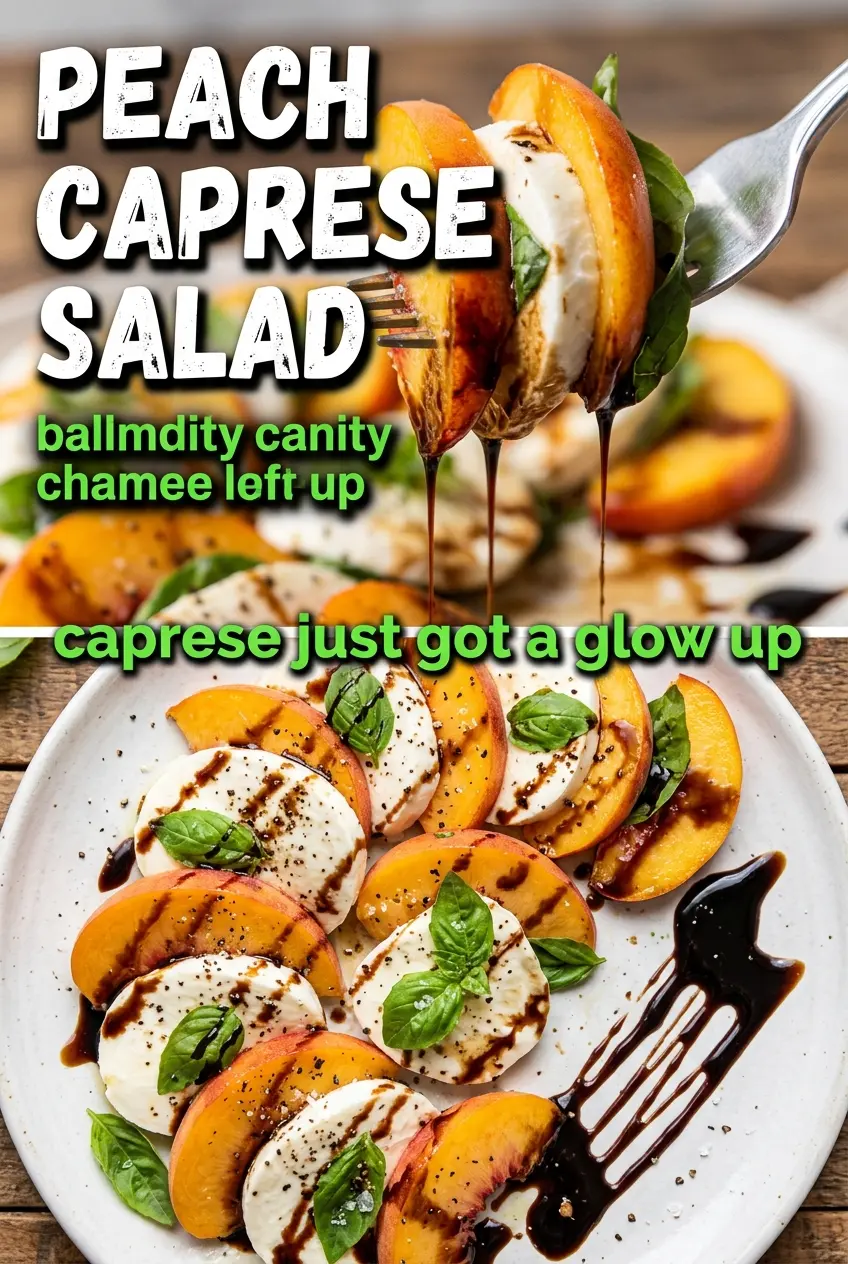
- Arrange alternating slices of peaches, tomatoes, and fresh mozzarella in a fanned or layered pattern on a large platter, keeping the colors clearly visible. Create the fan while the slices are fresh and evenly cut so each bite looks balanced.
- Tuck fresh basil leaves between the slices throughout the arrangement. Place them in several spots so the basil shows above the fan and is scattered across the top.
- Drizzle extra-virgin olive oil generously over the top so it lightly coats the slices. Aim for a steady pour across the surface rather than one concentrated spot.
- Drizzle balsamic glaze across the salad in thin ribbons. Let some glaze fall toward the platter for a glossy finish.
- Finish with a generous pinch of flaky sea salt and cracked black pepper over the entire salad. Season right before serving so the salt and pepper stay crisp-looking.
- Serve immediately at room temperature and do not refrigerate before serving. Keep it out just long enough for a fresh, juicy texture and best flavor.