Sliced pork tenderloin tossed through a glossy mushroom cream sauce is the kind of dinner that tastes like you spent twice as long at the stove. The pork stays tender when it’s seared hard and finished gently, and the sauce clings to wide pasta ribbons instead of sliding off into a pool at the bottom of the bowl. Every bite gets you that mix of browned mushrooms, sharp parmesan, and a little white wine brightness to keep the cream from feeling heavy.
The trick here is simple: sear the pork first, then build the sauce in the same pan so the browned bits do the work for you. Mushrooms need space and heat to caramelize; if they crowd the pan, they steam and the sauce loses that deep savory edge. The cream, broth, and parmesan come together fast, but the sauce needs a few minutes to thicken before the pasta goes in, or it will taste thin and coat poorly.
Below, I’m walking through the exact points that matter most: getting the pork just cooked through, keeping the sauce smooth, and choosing a pasta shape that catches all that mushroomy cream instead of letting it run to waste.
The pork stayed juicy and the sauce thickened up exactly right. I used pappardelle like you suggested, and it grabbed every bit of that creamy mushroom sauce. My husband went back for seconds before I even sat down.
Save this pork tenderloin pasta for the night you want a creamy mushroom sauce that coats every ribbon of pasta.
The Reason This Sauce Stays Silky Instead of Breaking
The biggest mistake with creamy pasta sauces is rushing the heat once the cream goes in. Heavy cream can handle a gentle simmer, but parmesan and high heat are where things turn grainy or split. This recipe stays stable because the wine reduces first, the broth gives the cream some breathing room, and the cheese goes in off a hard boil so it melts into the sauce instead of seizing.
Another thing that matters here is the order of operations in the pan. The mushrooms need to brown before the liquid goes in, because browned mushrooms bring depth and moisture control; if they’re pale and watery, the sauce tastes flat no matter how much cheese you add. The pork comes back at the end just long enough to warm through, which keeps the medallions juicy instead of overcooked.
What Each Ingredient Is Actually Doing in This Dish
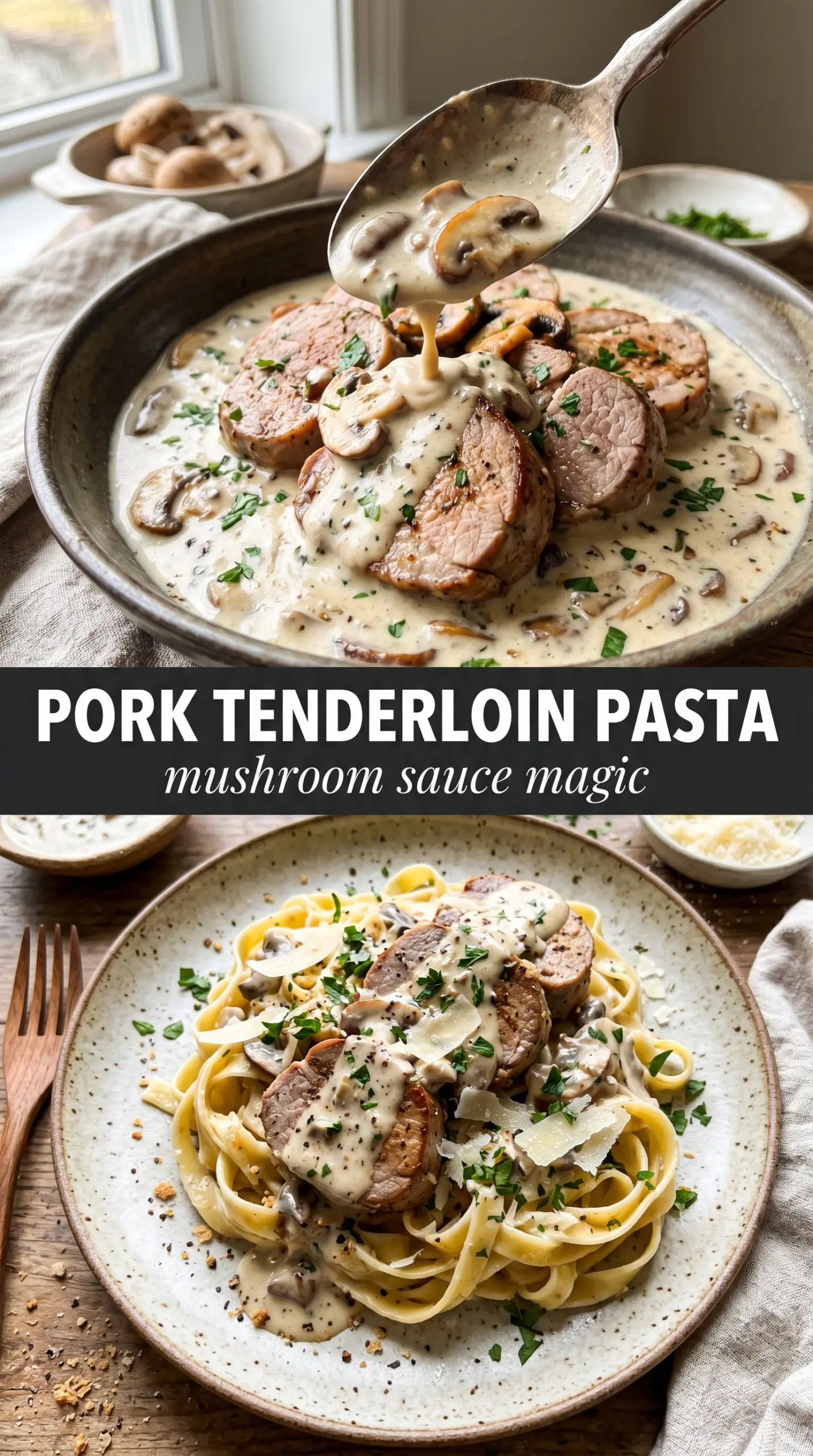
- Pork tenderloin — This is the lean cut that gives you tender medallions without long cooking. Slice it into even rounds so it sears quickly and finishes at the same rate; thicker chunks need extra time and can dry out.
- Cremini mushrooms — These carry the savory backbone of the sauce. White button mushrooms work in a pinch, but cremini bring a deeper, meatier flavor once they’ve had a chance to brown.
- Dry white wine — It loosens the browned bits and adds acidity so the cream doesn’t taste heavy. Use something you’d drink; a sharp, overly sweet wine will throw the sauce off.
- Heavy cream — This is what gives the sauce its body and lets it coat the pasta. Half-and-half can work, but it won’t thicken the same way and is more likely to look thin after the parmesan goes in.
- Parmesan — Grate it fresh if you can. Pre-grated parmesan often has anti-caking agents that keep it from melting as smoothly, and this sauce depends on a clean finish.
- Pappardelle or fettuccine — Wide noodles are worth it here because they hold onto the mushroom cream sauce instead of letting it slide off. If you use a thinner pasta, reduce the sauce a touch more so it still clings.
Building the Pork and Sauce in the Right Order
Searing the Pork Without Steaming It
Season the pork medallions and lay them in a hot pan with enough space between pieces for the surface to brown. Two minutes per side is usually enough if the medallions are about an inch thick; you want a deep golden crust, not a gray exterior. If the pan looks crowded, sear in batches, because a crowded skillet drops in temperature and the pork starts to sweat instead of color. Set the pork aside once it’s browned; it finishes later in the sauce.
Pulling Flavor From the Mushrooms
Add the mushrooms to the same pan with the butter and let them sit long enough to release their moisture before stirring. Once that liquid cooks off, they’ll start turning golden and smell nutty instead of raw. That’s the point where the garlic and thyme go in for just 30 seconds, because garlic burns fast and burnt garlic takes over the whole dish. The pan should still look glossy, not dry.
Reducing the Wine and Thickening the Cream
Pour in the wine and let it bubble until the sharp alcohol smell is gone and the liquid has reduced by about half. Then add the cream and broth and keep the heat at a steady simmer, not a rolling boil. The sauce should thicken enough to lightly coat a spoon before you add the parmesan; if it’s still thin at this stage, the cheese won’t rescue it. Stir in the parmesan off the hottest part of the burner so it melts smoothly.
Finishing With the Pasta and Pork
Return the pork medallions and let them warm through for a few minutes, just until the center is no longer cool. Add the cooked pasta and toss until every ribbon is coated and the sauce looks silky rather than loose. If it seems too tight, add a splash of the pasta cooking water to loosen it; if it seems too loose, let it sit for a minute so the sauce settles onto the noodles. Finish with parsley for a fresh edge and serve right away.
Three Ways to Make This Work for Your Table
Dairy-Free Version
Use full-fat coconut cream in place of the heavy cream and skip the parmesan, then finish with a little extra salt and a spoonful of nutritional yeast if you want some of that savory edge back. The sauce will be a touch sweeter and less sharp, but it still clings nicely to the pasta.
Gluten-Free Pasta Dinner
Use your favorite gluten-free fettuccine or chickpea pasta and cook it just shy of fully tender. Gluten-free noodles soften fast in a hot sauce, so undercooking them slightly keeps them from turning mushy when they hit the skillet.
No Wine, Still Good
Replace the wine with extra chicken broth plus a small splash of lemon juice. You lose a little of the wine’s depth, but the lemon helps keep the sauce bright so it doesn’t taste flat or overly rich.
Extra Mushroom, Less Pork
Cut the pork to half a pound and add another 8 ounces of mushrooms. The sauce becomes even more mushroom-forward and stretches into a meat-light dinner without losing the hearty feel.
Storage and Reheating
- Refrigerator: Store leftovers in an airtight container for up to 3 days. The sauce will thicken as it chills, and the pasta will absorb some of the cream.
- Freezer: The sauce can freeze, but the texture changes a bit after thawing. Freeze without the pasta if possible, then cook fresh noodles when you’re ready to serve.
- Reheating: Warm gently on the stove over low heat with a splash of broth or cream, stirring often. High heat can break the sauce and dry out the pork, so keep it slow and stop as soon as it’s hot.
Questions I Get Asked About This Recipe
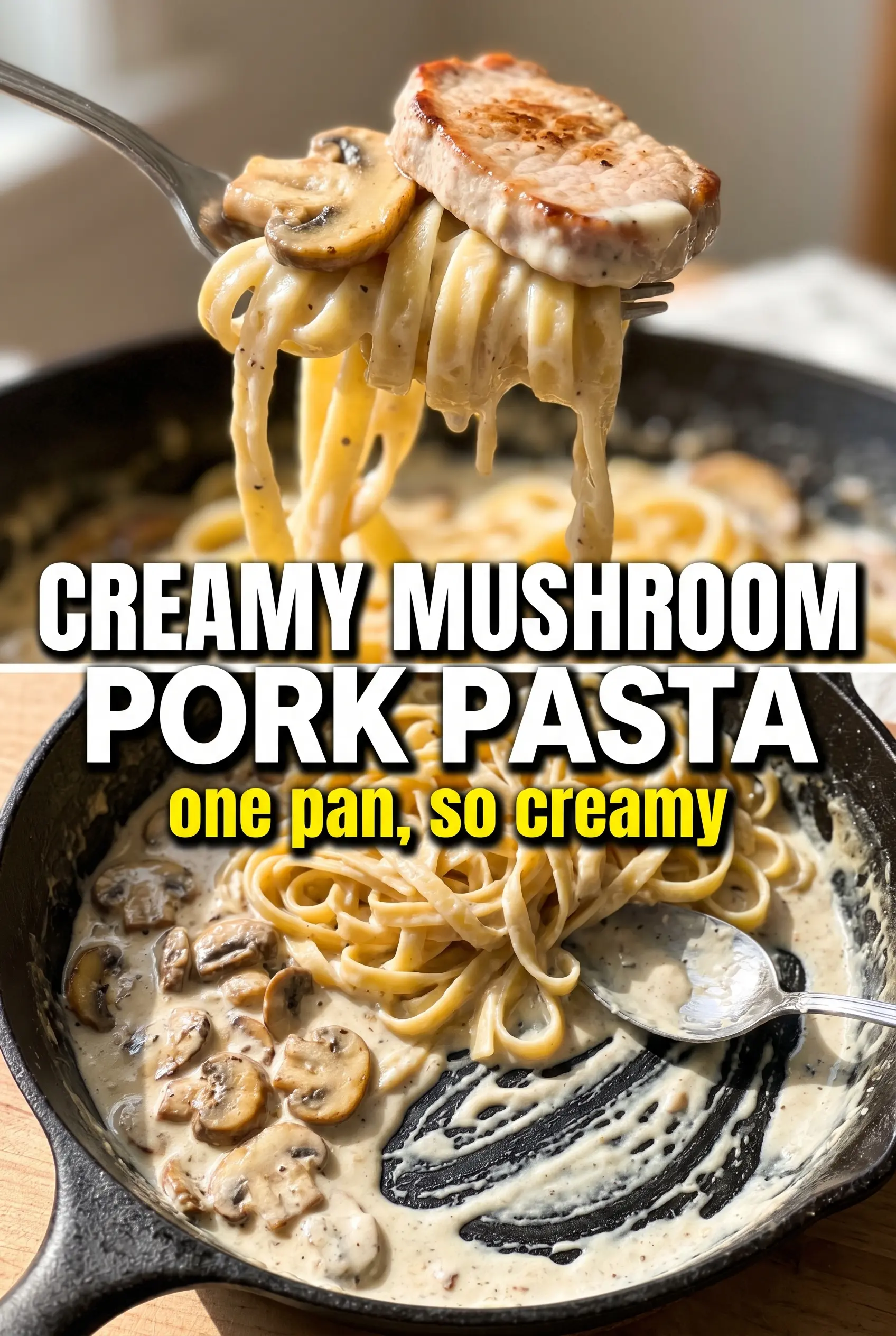
Pork Tenderloin in Creamy Mushroom Sauce with Pasta
Ingredients
Equipment
Method
- Season pork tenderloin medallions with salt and pepper, then sear in olive oil over high heat for 2 minutes per side until golden. Transfer the medallions to a plate and set aside.
- Melt butter in the same pan, then cook cremini mushrooms over medium-high heat until golden. Add garlic and fresh thyme and cook for 30 seconds, until fragrant.
- Pour in the dry white wine and deglaze, then simmer for 2 minutes to reduce slightly. Pour in the heavy cream and chicken broth and return to a gentle simmer.
- Simmer for 5–6 minutes, stirring often, until the sauce thickens to a glossy consistency. Lower heat and stir in parmesan until smooth and melted.
- Return pork medallions to the pan and gently simmer for 3 minutes until heated through. Stir to coat the pork with the sauce.
- Toss the cooked pappardelle or fettuccine with the sauce in the pan, until the noodles look lightly coated and creamy. Serve immediately, garnished with fresh parsley.