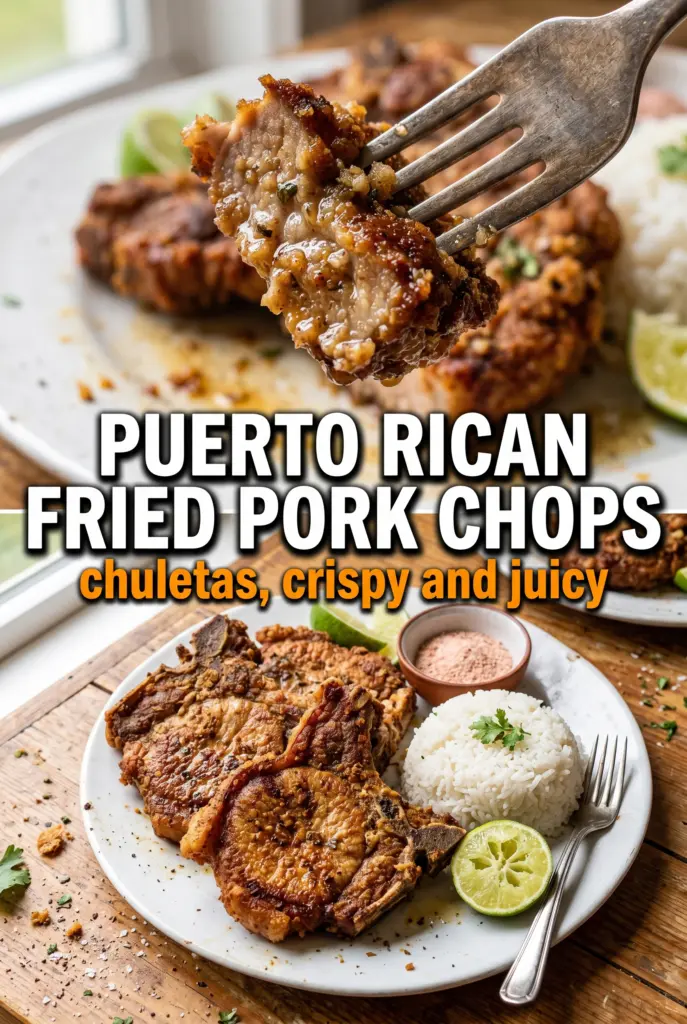
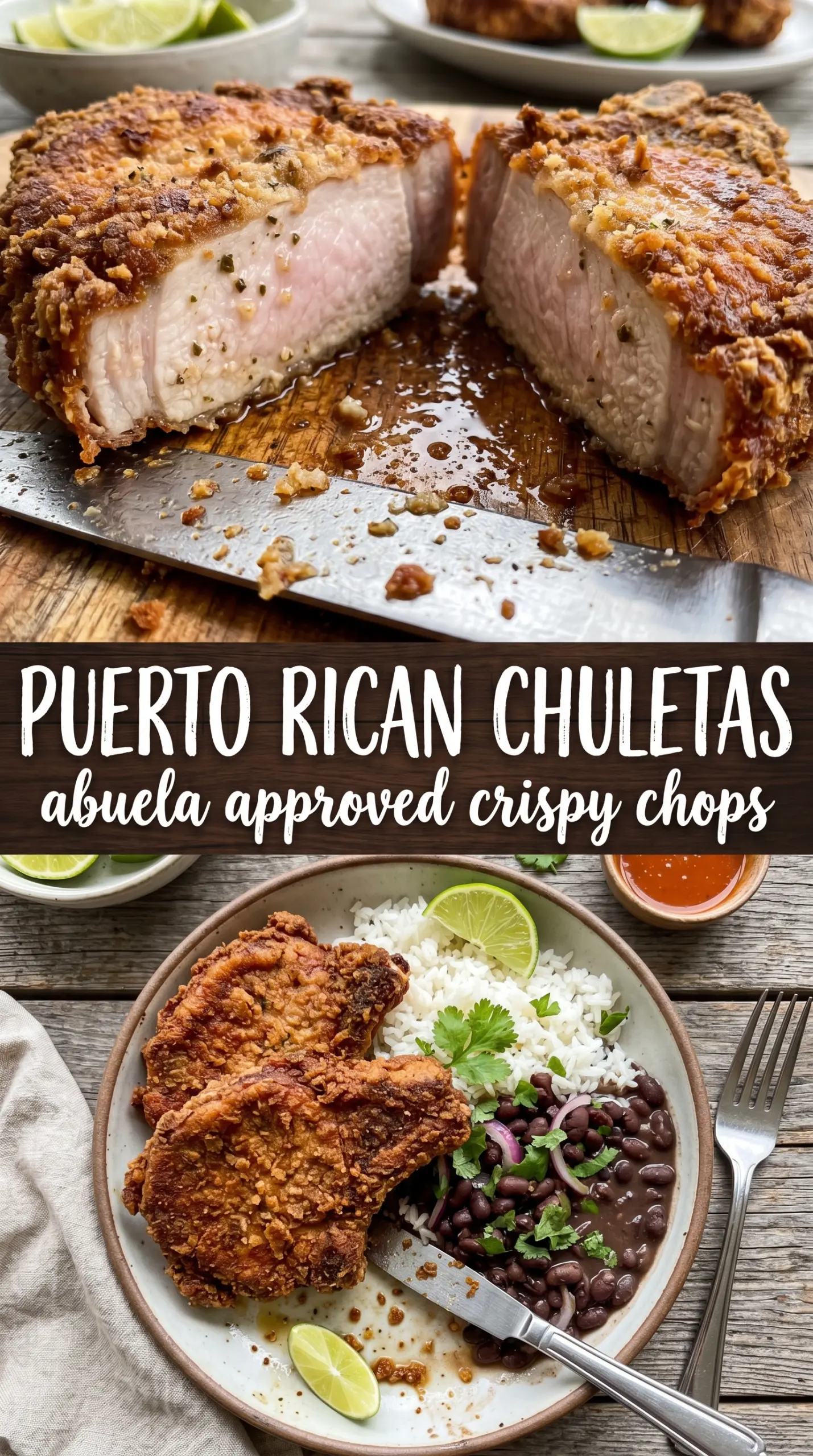
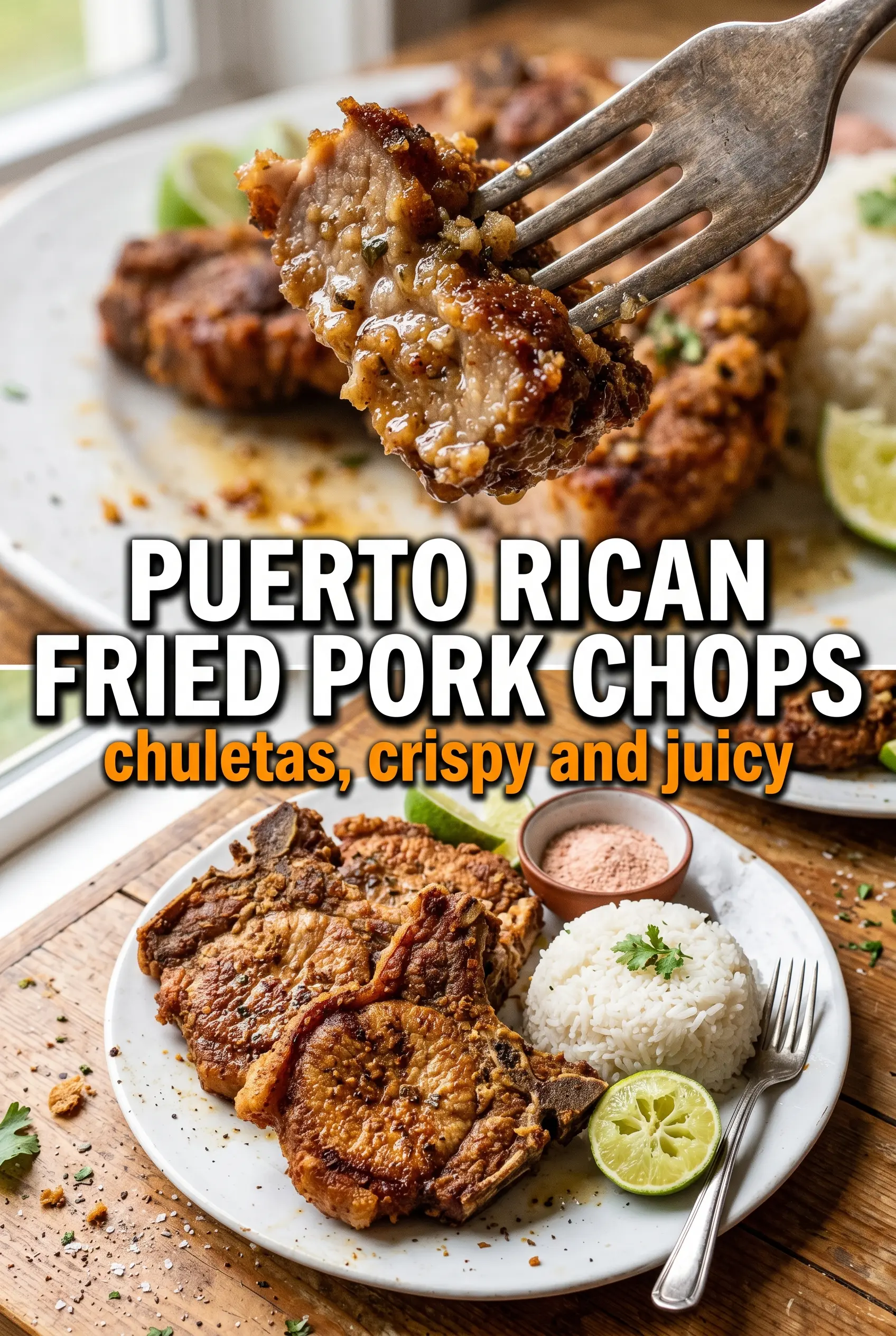
Golden, crispy Puerto Rican fried pork chops earn their place on the table fast: the crust crackles when you cut into it, and the meat underneath stays juicy and well seasoned all the way to the bone. The adobo and sazon give the chops that unmistakable savory, garlicky backbone, while a short marinade keeps the surface flavorful without turning the pork soft.
What makes these chuletas fritas work is the balance between seasoning and heat. Thin chops cook quickly, which means the outside can brown deeply before the inside dries out. A little vinegar in the marinade wakes up the spices and helps the seasoning cling, and shallow frying in a heavy skillet gives you that crisp edge without needing a big pot of oil.
Below, I’ll walk through the one marinating detail that keeps the crust from slipping, plus a few swaps and serving ideas that make this dish fit a weeknight dinner or a bigger spread with rice and beans.
The chops came out crisp on the outside and juicy inside, and the seasoning held onto every bite. I let them marinate for just 45 minutes and the crust still browned beautifully.
Save these crispy Puerto Rican fried pork chops for the night you want adobo-seasoned chuletas with a crunchy crust and juicy center.
The Marinade That Keeps Chuletas Fritas Crisp Instead of Soft
The biggest mistake with fried pork chops is overloading them with wet marinade or letting them sit so long that the surface gets tacky in the wrong way. Here, the marinade is just enough to season the pork and help the spices stick, but not so much that the chops steam in the pan. Thin pork chops need direct heat and a dry enough surface to brown fast.
Adobo and sazon do most of the heavy lifting, so don’t skip either one if you want that classic Puerto Rican taste. The vinegar brightens the seasoning and helps it cling, while olive oil carries the spices across the meat. If your chops are especially thin, keep the marinating time on the shorter end so the exterior stays ready for frying.
- Adobo seasoning — This is the base flavor. It brings salt, garlic, pepper, and savory depth all at once, which is why it works better here than trying to season piecemeal with a dozen spices.
- Sazon seasoning — This gives the chops that familiar Puerto Rican color and a rounded, earthy note. You can leave it out in a pinch, but the dish loses the specific flavor and look most people expect from chuletas fritas.
- White vinegar — Just a small amount wakes up the seasoning and helps the pork taste seasoned all the way through. Apple cider vinegar works too, but keep the amount the same so it doesn’t overpower the other spices.
- Thin bone-in pork chops — Bone-in chops stay juicier and taste fuller, especially when fried quickly over medium-high heat. If you use boneless chops, watch them closely because they dry out faster and need a shorter fry time.
What Each Ingredient Is Actually Doing in This Recipe
- Primary ingredient (the star) — Quality matters most. Choose the best you can find.
- Cooking medium (oil, butter, or broth) — This carries flavors and prevents dryness.
- Seasonings (salt, pepper, spices, herbs) — Layer flavors so nothing overpowers. Build depth gradually.
- Aromatics (garlic, onion, herbs) — Cook with fat to bloom flavors. Become the foundation.
- Supporting ingredients — Complement the main ingredient without overpowering it.
- Sauce or liquid (if applicable) — Brings flavors together. Balance richness with acid.
- Acid (lemon, vinegar, wine, or other) — Brightens and prevents flat-tasting results.
- Final finish (garnish, glaze, or sauce) — Prevents one-dimensional taste and adds visual appeal.
Frying the Chops So the Coating Browns Before the Pork Overcooks
Seasoning and Resting the Pork
Massage the marinade into every side of the chops until they look evenly coated and a little glossy. Let them sit at least 30 minutes so the seasoning sinks in, but don’t leave them swimming in liquid for hours or the surface will get too wet to fry properly. If the chops seem damp right before cooking, pat off the excess with a paper towel. That one small step helps the crust form instead of sliding around in the pan.
Heating the Oil to the Right Point
Use a heavy skillet and pour in just enough oil to cover the bottom by about 1/4 inch. The oil should shimmer before the pork goes in; if it looks flat and calm, the chops will absorb oil and turn greasy. If it’s smoking, the outside will brown too fast before the inside cooks through. Medium-high heat is the sweet spot for thin pork chops.
Getting the Color Without Drying Out the Meat
Lay the chops in the pan and leave them alone long enough for the first side to form a deep golden crust. If you move them too soon, they’ll tear and stick. After 4 to 5 minutes, flip and cook the second side until the pork is cooked through and the crust looks crisp at the edges. The meat should feel firm but still have a little give when pressed.
Finishing and Serving Right Away
Drain the chops briefly on paper towels so the crust stays crisp instead of soaking in its own steam. Serve them hot with white rice, pink beans, and lime wedges, because that sharp squeeze of lime cuts through the richness in the best way. These chops wait for no one; the crust is at its best in the first few minutes off the stove.
How to Adapt These Fried Pork Chops for Different Tables
Make Them Gluten-Free Without Changing the Method
This recipe is naturally gluten-free as written, as long as your adobo and sazon brands are certified gluten-free. The technique stays the same, and you still get the same crisp exterior because the crust comes from hot oil and proper browning, not from flour.
Boneless Pork Chops for a Faster Dinner
Boneless chops work when that’s what you have, but they cook faster and dry out sooner. Keep them thin and start checking early so the center stays juicy. You’ll still get good browning, just with a slightly leaner bite and less of the rich flavor that comes from cooking bone-in.
Add a Little Heat
A pinch of cayenne or a little hot sauce in the marinade gives the chops a sharper finish without changing the core Puerto Rican seasoning. Go light, because the adobo and sazon should still lead. Too much heat covers up the savory garlic-and-oregano balance that makes this dish work.
What to Serve When You Want a Fuller Plate
White rice and pink beans are the classic move, but these chops also work with tostones, a simple avocado salad, or sautéed peppers and onions. Keep the sides fresh or starchy so they balance the salty crust and juicy pork instead of competing with it.
Storage and Reheating
- Refrigerator: Store leftovers in an airtight container for up to 3 days. The crust softens in the fridge, but the flavor stays strong.
- Freezer: You can freeze cooked pork chops, but the coating won’t stay as crisp. Wrap tightly and freeze for up to 2 months, then thaw in the fridge before reheating.
- Reheating: Reheat in a 375°F oven or air fryer until hot and the edges crisp back up. Skip the microwave if you want any crust left at all, because it turns the coating soft and steamy.
Questions I Get Asked About This Recipe
Puerto Rican Fried Pork Chops (Chuletas Fritas)
Ingredients
Equipment
Method
- Mix adobo seasoning, sazon seasoning, garlic powder, dried oregano, white vinegar, and olive oil, then coat the pork chops thoroughly. Cover and refrigerate for 30 minutes to 2 hours.
- Heat 1/4 inch of oil in a heavy skillet over medium-high heat until shimmering.
- Fry the pork chops for 4–5 minutes per side until deep golden brown and cooked through.
- Drain the fried pork chops briefly on paper towels so the crust stays crisp.
- Serve the chuletas fritas with white rice, pink beans, and lime wedges.