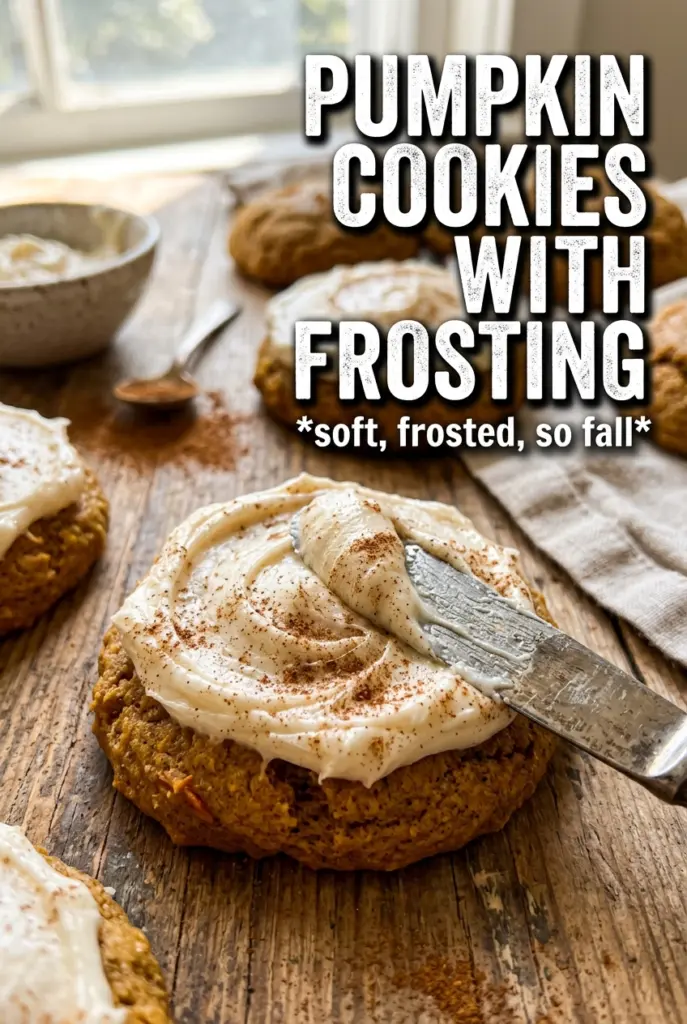
Pumpkin cookies with cream cheese frosting land somewhere between a soft cake and a classic drop cookie, and that’s exactly why they disappear fast. The cookies bake up pillowy and tender with a little structure at the edges, then the tangy frosting cools everything down and gives each bite that bakery-style finish. A dusting of cinnamon and a pecan on top make them look like you spent more time on them than you did.
The trick here is treating the dough like a soft batter and not trying to turn it into a stiff cookie dough. Pumpkin brings a lot of moisture, so the batter will look loose compared with chocolate chip cookie dough, but that’s what gives these their plush texture. The spices are built into both the cookies and the frosting, which keeps the pumpkin flavor present from the first bite to the last.
Below, I’m walking through the small details that matter: how to keep the cookies from spreading too thin, when to frost them, and the one swap I use when I want a slightly more pronounced spice note.
The cookies stayed soft for days, and the frosting set up enough that they stacked neatly without smearing. The cinnamon on top made them taste like a pumpkin roll in cookie form.
Save these pumpkin cookies with cream cheese frosting for the batch that bakes up soft, swirled, and finished with cinnamon and pecans.
The Dough Is Supposed to Stay Soft, Not Turn into a Scooping Dough
These cookies work because the dough bakes up thick and tender, not firm and structured. Pumpkin puree adds moisture and a little heft, so the batter will look softer than most cookie doughs the moment you finish mixing it. That’s normal. If you keep adding flour to make it look more manageable, the cookies turn dry and lose that pillowy crumb that makes them worth making.
Another place people go wrong is overbaking. The cookies should look set at the edges and slightly domed in the center, but they don’t need deep browning. They finish as they cool on the pan, and that carryover heat is what keeps the centers soft instead of gummy.
- Baking soda and baking powder — The two leaveners give these cookies lift without making them taste cakey in a bad way. The combo helps the cookies puff, then settle into a soft, spoonable texture.
- Pumpkin puree — Use plain pumpkin puree, not pumpkin pie filling. Pie filling is already sweetened and spiced, which throws off both texture and flavor.
- Brown sugar — This adds moisture and a deeper caramel note. Granulated sugar alone makes the cookies leaner and less plush.
What the Frosting and Spice Blend Are Each Doing Here
- Cream cheese — Full-fat cream cheese gives the frosting its tang and body. Low-fat versions can loosen the frosting and make it taste flat.
- Unsalted butter — Butter smooths out the cream cheese and keeps the frosting spreadable. If it’s too warm, the frosting turns slack, so start with softened but still cool butter.
- Pumpkin pie spice and cinnamon — Pumpkin pie spice gives the cookies their warm base note, while extra cinnamon sharpens the frosting. If you want a more distinct spice bite, increase the cinnamon slightly in the frosting rather than the cookie dough.
- Powdered sugar — This is what thickens the frosting without any grit. Add it gradually so the frosting stays fluffy instead of turning pasty.
Mix the Batter Gently, Then Let the Oven Do the Work
Whisking the dry ingredients first
Whisk the flour, baking soda, baking powder, pumpkin pie spice, cinnamon, and salt together before they ever hit the wet ingredients. That step keeps the spices evenly distributed so you don’t get one cookie that tastes heavily spiced and another that tastes plain. If you skip it, the dough can streak in spots and the flavor lands unevenly.
Building the pumpkin base
Beat the butter with both sugars until the mixture looks lighter and a little fluffy, then add the pumpkin, egg, and vanilla. The mixture may look slightly curdled once the pumpkin goes in, and that’s fine. Stir in the flour mixture only until the last dry streaks disappear. Overmixing at this point tightens the dough and makes the cookies bready instead of soft.
Baking until set, not dark
Drop the dough by 2-tablespoon portions onto parchment-lined baking sheets and bake just until the tops look set and the edges are no longer wet. A pale cookie is the goal here. If the tops start to brown, they’ve gone too far for this style of cookie. Let them cool completely before frosting or the cream cheese topping will melt and slide right off.
Finishing with frosting and the pecan top
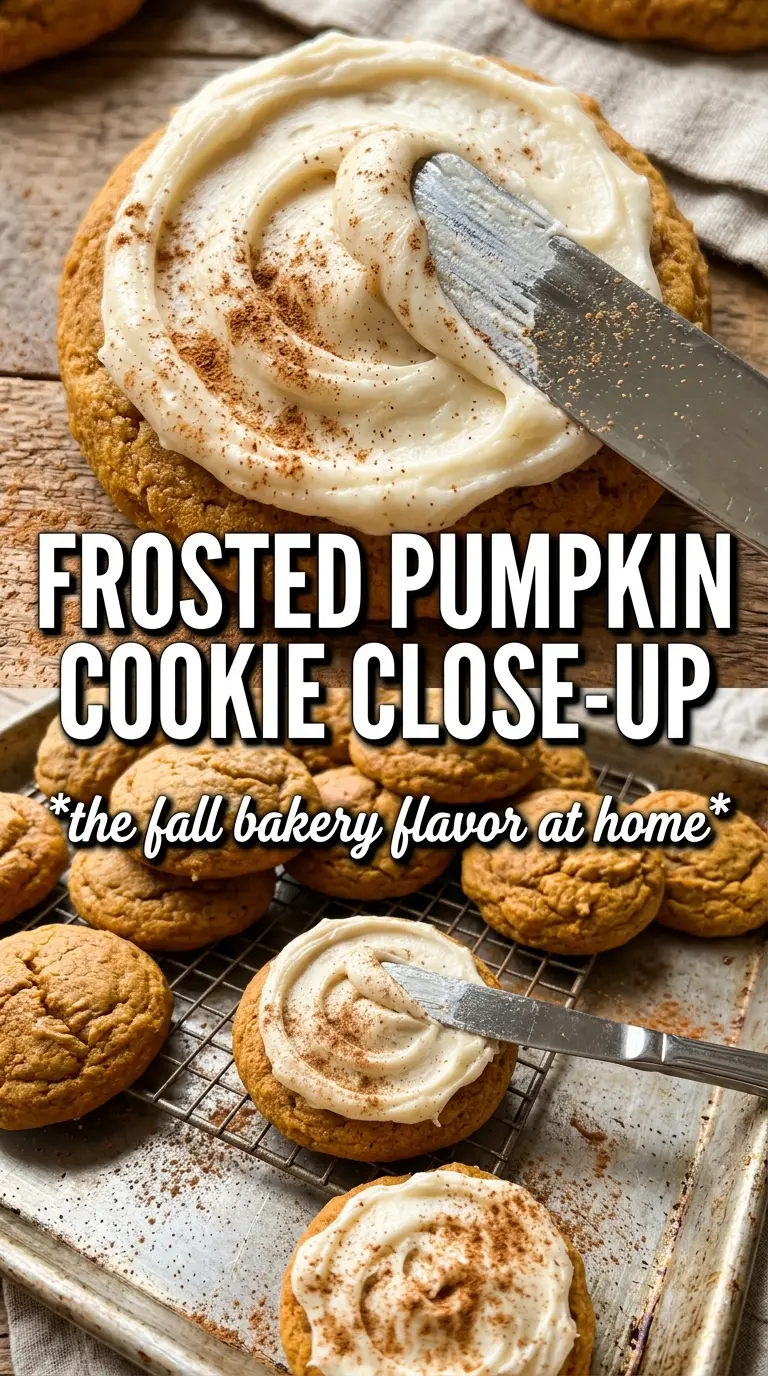
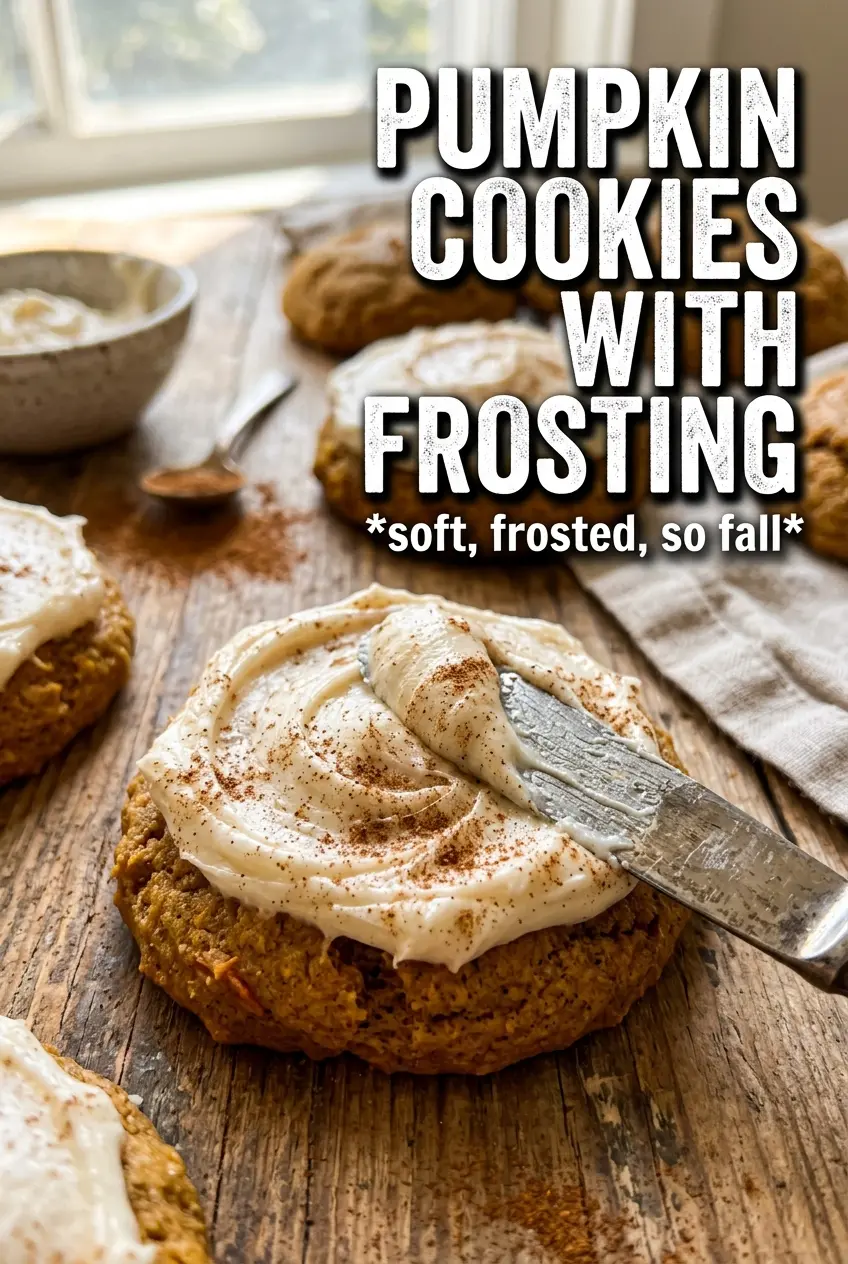
Beat the frosting until it’s smooth and spreadable, then spoon or swirl it generously over each cooled cookie. The frosting should hold its shape but still glide across the top without tearing the cookie underneath. A pinch of cinnamon and a pecan pressed into the center give each one that finished look and a little crunch against the soft crumb.
How to Adjust These Cookies Without Losing the Soft Texture
Make Them Without the Pecans
Leave off the pecans if you want a smoother finish or need a nut-free cookie. The cookies still hold their shape and the frosting carries the whole dessert, so you won’t miss the nut topping unless you want that little bit of crunch.
Gluten-Free Version
A good 1:1 gluten-free baking blend works here, but the dough may spread a touch less and bake up a little more delicate. Don’t change the pumpkin amount to compensate. The moisture balance is what keeps the cookies soft.
Dairy-Free Approach
Use plant-based butter in both the cookies and frosting, and swap in a dairy-free cream cheese that’s firm enough to hold its shape. The frosting will be a little softer and tangier, so chill it briefly before spreading if it feels loose.
Storage and Reheating
- Refrigerator: Store frosted cookies in an airtight container for 4 to 5 days. The cookies stay soft, but the frosting firms up, so let them sit at room temperature for about 15 minutes before serving.
- Freezer: Unfrosted cookies freeze well for up to 2 months. Freeze them in a single layer, then transfer to a bag or container. Frost after thawing for the best texture.
- Reheating: These are best served at room temperature, not warmed. Heat makes the frosting too soft and can turn the cookie crumb sticky.
Questions I Get Asked About This Recipe
Pumpkin Cookies With Cream Cheese Frosting
Ingredients
Method
- Preheat the oven to 350°F and line baking sheets with parchment. This helps the cookies release cleanly.
- Whisk together all-purpose flour, baking soda, baking powder, pumpkin pie spice, cinnamon, and salt in a mixing bowl. Whisk until evenly speckled.
- Beat the softened unsalted butter with granulated sugar and brown sugar until fluffy. This builds lift for the soft, cake-like texture.
- Add pumpkin puree, egg, and vanilla extract and mix until smooth. Scrape down the sides so no streaks remain.
- Fold the flour mixture into the wet ingredients until just combined. The dough should be soft and cake-like.
- Drop the dough by 2-tablespoon portions onto the lined baking sheets. Space them evenly so they spread without merging.
- Bake at 350°F for 10–12 minutes until the cookies are set. Keep an eye on the edges so they stay tender.
- Cool the cookies completely on a rack before frosting. Warm cookies will melt the frosting.
- Beat cream cheese frosting ingredients (cream cheese, softened butter, powdered sugar, vanilla, and cinnamon) until smooth. Mix just until creamy with no lumps.
- Frost each cooled cookie generously with the cream cheese frosting. Use a thick swirl so it holds its shape.
- Dust the frosted cookies lightly with cinnamon. The top should look speckled rather than coated.
- Press a pecan onto the top of each cookie. Press gently so the frosting stays intact.