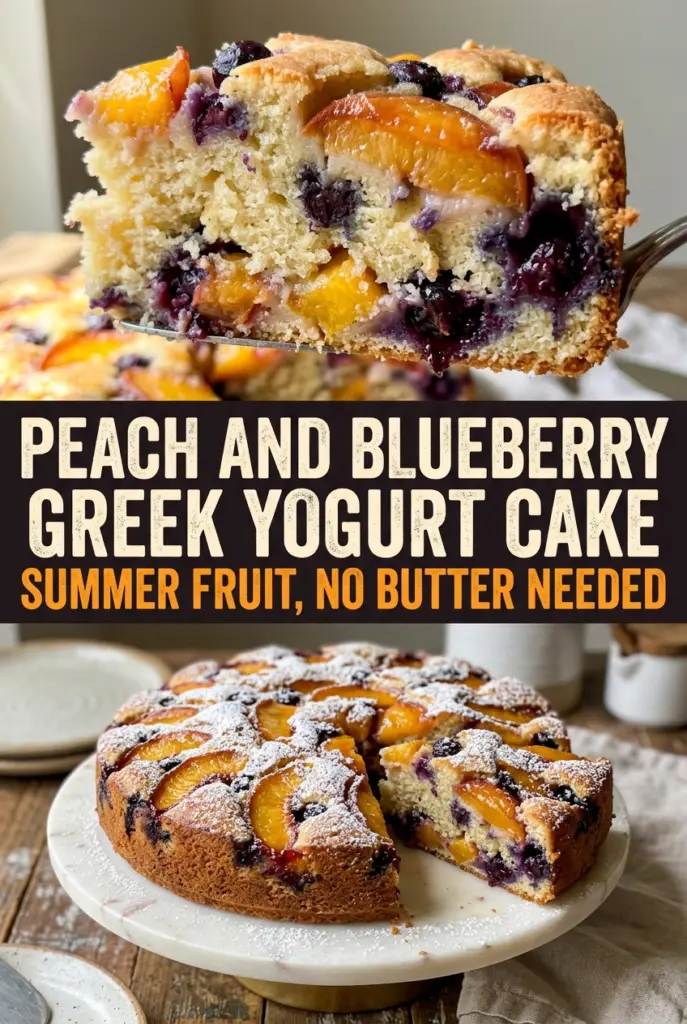
Peach and blueberry Greek yogurt cake bakes into a tender, close-crumbed cake with pockets of juicy fruit in every slice. The top turns golden and lightly crisp while the inside stays moist without feeling heavy, which is exactly what you want when fresh peaches are at their best and blueberries are ready to burst in the oven.
The Greek yogurt does the heavy lifting here. It brings tang, moisture, and enough structure to keep the crumb soft instead of oily, while a little baking soda works with that yogurt for a better rise and a finer texture. Tossing the fruit with flour matters too — it helps keep the peaches and blueberries suspended instead of sinking into the bottom of the pan.
Below, I’ll walk you through the small details that keep this cake from turning dense or soggy, plus the easiest way to swap the fruit when your produce drawer looks a little different.
The cake stayed incredibly moist for two days, and the flour-tossed fruit kept the blueberries from all sinking to the bottom. My family loved the little burst of cinnamon with the peaches.
Save this peach and blueberry Greek yogurt cake for the day you want a soft, fruit-studded dessert with a golden top and no fussy frosting.
The Trick to Keeping the Fruit Up in the Cake, Not Sunk at the Bottom
The biggest mistake with fruit cakes is adding juicy fruit straight into a loose batter and expecting it to behave. Peaches release liquid as they bake, blueberries soften fast, and both can slide to the bottom if the batter is too thin or the fruit is too wet. The flour toss gives the fruit a light coating that grips the batter just enough to keep it distributed through the crumb.
There’s another quiet problem here: overmixing. Once the wet ingredients hit the dry, the batter should look a little rough and just combined. Stirring until it’s perfectly smooth tightens the gluten and makes the cake bake up tougher than it should.
What Each Ingredient Is Actually Doing in This Cake
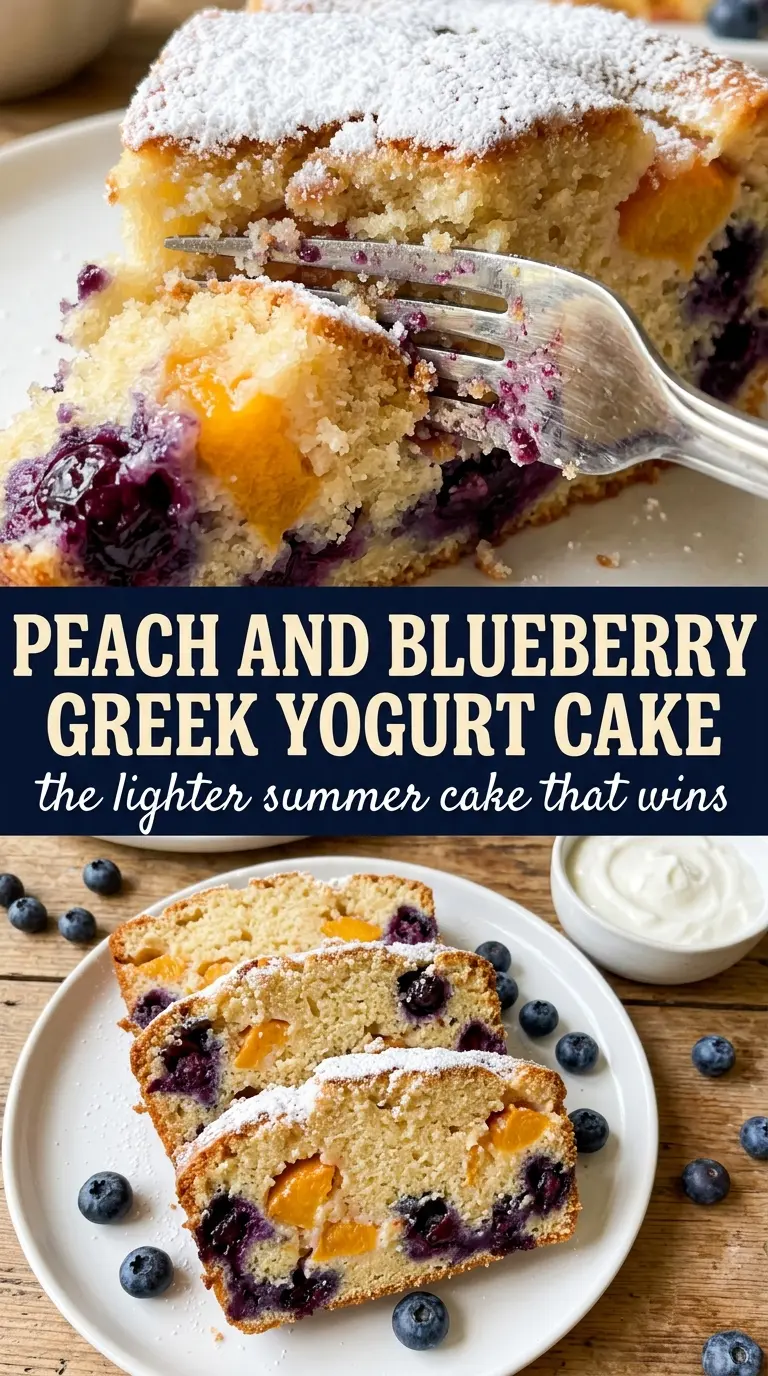
- Greek yogurt — This is what gives the cake its soft, damp crumb and subtle tang. Full-fat or 2% both work; nonfat is usable, but the cake won’t taste quite as rich. If you need a substitute, plain regular yogurt works, but drain it briefly first if it seems loose.
- Vegetable oil — Oil keeps the cake tender even after it cools. Butter brings more flavor, but it also firms up more as it sits, so the crumb won’t stay as plush. Neutral oil is the right move here because it lets the fruit and cinnamon stay in front.
- Peaches — Use ripe peaches with some give, not overly soft fruit that collapses into the batter. Peel them if the skins are thick or fuzzy; thin-skinned peaches can stay on if you don’t mind the texture. Dice them small enough to distribute cleanly.
- Blueberries — Fresh blueberries hold their shape best and give you those burst pockets across the top and middle. If you use frozen berries, don’t thaw them first or they’ll streak the batter and bleed more aggressively. Toss them in flour from frozen and fold them in fast.
- Cinnamon — This doesn’t make the cake taste spiced in a heavy way. It just bridges the peach and blueberry with a warm background note that makes the fruit taste fuller.
Building the Batter Without Beating the Life Out of It
Whisk the dry ingredients first
Start by whisking the flour, baking powder, baking soda, salt, and cinnamon until the mixture looks evenly speckled. That matters more than it sounds like it should, because baking soda clumps can leave bitter little pockets in the finished cake. A quick whisk now gives you a more even rise later.
Blend the wet ingredients until smooth
Beat the eggs, sugar, Greek yogurt, oil, and vanilla until the mixture looks glossy and fully combined. You’re not trying to whip in a ton of air here. The goal is a smooth base that pours easily and bakes into a fine crumb, not a frothy batter that rises and then collapses.
Fold the fruit in at the very end
Stir the wet and dry mixtures together just until you stop seeing streaks of flour, then add the floured peaches and blueberries. Fold with a light hand so the fruit stays whole and the batter doesn’t tighten up. If the pan sits too long before baking, the fruit starts releasing liquid and the batter thickens unevenly, so get it into the oven right away.
Watch the center, not just the color
The cake is done when the top is golden, the edges pull a touch from the pan, and a toothpick comes out clean or with a few moist crumbs. If the top browns before the center sets, tent it loosely with foil for the last 10 minutes. Let it cool in the pan for 15 minutes so it sets enough to turn out without breaking.
How to Adapt This Peach and Blueberry Cake When the Fruit Changes
Make it dairy-free without changing the crumb too much
Use a thick plain dairy-free yogurt with a tangy flavor, not a thin drinkable style. The cake will still stay moist, but the texture can be a little less rich than the yogurt version, so choose one with some body.
Swap the peaches for nectarines or apricots
Nectarines work one-for-one and give you the same soft, juicy pockets without peeling. Apricots bring a sharper tartness, so the cake tastes a little brighter and less mellow than it does with peaches.
Use frozen berries when fresh blueberries aren’t around
Frozen blueberries work well as long as you keep them frozen until the last second. They’ll tint the batter more than fresh berries, but they still bake up juicy and sweet. Don’t increase the flour coating or you’ll end up with dry patches around the berries.
Turn it into a gluten-free cake
Use a 1:1 gluten-free flour blend that already includes xanthan gum. The cake will still be tender, though it may bake up a touch more delicate, so let it cool fully before slicing.
Storage and Reheating
- Refrigerator: Store covered for up to 4 days. The crumb stays moist, and the fruit flavor deepens by day two.
- Freezer: This cake freezes well. Wrap slices tightly and freeze for up to 2 months, then thaw overnight in the refrigerator.
- Reheating: Warm individual slices for 10 to 15 seconds in the microwave, just until the chill comes off. Longer heating dries out the edges and makes the fruit juice seep into the crumb.
Answers to the Questions Worth Asking
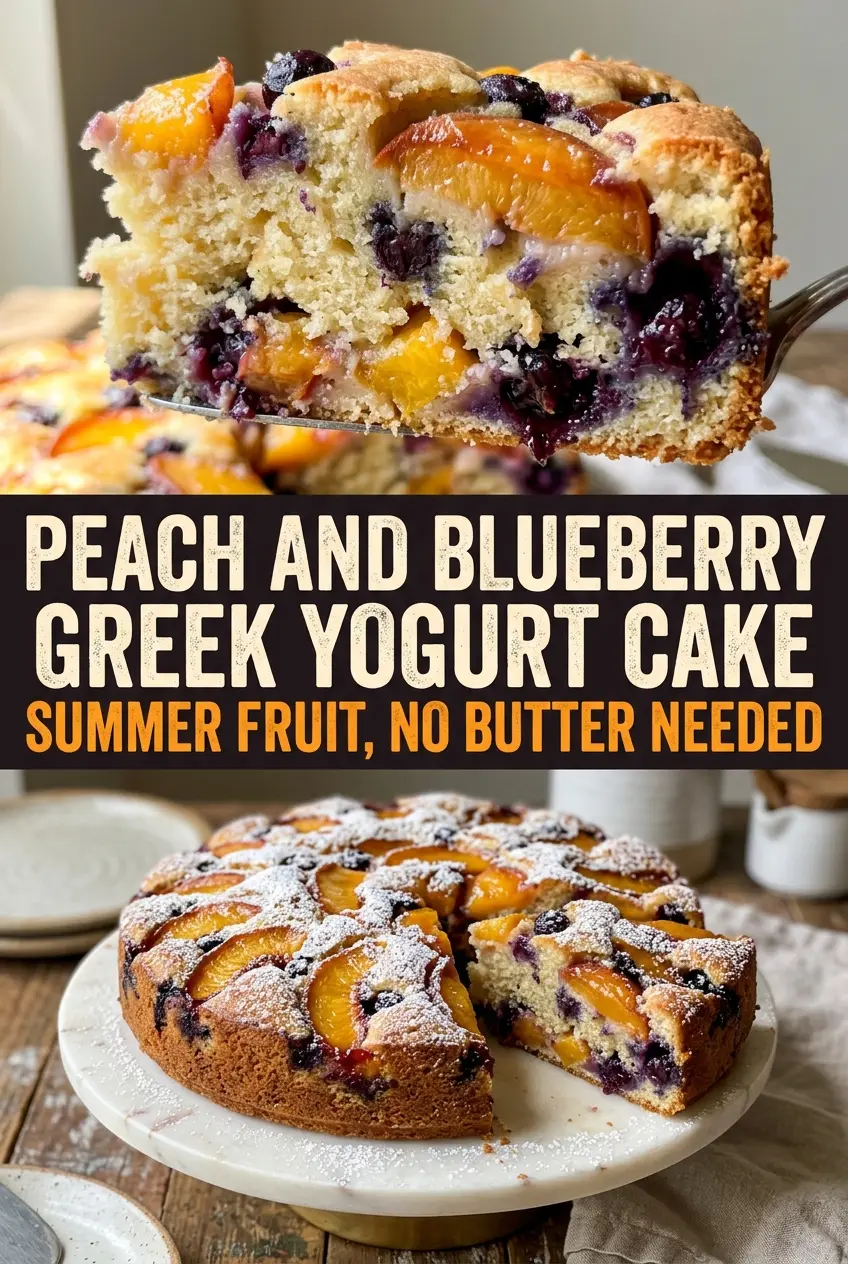
Peach and Blueberry Greek Yogurt Cake
Ingredients
Equipment
Method
- Preheat the oven to 350F and grease a 9-inch round cake pan.
- Whisk flour, baking powder, baking soda, salt, and cinnamon in a large bowl.
- Beat eggs, sugar, Greek yogurt, oil, and vanilla in a separate bowl until smooth.
- Stir wet into dry until just combined.
- Toss peaches and blueberries in 1 tablespoon flour, then fold gently into the batter.
- Pour the batter into the prepared pan and bake for 40-45 minutes until golden and a toothpick comes out clean.
- Cool 15 minutes in the pan before turning out.
- Dust with powdered sugar to serve.