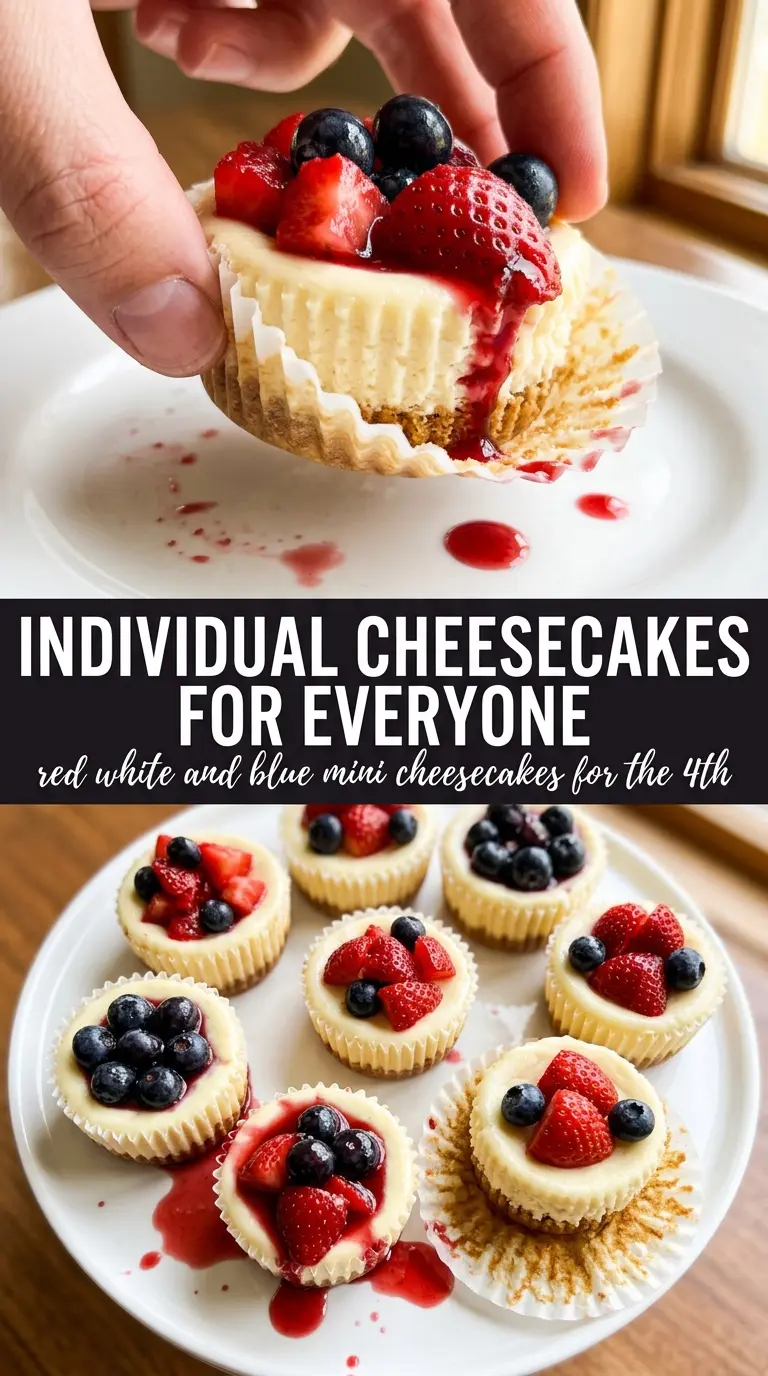
These red, white, and blue mini cheesecakes bake up with a smooth, tangy center, a clean cookie crust, and a chilled, creamy bite that feels festive without being fussy. The best part is the contrast: the filling stays rich and light, the berries add freshness, and the whipped cream gives each little cheesecake a bakery-style finish.
What makes these work is the simple structure. A whole Oreo or Golden Oreo pressed into the bottom of each liner becomes the crust without any extra mixing or melting butter, and the filling uses sour cream for that classic cheesecake tang. Baking them just until the centers are barely set keeps them from turning dry or cracked, which matters a lot in a small-format cheesecake where overbaking happens fast.
Below, I’ll walk through the one baking cue that keeps these mini cheesecakes silky, plus a few ways to adapt them if you want to swap the cookie base or make them ahead for a party.
The centers set up perfectly after chilling, and the Oreo base stayed crisp under the cheesecake instead of getting soggy. I made them the night before and they were even better the next day.
Save these red, white, and blue mini cheesecakes for a crowd-pleasing dessert with a crisp cookie crust and chilled berry topping.
The Small Cheesecake Mistake That Causes Cracks and Dense Centers
The biggest trap with mini cheesecakes is treating them like full-size ones. They bake faster, which means the line between perfectly set and overbaked is thin. If the centers look completely firm in the oven, they’ve already gone too far; they should still wobble slightly in the middle when you pull the pan out.
Another detail that matters is the batter texture before it goes into the tin. Cream cheese has to be soft enough to beat smooth with the sugar, or you’ll end up with tiny lumps that never disappear. Once the eggs go in, mix just until combined. Too much air makes the tops puff and crack as they cool, and mini cheesecakes show that damage fast.
- Underbaking slightly is the goal — the residual heat finishes the center while the cheesecake chills.
- Room-temperature cream cheese matters — cold cream cheese leaves a grainy filling no matter how long you mix.
- Don’t overmix after the eggs go in — that’s what traps air and leads to uneven tops.
What the Cookie Base, Sour Cream, and Berries Are Each Doing Here
- Golden Oreo or regular Oreo cookies — One cookie per cup gives you a built-in crust with almost no effort. Golden Oreos keep the dessert lighter and more vanilla-forward, while classic Oreos add a darker, chocolate contrast. Either one works because you don’t need crumbs or butter here; the cookie softens just enough during baking to slice cleanly after chilling.
- Cream cheese — This is the backbone of the filling, so use full-fat cream cheese for the best texture. Reduced-fat versions can bake up looser and a little gummier. The key is softening it all the way so it blends without stubborn bits.
- Sour cream — This adds tang and a smoother finish. If you don’t have it, plain full-fat Greek yogurt works in a pinch, but the filling will be slightly firmer and a little less rich.
- Fresh strawberries and blueberries — Use fresh berries, not frozen, for the topping. Frozen fruit turns wet and soft as it thaws, which bleeds into the whipped cream and dulls the clean color contrast.
Getting These Mini Cheesecakes into the Oven and Out with Clean Centers
Start with the crust in each liner
Line the muffin tin with cupcake liners, then set one cookie flat in the bottom of each cup. No crushing, no blending. The whole cookie gives you a sturdier base and a neat, individual look, and it stays intact when you lift the cheesecake out later.
Beat the filling until it’s silky, not airy
Mix the cream cheese and sugar first until the mixture looks completely smooth and glossy. Add the eggs one at a time, mixing just until each one disappears, then beat in the vanilla and sour cream. If the batter looks fluffy like cake batter, you’ve gone too far and baked-in air pockets are more likely.
Watch for the slight wobble
Divide the batter evenly among the cups, filling each about three-quarters full. Bake at 325°F for 18 to 20 minutes, and start checking early. The tops should look set around the edges with a soft jiggle in the center; if the centers look dry or puffed high, they’ll end up overbaked after cooling.
Chill before topping
Let the cheesecakes cool in the pan for 30 minutes, then move them to the refrigerator for at least 2 hours. That chill time isn’t optional if you want clean slices and a firm texture. Add the whipped cream, berries, and sprinkles only after they’re cold, or the topping will slide and melt into the surface.
How to Adapt These for Different Crowds and Ingredient Swaps
Make them gluten-free with the right cookie
Use certified gluten-free sandwich cookies or gluten-free vanilla cookies in place of the Oreos. The texture stays the same, but check that the cookie is sturdy enough to hold its shape during baking.
Go dairy-free with a planned swap
Use dairy-free cream cheese and a plant-based sour cream alternative. The filling will be a little softer and less tangy, so chill it fully before serving and keep the toppings light.
Swap the fruit for a different color theme
Raspberries and blueberries work if you want a sharper berry flavor, and sliced cherries can stand in for strawberries if that’s what you have. Keep the fruit fresh and dry so the whipped cream stays neat on top.
Storage and Reheating
- Refrigerator: Store covered for up to 4 days. The cookies soften slightly as they sit, but the flavor stays excellent.
- Freezer: Freeze the cheesecakes without the fruit and whipped cream for up to 1 month. Wrap each one well, then thaw in the refrigerator overnight before topping.
- Reheating: These shouldn’t be reheated. Cheesecake is best served chilled, and warming it will loosen the filling and melt the topping.
Answers to the Questions Worth Asking

Red, White and Blue Mini Cheesecakes
Ingredients
Equipment
Method
- Preheat oven to 325°F and line a 12-cup muffin tin with cupcake liners. Place the pan on a sheet pan for easier handling if needed.
- Place one Oreo cookie flat in the bottom of each liner. Press it down lightly so it forms a crust base.
- Beat cream cheese and granulated sugar until smooth. Scrape the sides and bottom of the bowl as needed to remove lumps.
- Add eggs one at a time and mix well after each addition. Continue mixing until the batter looks uniform.
- Beat in vanilla extract and sour cream until fully combined. Stop when no streaks remain for a creamy texture.
- Divide batter evenly among the 12 cups, filling about 3/4 full. Tap the muffin tin gently to help level the tops.
- Bake for 18–20 minutes, until the centers are just barely set. Look for a slight jiggle in the middle before removing the pan.
- Cool the cheesecakes in the pan for 30 minutes. Leave them undisturbed so the tops don’t crack.
- Refrigerate for at least 2 hours to fully chill and set. Keep them covered to prevent refrigerator odors.
- Swirl whipped cream over each cheesecake right before serving. Add enough to create a visible swirl on top.
- Top each cheesecake with a strawberry slice and a few blueberries. Arrange berries so red and blue colors show clearly.
- Finish each with a pinch of red and blue sprinkles. Serve immediately after topping for the freshest look.