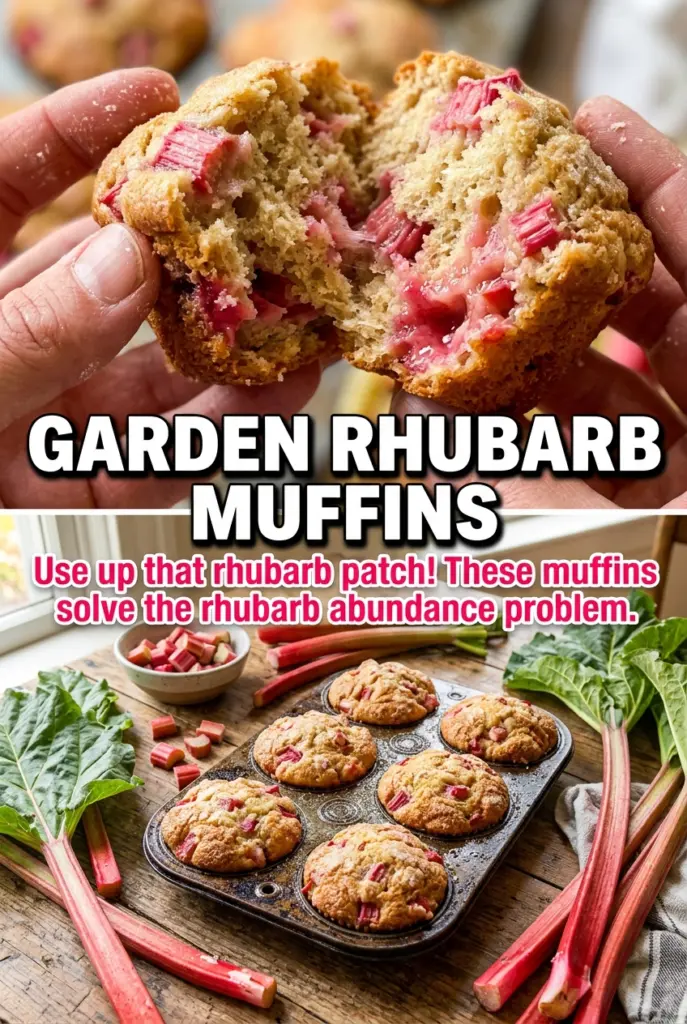
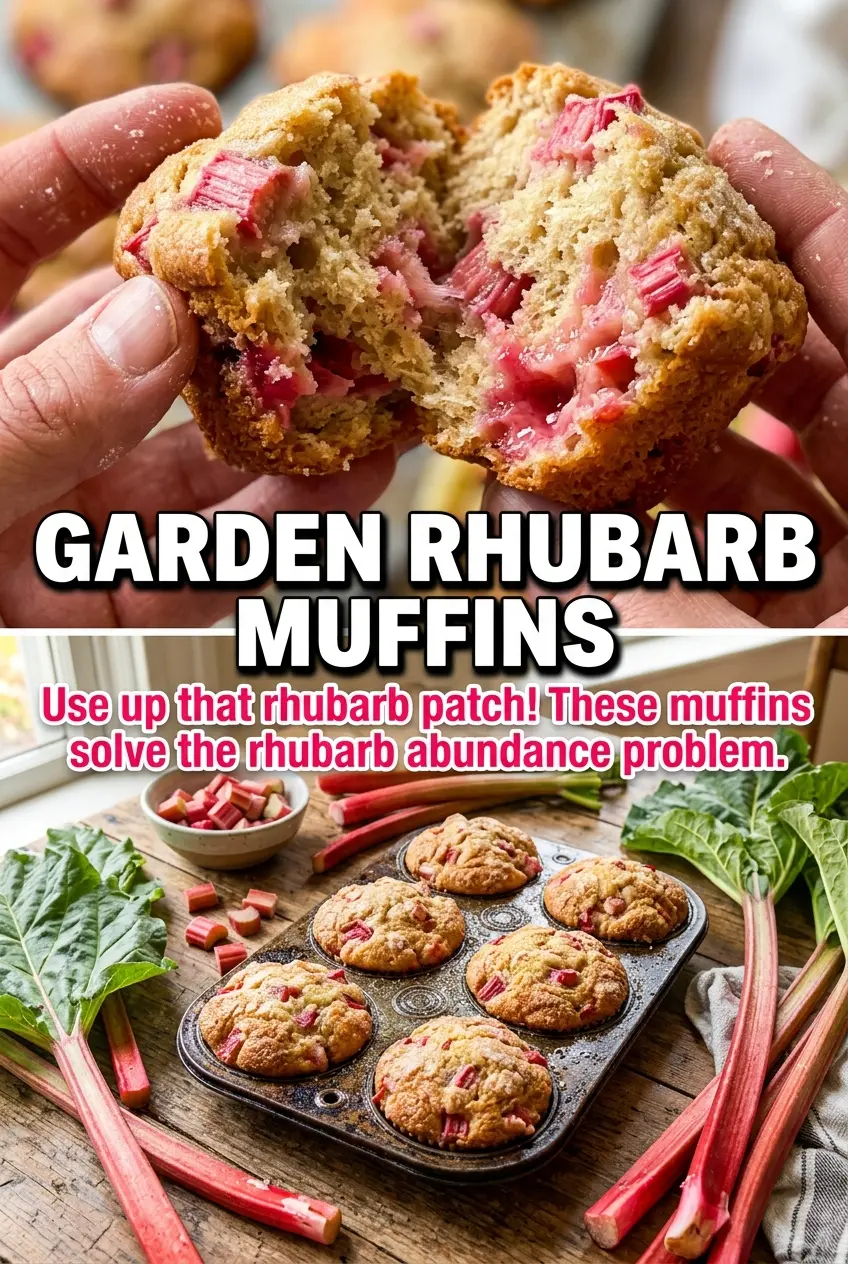
These rhubarb muffins bake up with a soft, tender crumb and little bursts of tart fruit in every bite. The tops rise into that classic bakery-style dome, and the cinnamon sugar gives each muffin a thin, crackly finish that works especially well against rhubarb’s sharp edge. They’re the kind of breakfast muffin that disappears fast because they feel plain enough for an ordinary morning, but interesting enough that people keep reaching for a second one.
The texture depends on two small things done right: mixing the batter just until the dry spots disappear, then folding in the rhubarb gently so the fruit stays intact. Rhubarb releases moisture as it bakes, which is exactly why this recipe stays moist without turning heavy. A little oil keeps the crumb soft for longer than butter would in a muffin like this, and the cinnamon sugar on top adds the best contrast without competing with the fruit.
Below, I’ve included the most useful substitutions, the one mixing mistake that can make muffins tough, and a few answers for the questions that come up most often when baking with rhubarb.
The muffins were tender all the way through, and the rhubarb stayed bright and tangy instead of turning mushy. The cinnamon sugar on top was the best part.
Save these rhubarb muffins for the mornings when you want soft, tangy muffins with a cinnamon-sugar top.
The Rhubarb Needs to Stay in Small Pieces, Not Melt Into the Batter
Rhubarb muffins can go wrong when the fruit is cut too large or stirred too aggressively. Big chunks sink, leave wet pockets, and can make the crumb look uneven even when the muffins are baked through. Finely dicing the rhubarb gives you small tart bursts throughout the muffin, which is what makes each bite taste balanced instead of patchy.
The other thing that matters here is the batter thickness. This is not a loose, pourable batter. It should look lumpy and just barely combined, because overmixing develops the flour and makes the muffins bouncy instead of tender. If you see a few streaks of flour, stop stirring and fold in the rhubarb from there.
What the Main Ingredients Are Doing in These Muffins
- Rhubarb — Fresh rhubarb brings the sharp, bright contrast that keeps these muffins from tasting flat. Frozen rhubarb can work, but use it straight from the freezer and don’t thaw it first, or it will bleed too much moisture into the batter.
- Vegetable oil — Oil keeps the crumb soft even after the muffins cool. Butter gives more flavor, but it also firms up sooner, so the texture won’t stay as plush the next day.
- Milk and egg — These build the structure and help the muffins rise evenly. Whole milk gives the richest result, but any milk works here because the rhubarb and cinnamon sugar are the real flavor drivers.
- Cinnamon sugar — This is more than decoration. It bakes into a thin crust on top and gives the first bite a little crunch, which is a nice contrast to the soft crumb underneath.
Mixing the Batter Without Beating the Muffins Tough
Start With the Dry and Wet Bowls Separate
Whisk the flour, sugar, baking powder, and salt together first so the leavener is evenly distributed. In the wet bowl, beat the egg, milk, oil, and vanilla just until smooth; you’re not trying to whip air into it. Once the two bowls come together, the goal is to stop as soon as the flour disappears. That keeps the muffins light instead of chewy.
Fold in the Rhubarb at the End
Add the diced rhubarb after the batter is mostly mixed, then fold only enough to spread it through. If you keep stirring after that, the fruit starts breaking down and the batter can turn streaky pink and watery. Divide the batter right away so the baking powder doesn’t lose its lift while it sits in the bowl.
Watch for the Same Doneness Cues Every Time
The muffins are done when the tops are golden and spring back lightly when touched in the center. A toothpick should come out clean or with a few moist crumbs, not wet batter. Let them sit in the pan for 5 minutes so they set up, then move them to a wire rack. If you leave them in the tin too long, the bottoms can turn soggy from trapped steam.
How to Adapt These Rhubarb Muffins Without Losing the Tender Crumb
Gluten-Free Version
Use a cup-for-cup gluten-free flour blend that includes xanthan gum. The texture will be a little more delicate and less bouncy, but the muffins still hold together well if you don’t overmix the batter.
Dairy-Free Swap
Swap the milk for an unsweetened non-dairy milk like almond or oat. Since this recipe already uses oil instead of butter, the switch is easy and the muffins stay just as moist.
Extra Tart and Fruity
Add an extra 1/4 cup rhubarb if you want more visible fruit and sharper flavor. Go past that carefully, though, because too much rhubarb can weigh the batter down and make the centers a little wet.
Storage and Reheating
- Refrigerator: Store in an airtight container for 4 days. The tops soften a little, but the crumb stays moist.
- Freezer: These freeze well. Wrap individually and freeze for up to 2 months, then thaw at room temperature.
- Reheating: Warm in a 300°F oven for 5 to 8 minutes. The common mistake is microwaving too long, which makes the crumb rubbery and the rhubarb overly soft.
Questions I Get Asked About This Recipe
Rhubarb Muffins
Ingredients
Equipment
Method
- Preheat oven to 400°F and line a 12-cup muffin tin with paper liners.
- Whisk together flour, sugar, baking powder, and salt in a large bowl until evenly combined.
- Beat egg, milk, oil, and vanilla until combined in a separate bowl.
- Pour wet ingredients into dry ingredients and stir until just moistened.
- Gently fold in diced rhubarb so pink pieces stay visible.
- Divide batter among muffin cups, filling each about 2/3 full, then sprinkle with cinnamon sugar.
- Bake for 18-20 minutes at 400°F until golden and a toothpick comes out clean.
- Cool in pan for 5 minutes before transferring to a wire rack.