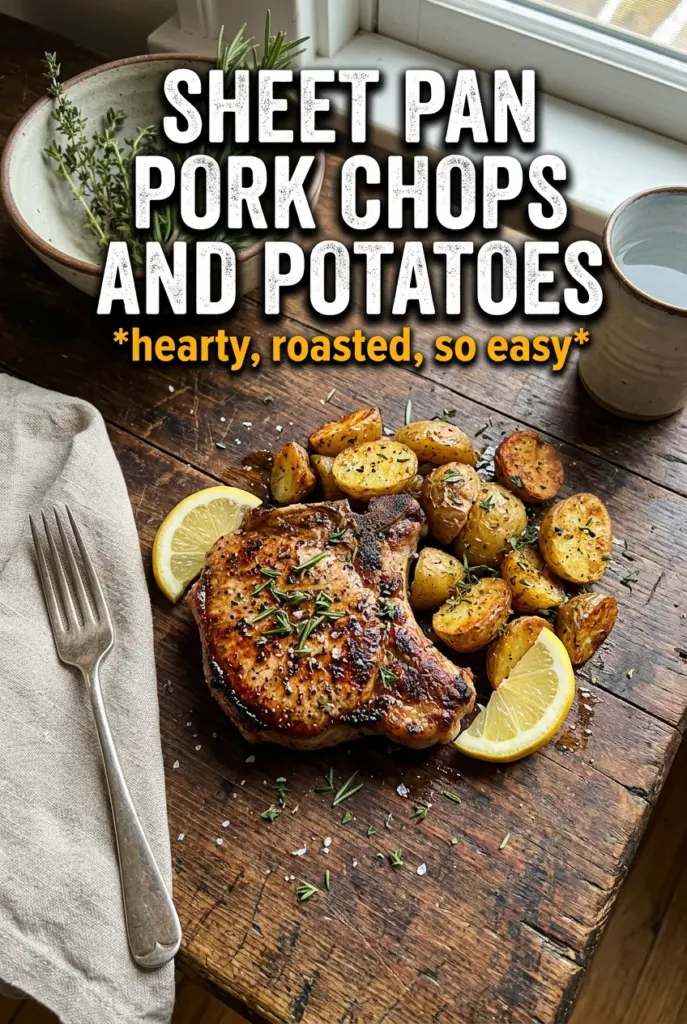
Golden pork chops, caramelized potatoes, and tender green beans all on one pan is the kind of dinner that looks like you worked harder than you did. The potatoes turn crisp at the edges, the pork stays juicy in the middle, and the garlic butter melts into everything so the whole pan tastes finished, not thrown together. It’s the sort of meal that lands on the table with almost no cleanup and still feels like a proper dinner.
The trick here is giving the potatoes a head start. They need those first 15 minutes on the pan before the pork goes in, or they’ll still be pale and underdone when the chops hit 145°F. I also like a quick sear on the pork before roasting. That step gives the chops color fast and keeps the final oven time short enough that they don’t dry out.
Below, I’ll walk through the timing that keeps everything cooking evenly, plus a few smart swaps if you need to work with what’s already in the kitchen.
The potatoes got those crispy edges and the pork was still juicy at 145°F. I loved that the garlic butter soaked into the green beans too — nothing tasted dry.
Save these sheet pan pork chops and potatoes for the night you want juicy pork, crisp potatoes, and an easy garlic butter finish with one pan to wash.
Why the Potatoes Start First Instead of Waiting for the Pork
Baby potatoes need a head start because they cook much slower than pork chops, and that gap is what keeps this pan dinner from turning into overcooked meat and underdone potatoes. Roasting them first on a hot, lined sheet pan gives the cut sides time to start browning before the meat joins in. If you skip that early roast, the pork is usually done before the potatoes are tender.
The other thing that matters is space. Spread the potatoes out in a single layer and don’t crowd them into the middle of the pan, or they’ll steam instead of crisp. When the pork goes in, pushing the potatoes toward the edges helps everything finish evenly and keeps the center open for airflow.
What Each Ingredient Is Doing on This Pan
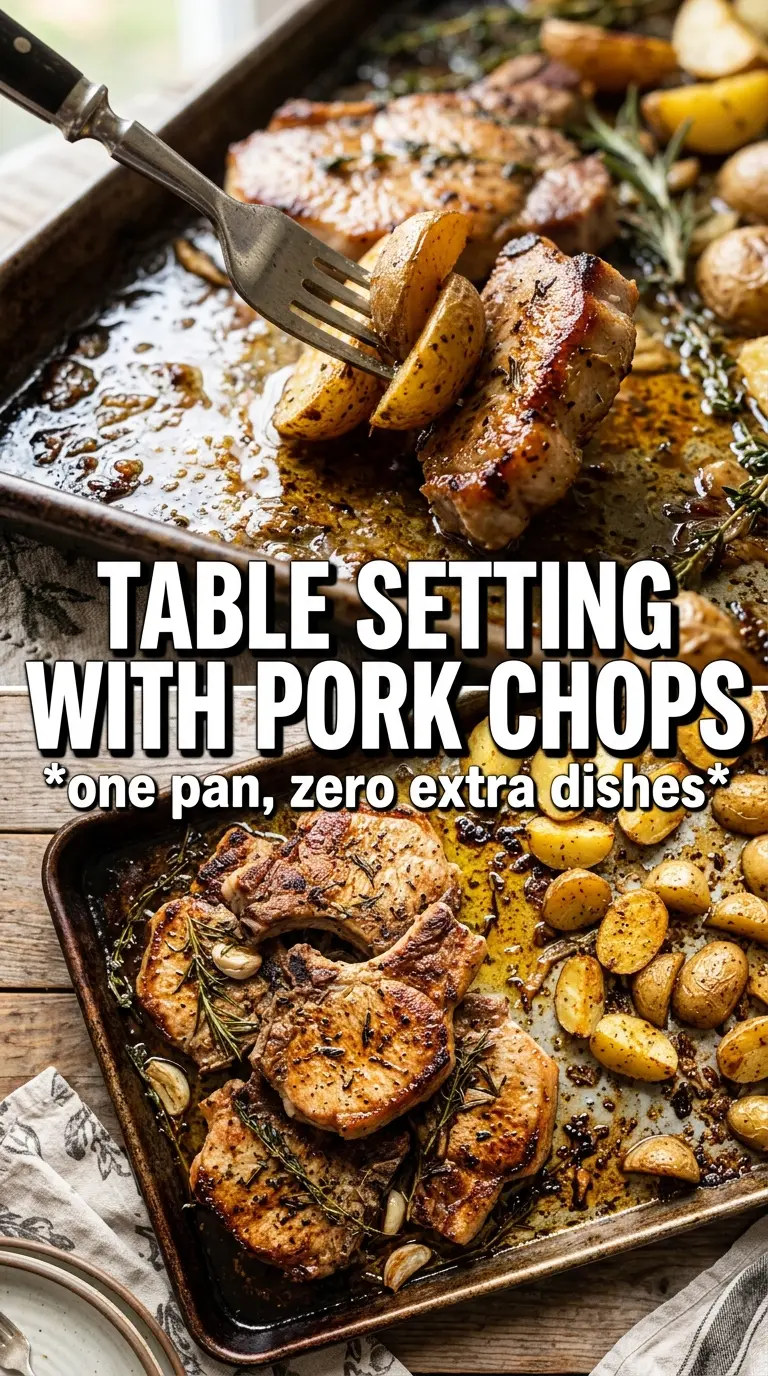
- Bone-in pork chops — Bone-in chops hold onto moisture better than boneless, especially in a hot oven. A 1-inch thickness gives you enough time to build color in the skillet without overshooting the center. If you only have boneless chops, cut the final oven time back a few minutes and start checking early.
- Baby potatoes — Their small size means they cook through in the same window as the pork once they’ve had that first roast. Halving them gives you more surface area for browning. Larger potatoes work too, but they need to be cut smaller so they’re done on time.
- Green beans — These go in later because they need a shorter roast than the potatoes. They pick up the garlic butter fast and stay crisp-tender instead of collapsing. Trim them well so the ends don’t dry out or get stringy.
- Smoked paprika, rosemary, and thyme — This trio gives the pan a savory, roast-dinner flavor without a long marinade. Dried herbs work best here because they hold up to the oven heat. If you use fresh rosemary or thyme, chop them finely so they don’t burn or stay tough.
- Garlic butter — This is the finish that ties the pan together. Add it near the end so the garlic stays fragrant instead of bitter. If you want a stronger garlic hit, use fresh minced garlic; for a gentler version, use a little garlic powder in the butter instead.
The Timing That Keeps the Pork Juicy and the Potatoes Crisp
Building the Potato Base
Heat the oven to 425°F and line the sheet pan so the potatoes release cleanly after they’ve browned. Toss them with olive oil, rosemary, thyme, garlic powder, salt, and pepper, then spread them cut-side down if you can. You’re looking for the edges to start turning golden before the pork ever hits the pan. If the potatoes are piled up, they’ll soften instead of caramelize, and that changes the whole dish.
Searing the Chops Before They Roast
Season the pork chops with smoked paprika, salt, and pepper, then sear them in a hot skillet for about 2 minutes per side. You’re not cooking them through here; you’re building color and locking in a good crust. If the pan isn’t hot enough, the chops will pale instead of sear, and they’ll need more oven time later. Pull them as soon as the outside looks browned and fragrant.
Finishing Everything Together
After the potatoes have roasted for 15 minutes, push them to the edges and place the pork chops in the center. Add the green beans around the pan, then drizzle the garlic butter over everything. Roast until the pork reaches 145°F at the thickest part and the beans are tender but still green. Let the chops rest for a few minutes before serving so the juices stay in the meat instead of running out onto the pan.
How to Adapt This When You Need a Different Pan Dinner
Swap in boneless pork chops
Boneless chops work, but they cook faster and dry out more easily. Keep the same sear, then start checking the oven a few minutes early. You’ll lose a little flavor from the bone, but the garlic butter helps make up for it.
Make it dairy-free
Skip the butter and finish the pan with another tablespoon of olive oil plus a little extra garlic. You won’t get the same rich gloss, but the herbs and paprika still carry the flavor well. This is the easiest swap if you need the recipe to stay dairy-free without changing the method.
Use broccoli instead of green beans
Broccoli florets can replace the green beans, but they’ll brown faster and pick up more of the garlic butter on the edges. Add them only for the last 12 to 15 minutes so they don’t turn mushy. This swap gives the pan a heartier, more roasted finish.
Storage and Reheating
- Refrigerator: Store leftovers in an airtight container for up to 3 days. The potatoes soften a little, but the flavor stays good.
- Freezer: The pork freezes better than the potatoes and beans, which can turn mealy after thawing. If you freeze it, expect a softer texture and plan to use it for a quick lunch rather than a full repeat of the original dinner.
- Reheating: Warm leftovers in a 350°F oven until heated through, or use a skillet over medium-low heat. The main mistake is blasting everything in the microwave, which makes the pork tough and the potatoes watery.
Answers to the Questions Worth Asking
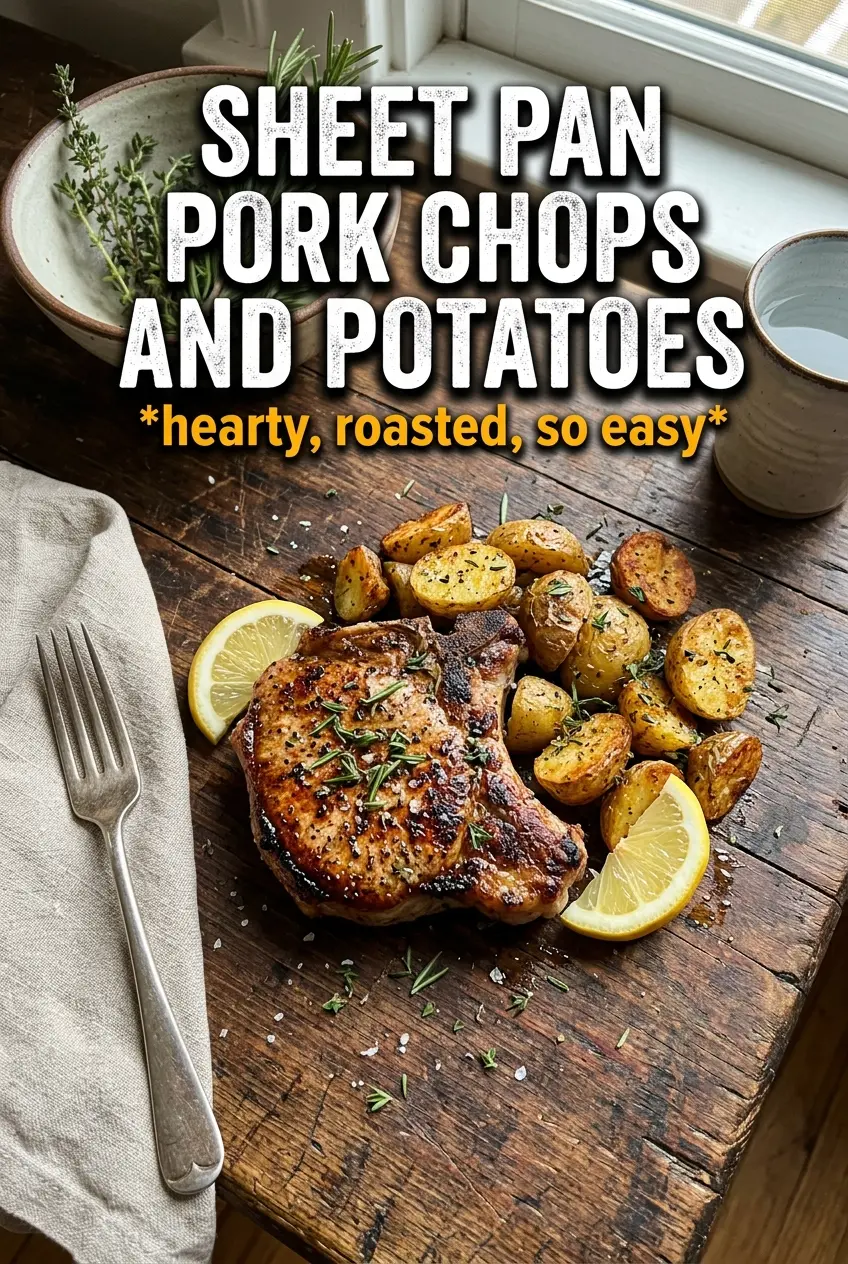
Sheet Pan Pork Chops And Potatoes
Ingredients
Equipment
Method
- Preheat oven to 425F and line a large rimmed baking sheet with parchment for easy cleanup.
- Toss halved baby potatoes with 2 tablespoons olive oil, dried rosemary, dried thyme, garlic powder, salt, and pepper, then spread them in an even layer on the pan.
- Roast the potatoes for 15 minutes until they start to turn golden at the edges.
- Season pork chops with smoked paprika, salt, and pepper.
- Heat a hot cast iron skillet with the remaining olive oil and sear pork chops for 2 minutes per side.
- Push the potatoes to the edges, then place the pork chops in the center and tuck green beans around them on the sheet pan.
- Mix minced garlic with melted butter, then drizzle the garlic herb butter over the potatoes, pork chops, and green beans.
- Roast 18-20 more minutes at 425F until the pork chops reach 145F, then garnish with fresh parsley before serving.