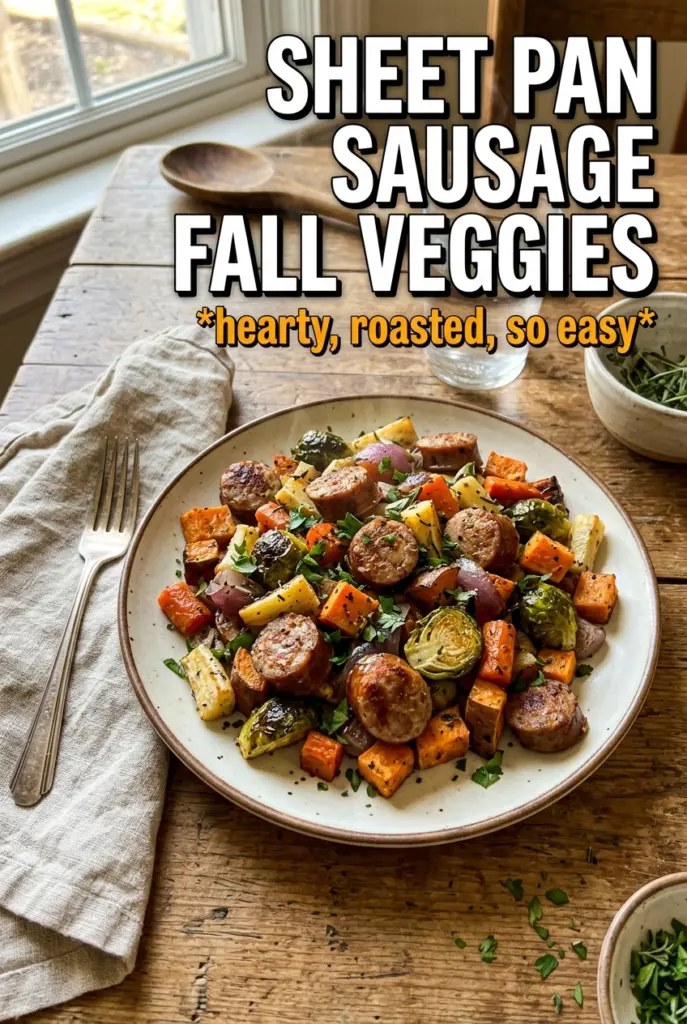
Caramelized sausage, tender roasted squash, and crispy-edged Brussels sprouts make this sheet pan dinner one of those meals that disappears fast and doesn’t leave much behind except a good smell in the kitchen. The apple and balsamic-mustard glaze pull the whole pan together, so every bite gets a little sweet, savory, and tangy all at once. It’s the kind of dinner that feels hearty without being heavy, and it lands on the table with barely any cleanup.
The trick here is giving the vegetables enough space to roast instead of steam. A hot oven and a well-spread pan are what turn the squash sweet at the edges and keep the sprouts from going soft. I also like tossing the glaze ingredients together before they hit the pan, so the maple and Dijon coat everything evenly instead of clumping in one spot. The sausage drips enough fat as it cooks to help flavor the vegetables, which is why this works so well on a single tray.
Below, I’ve included the details that matter most for getting the vegetables browned, the sausage cooked through, and the apples tender without turning mushy. There’s also a few smart swaps if you want to change up the produce based on what’s in your kitchen.
The vegetables caramelized instead of getting soggy, and the maple-Dijon glaze gave the sausage such a good finish. I stirred once halfway and everything came out browned and perfectly tender in 35 minutes.
Save this sheet pan sausage and fall veggies dinner for the nights when you want one pan, crispy edges, and a balsamic-maple finish.
The Difference Between Roasted and Soggy Starts With the Pan
Sheet pan dinners fail when the vegetables are crowded together or cut in uneven sizes. The squash needs time to caramelize, the Brussels sprouts need exposed cut sides, and the sausage needs enough direct heat to brown instead of just warm through. If everything sits on top of each other, the steam has nowhere to go and you lose the texture that makes this kind of meal worth making.
The answer is a hot oven, a large rimmed baking sheet, and a layout with some breathing room. This recipe also benefits from the glaze going on before roasting instead of after, because the maple and balsamic can tighten up in the heat and cling to the sausage and vegetables. Stirring once halfway is enough; if you keep moving everything around, you delay browning.
What Each Ingredient Is Doing in the Pan
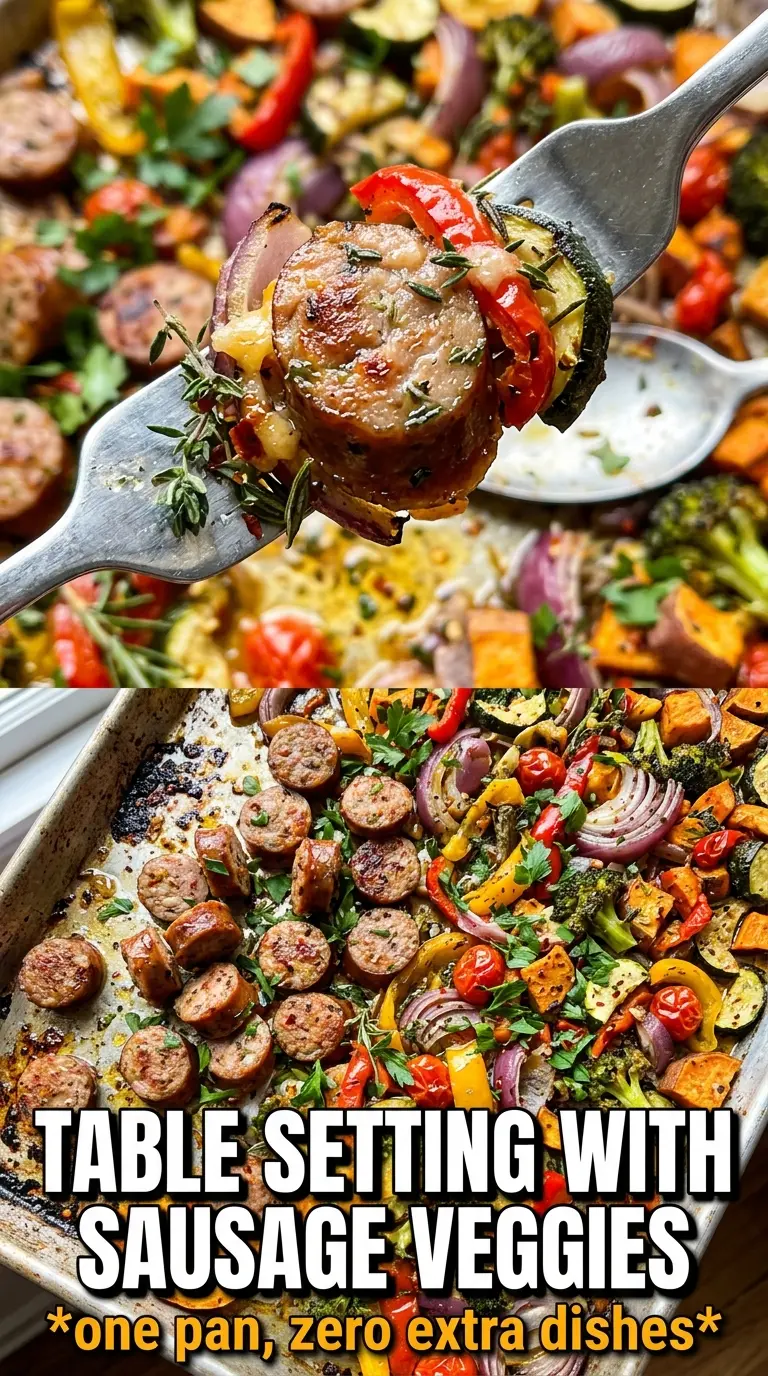
- Italian sausage links — Sliced sausage gives you more browned edges than whole links, which means better texture and more flavor in every bite. Pork sausage brings enough fat to help season the vegetables as they roast, but chicken or turkey sausage works too if you want something lighter.
- Butternut squash — This is the piece that needs the most time, so cut it into even cubes. Smaller pieces brown faster, but if they’re too tiny, they can collapse before the sausage is done.
- Brussels sprouts — Halving them exposes the cut side to the pan, which is where you get the deepest color. If your sprouts are large, trim them a little so they cook at the same rate as the squash.
- Apple — The apple softens into the glaze and gives the pan a sweet note that keeps the whole dish from tasting flat. Use a firm apple like Honeycrisp or Pink Lady so it holds its shape.
- Balsamic, maple syrup, and Dijon — This is the coating that turns the pan from plain roasted vegetables into a finished dinner. The Dijon helps emulsify the glaze, so it clings instead of pooling at the bottom.
- Fresh rosemary and garlic — Fresh rosemary stands up to the oven heat without disappearing, and garlic adds depth as long as it’s mixed into the glaze rather than left in raw chunks on the tray.
Roasting the Vegetables Until the Edges Go Deep Brown
Mix the glaze first
Whisk the olive oil, balsamic vinegar, maple syrup, Dijon, garlic, rosemary, Italian seasoning, salt, and pepper until it looks smooth and slightly thickened. That little bit of Dijon matters because it helps the oil and vinegar stay combined long enough to coat the pan evenly. If you pour the liquids on separately, the sweet stuff will collect in one area and brown unevenly.
Spread everything in a single layer
Add the sausage, squash, Brussels sprouts, onion, peppers, and apple to the parchment-lined baking sheet, then drizzle the glaze over the top and toss just enough to coat. The goal is not a deep toss bowl situation; it’s even coverage and direct contact with the pan. If the tray looks piled up, split it across two pans, because overcrowding is the fastest way to lose caramelization.
Roast until browned, then finish hot
Roast at 425°F for 30 to 35 minutes, stirring once halfway through so the pieces from the outside move toward the center. You’re looking for browned sausage edges, tender squash, and Brussels sprouts with dark, crisped cut sides. For extra color, broil for 2 to 3 minutes at the end, but stay close because the maple in the glaze can go from caramelized to burnt fast.
Swap the Sausage for Chicken or Turkey
Chicken or turkey sausage works well here and keeps the dish a little leaner, but you’ll lose some of the rich drippings that help coat the vegetables. If you use a lower-fat sausage, don’t skip the olive oil in the glaze or the pan can taste dry.
Make It Dairy-Free and Gluten-Free Without Changing the Method
This recipe already works naturally for both dairy-free and gluten-free eaters as long as your sausage is labeled accordingly. The flavor stays intact because the glaze builds all the depth from balsamic, maple, mustard, and rosemary, not from cream or cheese.
Use Sweet Potatoes Instead of Butternut Squash
Sweet potatoes give you a similar roast-and-caramelize result with a slightly earthier finish. Cut them to the same size as the squash so they finish at the same time, or they’ll stay firm while the rest of the pan is done.
Storage and Reheating
- Refrigerator: Store leftovers in an airtight container for up to 4 days. The vegetables soften a little, but the flavor stays strong.
- Freezer: It freezes, but the apples and Brussels sprouts lose some texture after thawing. If you plan to freeze it, expect softer vegetables and use it within 2 months.
- Reheating: Reheat on a sheet pan in a 375°F oven until hot, about 10 to 15 minutes. The microwave works in a pinch, but it wipes out the roasted edges that make this dish good in the first place.
Questions I Get Asked About This Recipe
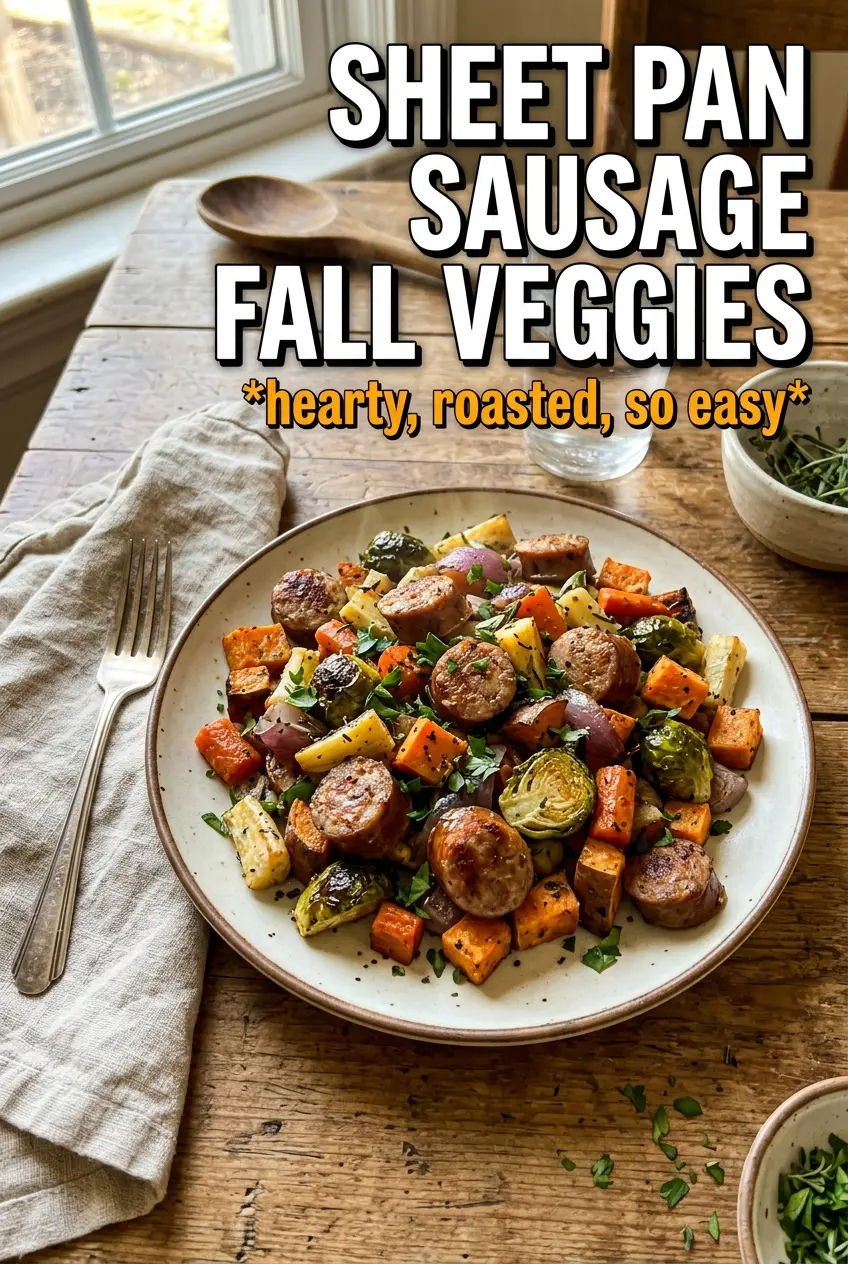
Sheet Pan Sausage And Fall Veggies
Ingredients
Equipment
Method
- Preheat the oven to 425F and line a large rimmed baking sheet with parchment. This prevents sticking and helps the vegetables roast evenly.
- Whisk olive oil, balsamic vinegar, maple syrup, Dijon mustard, garlic, rosemary, Italian seasoning, salt, and pepper until smooth. The glaze should look glossy and cohesive.
- Arrange the sliced sausage rounds, cubed butternut squash, halved Brussels sprouts, red onion wedges, bell pepper chunks, and sliced apple in an even layer on the sheet pan. Leave space so the vegetables can caramelize instead of steam.
- Drizzle the glaze over everything and toss to coat. Make sure each piece has a thin, even sheen.
- Roast at 425F for 30-35 minutes, stirring once halfway. Roast until vegetables are caramelized and the sausage is cooked through, with browned edges on the squash and Brussels sprouts.
- Broil for 2-3 minutes to add extra caramelization. Watch closely until the top edges look deeply golden but not burnt.