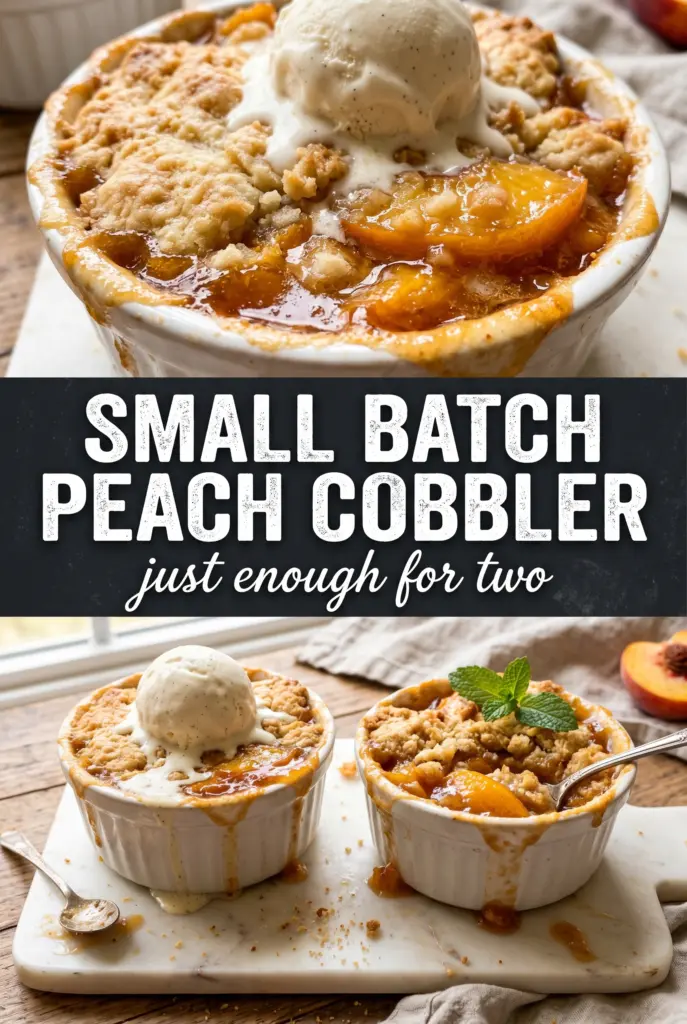
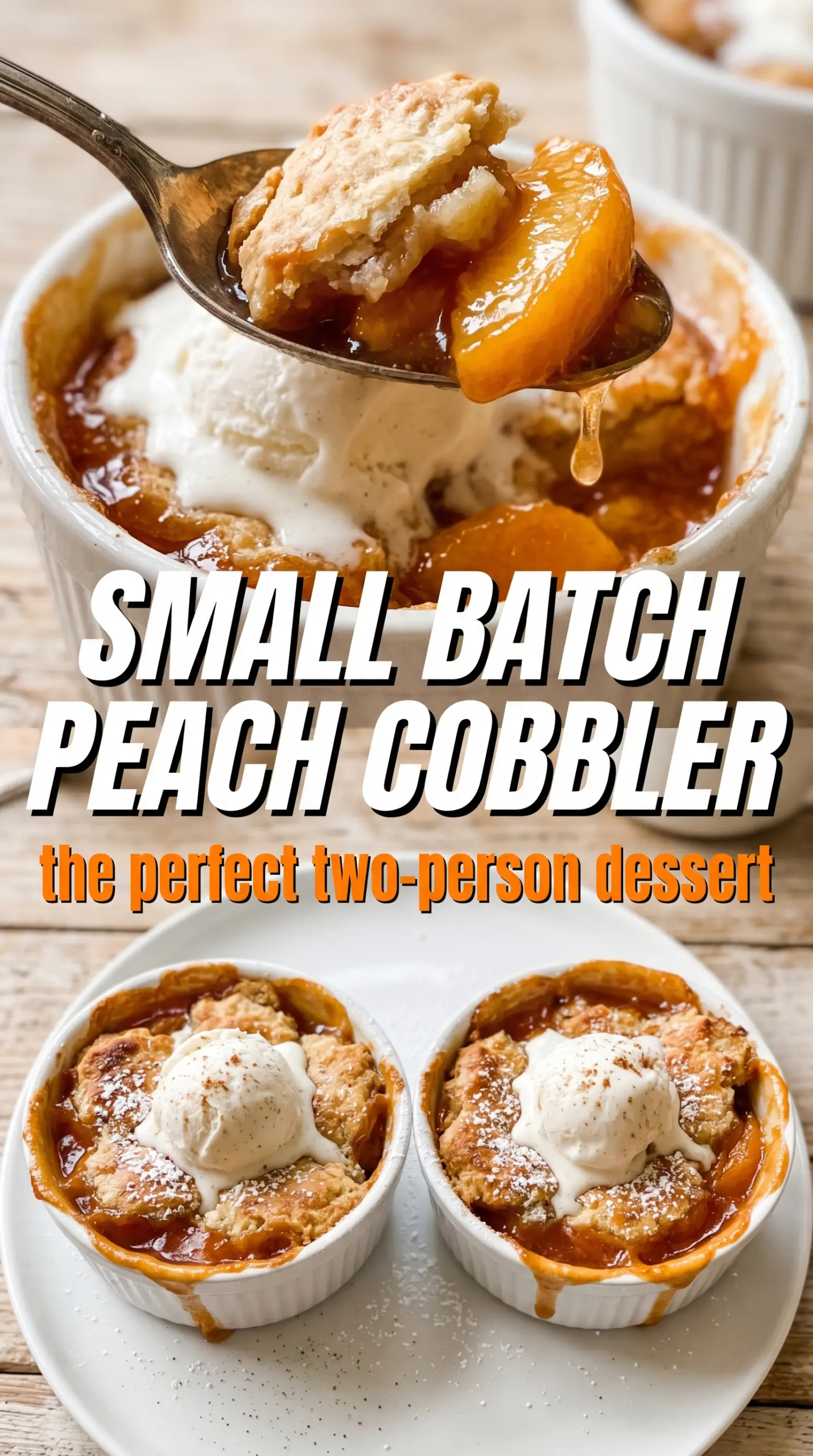
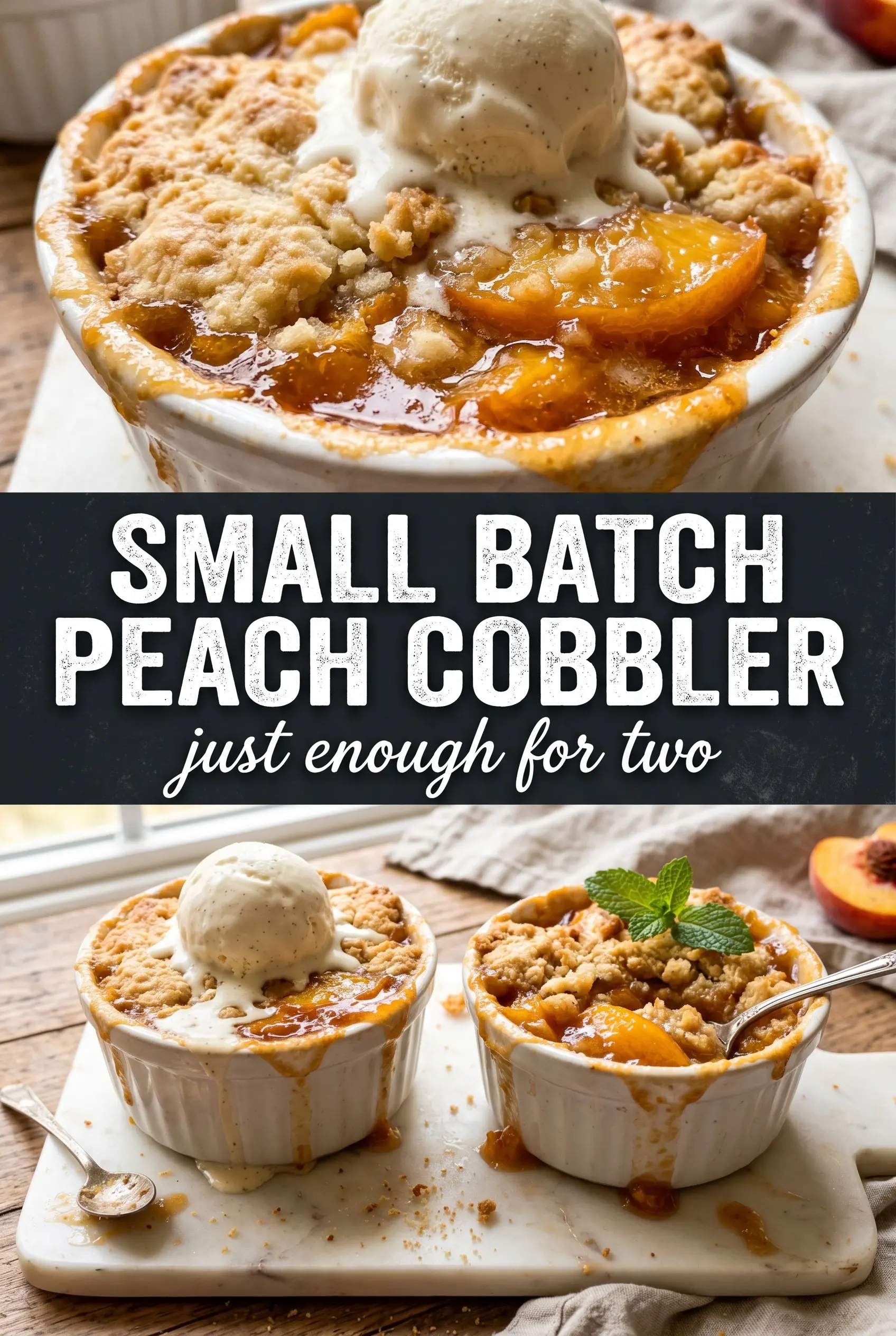
Golden, bubbling peach cobbler in two ramekins is the kind of dessert that disappears before it has a chance to cool. The crust bakes up tender on the bottom and deeply golden on top, while the peaches underneath turn jammy and syrupy without getting mushy. It tastes like the full-size version everyone remembers, just without a pan full of leftovers waiting on the counter.
The key here is keeping the layers separate. The butter melts in the ramekins first, then the batter goes in next, and the peaches are spooned on top without stirring. That little bit of restraint is what gives you the classic cobbler effect: a buttery crust rising up through the fruit as it bakes. Fresh peaches work best because they hold their shape and give off just enough juice to make the filling glossy, not watery.
Below, I’ve included the small technique choices that matter most, plus a few ways to adapt this for what you have on hand. If you’ve ever ended up with a soggy cobbler or a topping that baked up dense, this version keeps both problems in check.
The peaches stayed juicy and the topping baked up crisp around the edges but soft underneath, which is exactly what I wanted. I used two ramekins and they were the perfect size for dessert with ice cream.
Love the bubbling peaches and buttery topping? Save this small batch peach cobbler for the nights when you want a warm dessert for two without a full pan of leftovers.
The One Thing That Keeps This Cobbler From Turning Watery
Peach cobbler goes wrong when the fruit releases too much liquid before the topping has a chance to set. In a small batch, that matters even more because there isn’t much space for excess juice to evaporate. Tossing the peaches with just a tablespoon of sugar pulls out a little moisture, but not enough to flood the ramekins.
The other thing that matters is resisting the urge to stir after the batter goes in. The butter and batter need to stay layered so the crust can rise around the peaches instead of dissolving into them. If you mix everything together, you lose that signature cobbler texture and end up with something closer to cake with fruit folded through it.
- Fresh peaches — Use ripe peaches that still feel firm enough to slice cleanly. Overripe fruit breaks down fast and gives you a loose filling.
- Lemon juice — This keeps the fruit tasting bright and keeps the filling from reading flat. Bottled lemon juice will work in a pinch, but fresh gives a cleaner finish.
- Unsalted butter — The butter melts in the ramekins and seasons the crust from the bottom up. Salted butter is fine if that’s what you have; just keep the added salt in the batter modest.
- Whole milk — Whole milk gives the batter enough richness to bake up tender. Lower-fat milk works, but the topping won’t be quite as soft.
How to Build the Ramekins So the Crust Bakes Up Right
The image block is included here before the ingredient notes as requested.
- Peaches — Peel and slice them evenly so they soften at the same rate. Thick chunks stay firmer; thin slices almost melt into the juices.
- Granulated sugar — Dividing the sugar keeps the fruit sweet enough without making the batter overly sweet. The small amount in the fruit also helps draw out just enough syrup for that glossy cobbler filling.
- Cinnamon — A little goes a long way here. It gives the peaches warmth without making the dessert taste like spice cake.
- Flour, baking powder, and milk — This batter is intentionally simple. Baking powder gives the lift, flour gives structure, and milk keeps the crumb tender instead of dry and bready.
The 35 Minutes That Matter Most
Melting the Butter in the Ramekins
Divide the butter between the two ramekins and put them in the oven just long enough for the butter to melt completely. You want a glossy pool, not browned butter. If the butter starts to brown before the batter goes in, pull the ramekins out immediately and keep moving so the crust doesn’t catch on the edges.
Mixing the Batter Without Overworking It
Whisk the flour, remaining sugar, baking powder, salt, and milk just until the dry streaks disappear. A few small lumps are fine and actually better than a smooth, overmixed batter. If you beat it until it looks perfectly even, the topping bakes up tighter and loses that soft, cakey lift.
Layering the Fruit on Top
Pour the batter evenly over the melted butter, then spoon the peaches and their juices over the top without stirring. The batter will look thin and the fruit will look like it’s sitting on top in the wrong place. That’s exactly right. As it bakes, the batter rises around the fruit and forms the cobbler crust underneath it.
Baking Until the Edges Bubble
Bake until the top is deep golden and the peach juices are bubbling around the edges of the ramekins. If the top looks pale, it’s not done enough to hold its structure. Serve it right away while the contrast between the crisp top and the molten fruit underneath is still at its best.
Three Small Changes That Still Give You Real Cobbler
Make It Dairy-Free
Use a neutral plant-based butter and unsweetened oat milk or almond milk. The crust will still rise and brown, though oat milk gives a softer, richer result than almond milk.
Use Canned or Frozen Peaches
Drain canned peaches well or thaw frozen peaches first and pat them dry. Extra liquid is the main thing that can throw off a small cobbler, so the drier the fruit starts, the better the topping bakes.
Add a Little Nutmeg or Vanilla
A tiny pinch of nutmeg or a splash of vanilla in the batter changes the aroma without taking over. Keep it subtle, since the peaches should still be the main event.
Storage and Reheating
- Refrigerator: Store covered for up to 3 days. The topping softens as it sits, but the flavor holds up well.
- Freezer: It freezes, but the crust won’t stay as nice after thawing. For the best texture, bake it fresh.
- Reheating: Warm in a 325F oven until the filling is hot and the top has firmed back up, about 10 to 15 minutes. The microwave will make the crust soggy fast.
Answers to the Questions Worth Asking
Small Batch Peach Cobbler
Ingredients
Equipment
Method
- Preheat the oven to 350F.
- Toss sliced fresh peaches with 1 tablespoon granulated sugar, cinnamon, and lemon juice until the peaches look glossy.
- Divide the unsalted butter between two 6-oz ramekins and melt in the oven until melted and lightly foaming at the edges.
- Whisk all-purpose flour, the remaining 2 tablespoons granulated sugar, baking powder, salt, and whole milk until just combined; the batter should look thick and lumpy.
- Pour the batter evenly over the melted butter in each ramekin and do not stir so a buttery layer remains at the bottom.
- Spoon the peaches and their juices over the batter in each ramekin and do not stir so peaches sink slightly as it bakes.
- Bake for 30-35 minutes at 350F until the tops are golden and the filling is bubbling around the edges.
- Serve immediately with vanilla ice cream so the ice cream melts slightly over the warm cobbler.