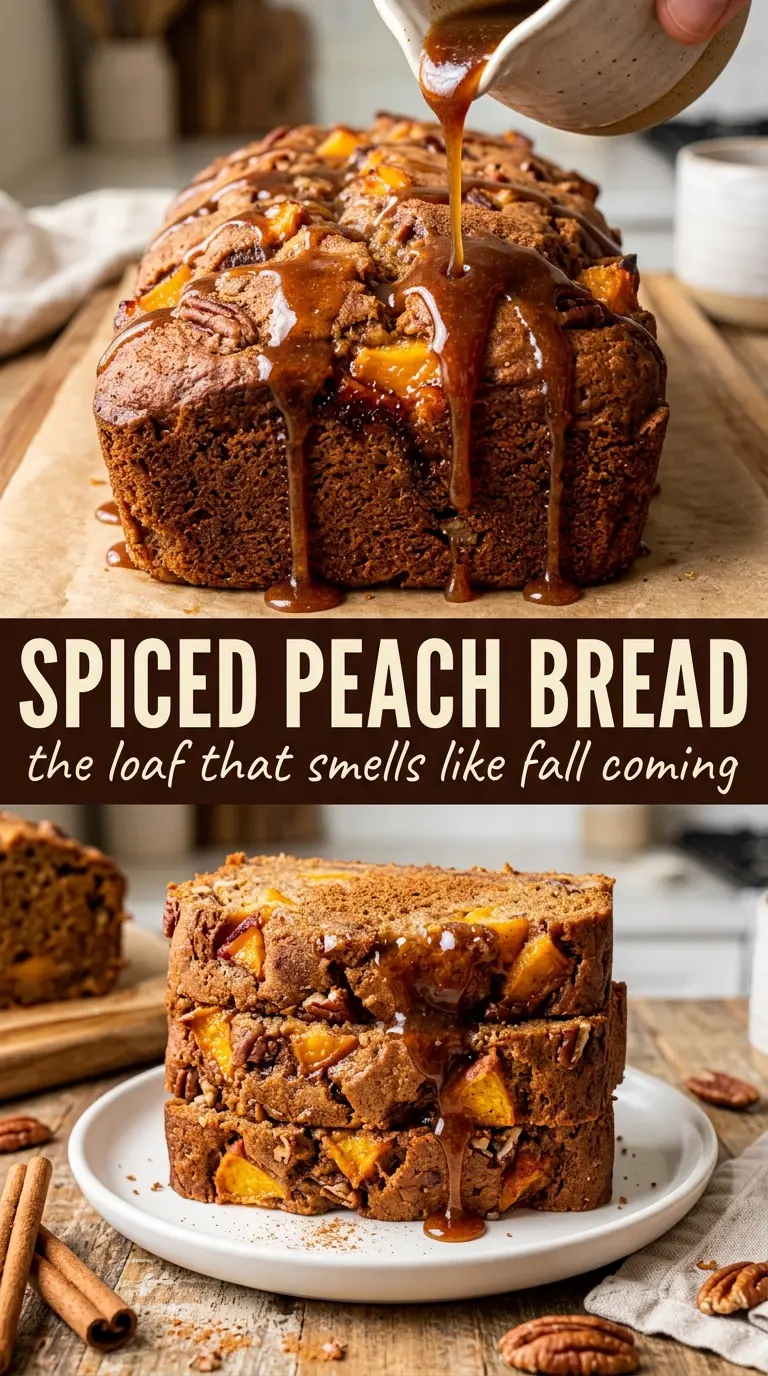
Spiced peach bread bakes up with a tender crumb, a cracked amber top, and pockets of juicy fruit that keep every slice from feeling heavy. The ginger, cardamom, cinnamon, and cloves don’t overpower the peaches; they wrap around them and make the loaf taste warmer and more fragrant than a plain peach quick bread. A slice on its own works for breakfast, but it’s also the kind of loaf that gets cut into “just one more piece” territory by the end of the afternoon.
What makes this version work is the balance between moisture and structure. Yogurt keeps the crumb soft without making it gummy, brown sugar adds a deeper note than white sugar, and the oil stays liquid at room temperature so the loaf doesn’t dry out by the second day. The peaches go in diced, not mashed, so you get clear fruit pieces instead of a wet batter that collapses in the center.
Below, I’ll walk you through the spice blend that gives this loaf its chai-like warmth, the mixing order that keeps the crumb tender, and a few smart swaps if your peaches are extra juicy or you want to bake this one dairy-free.
The loaf came out with a perfect crackly top and the crumb stayed soft even after sitting overnight. The peaches baked into little juicy pockets, and the cardamom made it taste much more special than a regular quick bread.
Save this spiced peach bread for the days when you want a soft, fragrant loaf with juicy peach pieces and a chai-warm crumb.
The Secret to Keeping Peach Bread Tender Instead of Dense
Quick breads go wrong when the batter gets overmixed or the fruit turns the loaf into a wet middle with a pale, underbaked crown. This recipe avoids both problems by keeping the batter loose but controlled. The dry ingredients are fully whisked first so the spices disperse evenly, then the wet mixture goes in just until the flour disappears. Once the peaches are folded in, the batter should look thick and slightly lumpy, not smooth.
The other thing that matters here is the peach size. Small, even dice distribute better than big chunks, which tend to sink and create uneven pockets. If your peaches are very ripe and extra juicy, tossing them lightly with a spoonful of flour from the measured amount helps keep the crumb from turning soggy around the fruit.
- Brown sugar — It gives the loaf a deeper, almost caramel note that suits the spices. White sugar will work in a pinch, but the flavor becomes flatter.
- Plain yogurt — This adds moisture and a slight tang that keeps the bread from tasting one-note. Sour cream can replace it one-for-one if that’s what you have.
- Vegetable oil — Oil keeps the crumb soft for days. Melted butter can be used, but the texture will be a little more cake-like and less plush.
- Fresh peaches — Fresh fruit is worth using here because it bakes into bright, juicy pieces instead of dissolving into the batter. If peaches are out of season, thawed frozen peaches can work if you drain them well and blot them dry.
What Each Ingredient Is Actually Doing in This Peach Recipe
- Peaches (the star ingredient) — Ripe peaches are essential. Quality impacts final dish.
- Sugar (the sweetness) — Enhances peach flavor without overpowering. Adjust based on ripeness.
- Lemon juice (the brightness) — Brings out peach flavor and prevents cloying. Essential, not optional.
- Butter or oil (the richness) — Carries flavors and creates satisfying texture. Don’t skip.
- Spices (cinnamon, ginger, or nutmeg) — Warm up peach flavor without overwhelming. Use in balance.
- Texture element (nuts, crumble, or crispy topping) — Prevents monolithic texture. Add before serving.
- Optional thickener (cornstarch or flour) — Creates right consistency. Essential for thick fillings.
- Finishing touch (fresh herbs, glaze, or garnish) — Adds aroma and visual appeal. Keeps fresh.
Building the Batter So the Loaf Stays Light
Whisking the Dry Mix
Start by whisking the flour, baking soda, baking powder, salt, and spices in a large bowl until the color looks even throughout. That step matters because cinnamon and cardamom can clump, and a clump of spice gives you one bitter bite instead of a balanced loaf. The flour also needs that even distribution so the bread rises uniformly instead of doming hard in one spot.
Mixing the Wet Ingredients
Beat the eggs, brown sugar, oil, yogurt, and vanilla until the mixture looks smooth and glossy. The brown sugar should be mostly dissolved before it meets the flour, or you’ll get grainy streaks in the finished loaf. If the mixture looks broken at first, keep stirring; the yogurt and oil come together once the eggs are fully incorporated.
Combining Without Beating Air Out
Stir the wet ingredients into the dry just until the flour disappears, then stop. A few streaks are better than a batter that’s been worked into submission, because overmixing builds gluten and tightens the crumb. Fold in the peaches with a few gentle turns so they stay intact and don’t bleed too much juice into the batter.
Baking Until the Center Sets
Scrape the batter into a greased 9×5 loaf pan and bake until the top is deeply golden, cracked in the center, and a toothpick comes out clean from the middle. This usually takes 60 to 65 minutes, but the biggest clue is the smell: the loaf will go from smelling like raw flour and spice to smelling toasted and jammy. If the top browns early, tent it loosely with foil so the center can finish without overbaking the crust.
Three Smart Ways to Adapt This Peach Loaf
Dairy-Free Version
Swap the plain yogurt for an unsweetened dairy-free yogurt with a similar thickness. Coconut yogurt works if you like a faint coconut note, while almond or oat yogurt keeps the flavor more neutral. The loaf still bakes up tender because the moisture and acidity are what matter most here.
Using Frozen Peaches
Thaw the peaches first, then drain them well and pat them dry before folding them in. Frozen fruit releases more water than fresh, and skipping the drying step can leave the center gummy. The flavor still works beautifully, especially when the spice blend is doing this much heavy lifting.
Gluten-Free Swap
Use a 1:1 gluten-free baking flour that includes xanthan gum. The texture will be a little more delicate and less springy, but it still slices cleanly if you let it cool fully before cutting. Quick breads made with gluten-free flour usually need that full rest so the crumb can set.
Storing Leftover Slices
Wrap the cooled loaf tightly or store slices in an airtight container. The bread stays soft for 3 days at room temperature and about 5 days in the refrigerator, though refrigeration can make the crumb feel a little firmer. Freeze individual slices with parchment between them, then thaw at room temperature or warm gently in a toaster oven.
Answers to the Questions Worth Asking

Spiced Peach Bread
Ingredients
Equipment
Method
- Preheat the oven to 350F and grease a 9x5 loaf pan.
- Whisk all-purpose flour, baking soda, baking powder, cinnamon, ginger, cardamom, cloves, nutmeg, and salt in a large bowl until evenly combined.
- Beat eggs, brown sugar, vegetable oil, plain yogurt, and vanilla extract in a separate bowl until smooth.
- Stir the wet mixture into the dry mixture until just combined; do not overmix.
- Fold in the diced fresh peaches.
- Pour the batter into the prepared loaf pan and bake for 60-65 minutes, until a toothpick comes out clean.
- Cool in the pan for 15 minutes before turning out to prevent the loaf from breaking.