
Golden-seared chicken breasts tucked into a velvety garlic Parmesan sauce earn a permanent spot in the weeknight rotation fast. The chicken stays juicy because it’s seared first, then finished gently in the sauce instead of being simmered to death. What you get is a skillet dinner with a glossy, spoon-coating sauce that tastes rich without turning heavy or gluey.
The trick here is building the sauce in the same pan you used for the chicken. Those browned bits are loaded with flavor, and a quick deglaze pulls them right back into the sauce instead of leaving them stuck to the skillet. Freshly grated Parmesan matters too; pre-shredded cheese often melts into a gritty sauce because of the anti-caking starches.
Below, I’ve included the timing that keeps the chicken tender, the one swap that works if you don’t want to use wine, and a few variations for making this fit what you already have in the kitchen.
The sauce thickened up perfectly and clung to the chicken without breaking. I used the chicken broth instead of wine and it still tasted like something from a restaurant.
Save this creamy garlic Parmesan chicken for the nights when you want a glossy skillet sauce and tender chicken without a long ingredient list.
The Seared Chicken Is What Keeps the Sauce from Turning Flat
A lot of creamy chicken skillets go wrong before the sauce even starts. If the chicken never gets a good sear, you miss the browned bits that give the sauce depth, and the whole dish tastes soft in a one-note way. The goal is a deep golden crust on the outside and just-cooked chicken in the center, not pale meat simmering away until it gets stringy.
Use medium-high heat for the sear, then pull the chicken out once it hits 165°F. That rest matters because the chicken finishes carrying over while the sauce comes together, and it also keeps you from overcooking it when you return it to the skillet at the end. If your pan looks dry before the garlic goes in, that’s normal; the butter goes in next and loosens the browned fond just enough to build the sauce.
What Each Ingredient Is Actually Doing in This Dish
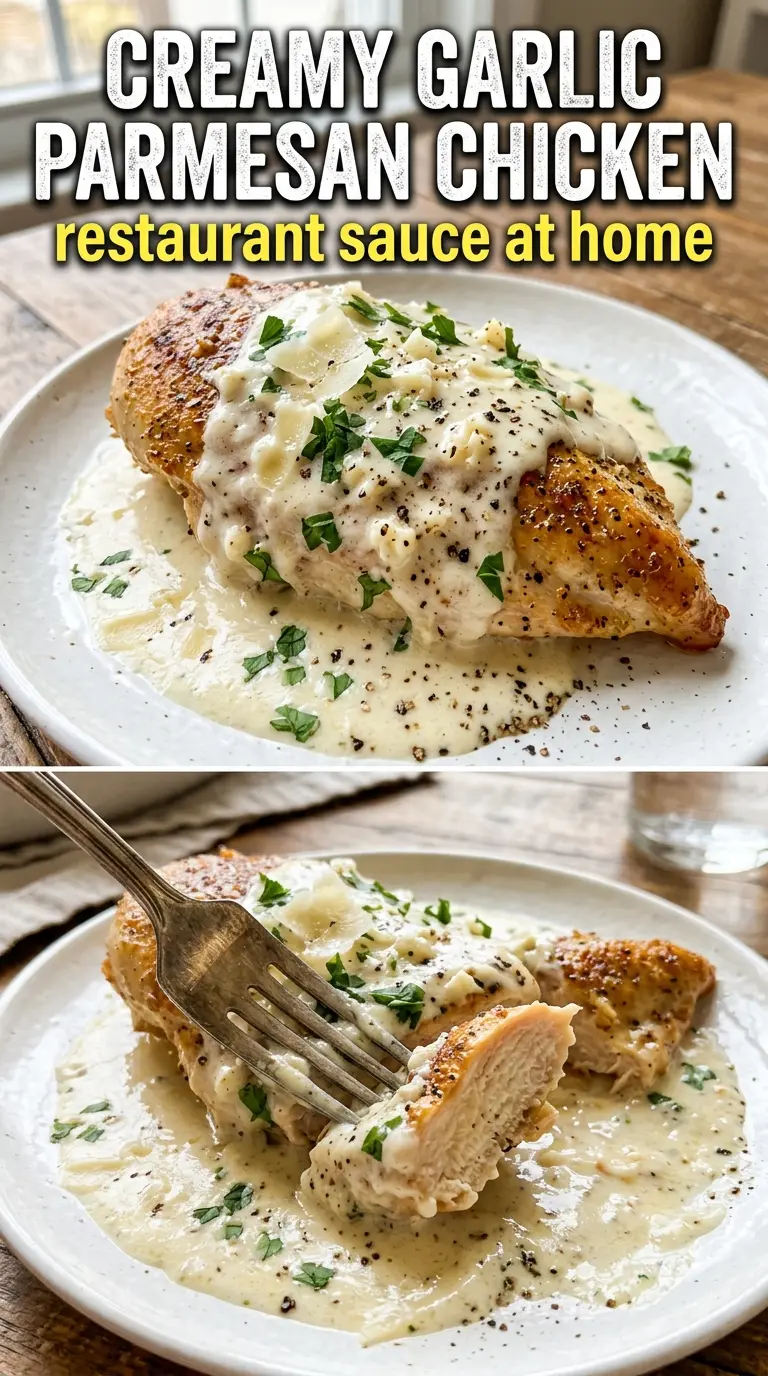
- Chicken breasts — Boneless, skinless breasts give you a lean base that cooks quickly and slices cleanly for serving. If yours are thick in the center, pound them lightly so they cook at the same rate from edge to edge. That small step keeps the outside from drying out before the middle is done.
- Fresh garlic — This is the flavor backbone of the sauce, and it needs only a minute in the butter before the liquid goes in. Minced garlic cooks fast; if it turns brown, it gets bitter and takes the sauce with it. Jarred garlic works in a pinch, but it won’t give you the same sharp, fresh finish.
- Heavy cream — This is what gives you the lush, glossy texture that clings to the chicken. Half-and-half can work, but the sauce will be thinner and a little more fragile. Keep the heat low once the cream goes in so it thickens gently instead of separating.
- Freshly grated Parmesan — This is one place where quality matters. Pre-grated cheese often melts grainy, while freshly grated Parmesan disappears into the sauce and helps it thicken naturally. Add it off a rolling boil and stir until smooth so it doesn’t clump.
- White wine or chicken broth — The deglazing liquid pulls the browned bits off the pan and keeps the sauce from tasting heavy. Wine adds a little brightness; broth is the cleaner family-friendly swap and still works well. If you use broth, keep the seasoning at the end until you taste the finished sauce.
Building the Sauce in the Same Pan Without Breaking It
Sear First, Sauce Second
Season the chicken generously on both sides, then sear it in olive oil until the outside is deep golden and the meat releases easily from the skillet. Don’t move it too soon or you’ll tear the crust. When it’s cooked through, transfer it to a plate and leave the browned bits in the pan; that’s the start of the sauce.
Wake Up the Garlic and Fond
Add the butter, then the garlic, and stir for about a minute until it smells fragrant and sweet. Pour in the wine or broth to deglaze and scrape the bottom of the pan with a wooden spoon so the fond dissolves into the liquid. If the garlic starts to darken before the liquid goes in, pull the pan off the heat for a few seconds so it doesn’t turn bitter.
Finish the Cream Sauce Slowly
Stir in the cream, broth, Parmesan, and Italian seasoning, then let the sauce simmer until it thickens enough to coat the back of a spoon. Keep the heat at a gentle simmer, not a hard boil. High heat can make the dairy separate and leave you with a grainy sauce instead of a smooth one.
Return the Chicken for the Last Few Minutes
Slide the chicken back into the skillet and spoon sauce over the top. Let it warm through for a few minutes so the flavors settle together, then finish with thyme and parsley. If the sauce looks too thick, loosen it with a splash of broth; if it looks thin, give it another minute or two at a gentle simmer.
Three Ways to Make This Skillet Chicken Work for Your Kitchen
Dairy-Free Version That Still Tastes Rich
Use full-fat canned coconut milk in place of the cream and a dairy-free Parmesan alternative, then simmer a little longer to get the sauce to thicken. The flavor shifts slightly, but the garlic and seared chicken still carry the dish. This version works best when you keep the seasoning bold and finish with extra herbs.
No Wine, No Problem
Swap the wine for chicken broth and add an extra squeeze of lemon at the end if you want a little brightness back. You lose the slight acidity wine gives the sauce, but the broth still lifts the pan juices and keeps the skillet from tasting heavy. This is the easiest version to make any night of the week.
For Thinner Chicken Cutlets
If you pound the chicken breasts into cutlets, cut the sear time down to about 3 to 4 minutes per side. They cook faster and pick up more sauce on each bite, but they also dry out faster if you walk away from the pan. Watch for a firm spring when pressed, then pull them as soon as they hit temperature.
Storage and Reheating
- Refrigerator: Store leftovers in an airtight container for up to 3 days. The sauce thickens as it chills, so it will look denser when cold.
- Freezer: It’s not my first choice for freezing because cream sauces can separate when thawed. If you do freeze it, cool it fully first and reheat gently after thawing in the fridge overnight.
- Reheating: Warm it slowly in a covered skillet over low heat with a splash of broth or cream. High heat is the mistake that breaks the sauce and turns the chicken dry.
Answers to the Questions Worth Asking

Creamy Garlic Parmesan Chicken
Ingredients
Equipment
Method
- Season the chicken breasts generously on both sides with salt, pepper, garlic powder, and smoked paprika. Let them sit while the skillet heats for more even seasoning.
- Heat olive oil in a large cast iron skillet over medium-high heat. Sear the chicken for 5-6 minutes per side until golden and internal temperature reaches 165°F, then remove the chicken to a plate.
- Reduce heat to medium and add butter and minced garlic to the same pan. Cook for 1 minute until fragrant.
- Pour in the dry white wine (or chicken broth) to deglaze the pan and loosen the browned bits. Cook for 2 minutes until slightly reduced.
- Stir in the heavy cream, chicken broth, Parmesan, and Italian seasoning. Simmer for 4-5 minutes until the sauce is thick and glossy.
- Return the chicken breasts to the pan. Spoon the sauce over each breast to coat.
- Garnish with fresh thyme and parsley and serve immediately. Spoon any extra glossy sauce from the skillet over the top at the table.