
Baked pork chops can be dry, bland, and forgettable when they go into the oven naked and overcook by even a couple of minutes. These come out with a seasoned, golden top and a juicy center that stays tender after the rest, which is exactly why they end up back on the dinner rotation. Bone-in chops help, but the real win here is the quick dry-brine-style seasoning and the short, hot bake.
The trick is treating moisture like the enemy before they hit the oven. Patting the chops dry first lets the oil and spices cling to the meat instead of sliding around on a wet surface, and baking at 400°F gives you enough heat to build color without pushing the interior past 145°F. That target matters. Pork doesn’t need to be cooked into toughness to be safe, and a thermometer takes the guesswork out of it.
Below, I’ve laid out the small steps that keep pork chops juicy instead of chalky, plus a few swaps if all you have are boneless chops or a different seasoning blend. If you’ve had bad luck with pork in the oven before, this version fixes the usual problems fast.
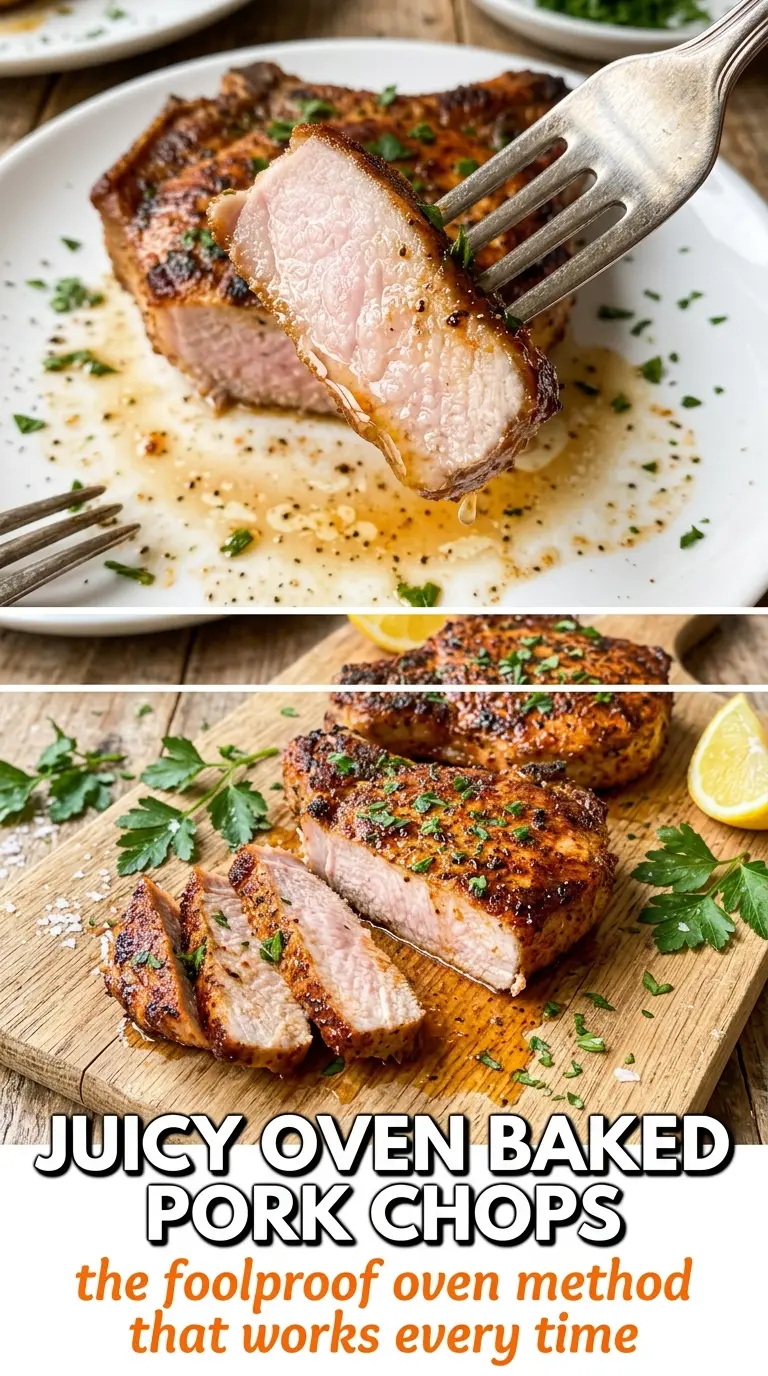
The chops browned beautifully on top and stayed juicy all the way through. I used my thermometer and pulled them right at 145, then let them rest, and the juices stayed in the meat instead of running all over the plate.
Save these juicy oven baked pork chops for a fast dinner with a crisp spiced crust and a tender, blush-pink center.
The Secret to Juicy Pork Chops Is Stopping the Oven Before It Thinks About Overcooking
The biggest mistake with baked pork chops is chasing color for too long. By the time the top looks deeply browned, the center is often already headed past the sweet spot and drying out. These chops only need enough oven time to reach 145°F, and the carryover heat during the rest finishes them gently.
Bone-in chops give you a little insurance because the bone slows heat movement and helps the meat cook more evenly. Thickness matters just as much. Thin chops cook fast enough to go from fine to dry in a minute or two, while 1-inch chops give you a little buffer and a better chance at a juicy center.
- Dry surface — Moisture on the outside steams the pork instead of helping it brown, which is why the paper towel step matters more than most people think.
- Hot oven — 400°F gives the seasoning enough heat to toast without forcing the meat to linger in the danger zone of overcooking.
- Thermometer — This isn’t the place to guess. Pulling at 145°F is the difference between juicy and dry.
What the Seasoning Is Doing Beyond Just Tasting Good
The seasoning mix here isn’t complicated, but each piece earns its spot. Olive oil helps the spices stick and encourages browning. Garlic powder, onion powder, smoked paprika, and thyme build a savory crust without burning the way fresh garlic can in a hot oven.
- Bone-in pork chops — The bone helps the chops cook a little more evenly and keeps the texture from turning stringy. If you only have boneless chops, use the same method but start checking a few minutes early.
- Smoked paprika — This brings color and a gentle smoky depth that makes the chops taste like you worked harder than you did. Regular paprika works too, but the flavor will be milder.
- Garlic powder and onion powder — These give the crust a round, savory base. Fresh garlic isn’t a great swap here because it can scorch before the pork is done.
- Olive oil — You don’t need much, just enough to coat the meat lightly and help the spices bloom in the oven.
- Lemon wedges — The squeeze of acid at the end wakes up the seasoning and cuts through the richness of the pork. Don’t add it before baking or the flavor gets dull.
The Short Bake That Keeps These Chops from Turning Dry
Drying and seasoning the meat
Pat the pork chops completely dry first, then brush both sides with olive oil and season them generously. The surface should look evenly coated, not paste-like or wet. If the chops are still damp, the seasoning slips around and you lose the crust that makes this recipe work.
Roasting to temperature, not to a clock
Lay the chops on a foil-lined baking sheet and bake at 400°F for 15 to 20 minutes, depending on thickness. Start checking early if the chops are on the thinner side, and use an instant-read thermometer in the thickest part. Pull them when they hit 145°F, even if the center still looks slightly pink; that’s the point where they stay juicy after resting.
Letting the juices settle back in
Rest the chops for 5 minutes before serving. This is the part people skip, then wonder why the plate fills with juice the second they cut in. During the rest, the meat relaxes and the juices stay where they belong instead of flooding out onto the cutting board.
How to Adapt These Pork Chops Without Losing the Juicy Center
Boneless Chops Work, but Check Them Early
Boneless pork chops cook faster and dry out more easily, so start checking around the 12 to 14 minute mark. You get the same seasoning and crust, but you lose the bone’s protection, which means the thermometer matters even more.
Make It Gluten-Free Without Changing Anything
This recipe is naturally gluten-free as written, so there isn’t a special swap to worry about. Just check your spice labels if you use pre-mixed seasonings, since some blends sneak in fillers or anti-caking agents.
Change the Spice Blend for a Different Mood
You can swap the thyme and smoked paprika for rosemary, Italian seasoning, or a little Cajun blend. The method stays the same, but the finished chops will lean more herbal, more savory, or more peppery depending on what you choose.
Storage and Reheating
- Refrigerator: Store in an airtight container for up to 3 days. The crust softens a bit, but the meat stays tender if it was cooked to temperature.
- Freezer: These freeze well for up to 2 months, tightly wrapped and sealed. Freeze without the lemon garnish, then thaw in the fridge before reheating.
- Reheating: Warm covered in a 300°F oven until just heated through, or use a skillet over low heat with a splash of broth. High heat dries pork out fast, which is the most common mistake people make when reheating it.
Answers to the Questions Worth Asking

Juicy Oven Baked Pork Chops
Ingredients
Equipment
Method
- Preheat the oven to 400°F and line a baking sheet with foil to prevent sticking and help browning.
- Pat the bone-in pork chops completely dry with paper towels, since moisture on the surface makes the crust less golden.
- Brush both sides of the pork chops with olive oil.
- Season generously on both sides with garlic powder, smoked paprika, onion powder, dried thyme, salt, and black pepper.
- Place the chops on the prepared baking sheet, spacing them out so they roast evenly.
- Bake for 15–20 minutes until the internal temperature reaches 145°F, watching for a golden-spiced top crust.
- Rest the pork chops for 5 minutes before serving to keep juices from running out when you slice.
- Garnish with fresh parsley and serve with lemon wedges for brightness right before eating.