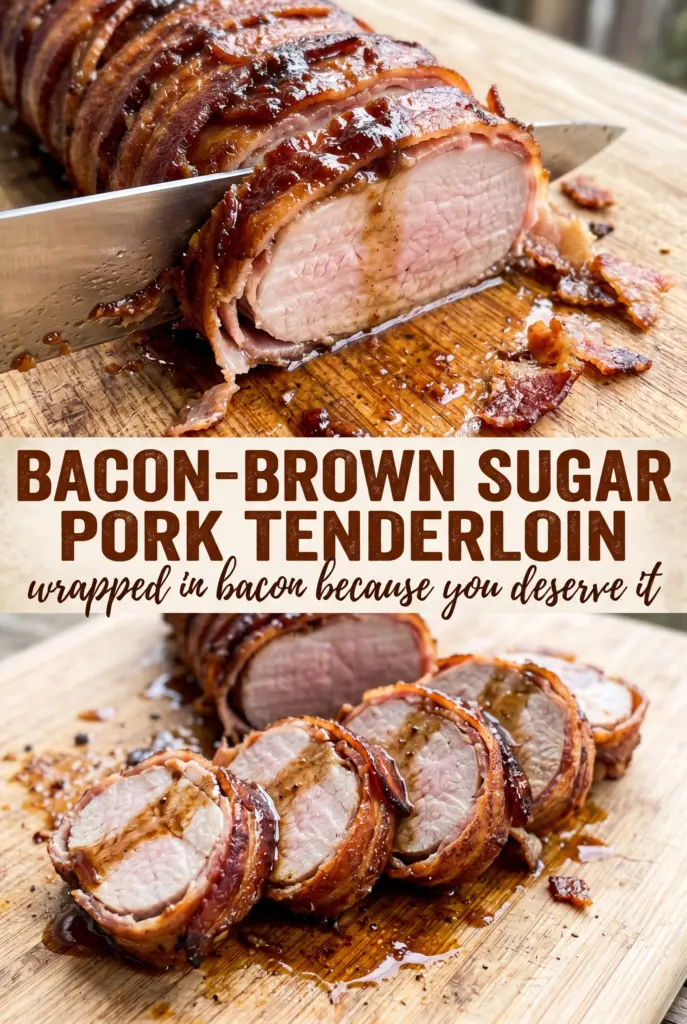
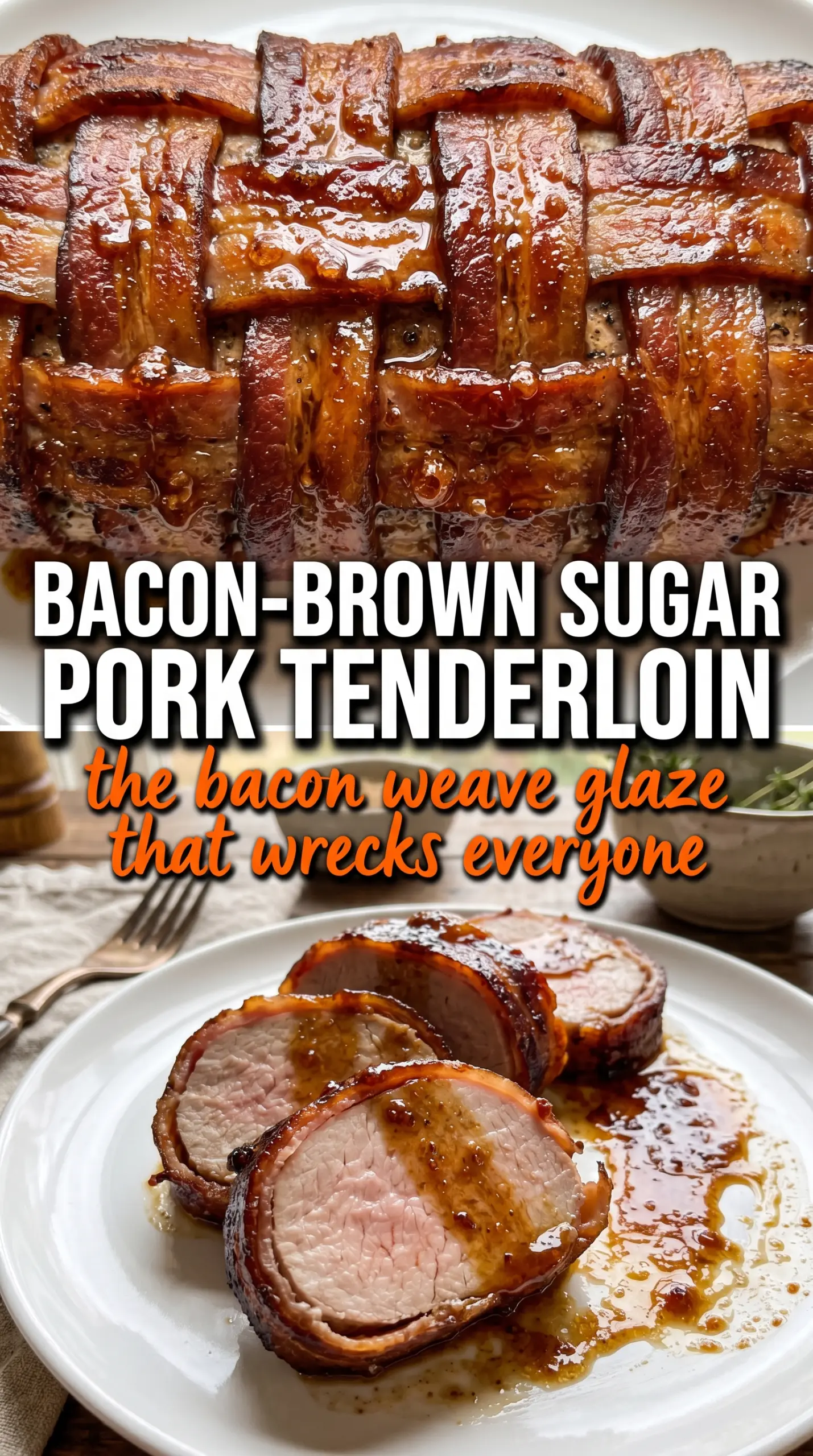
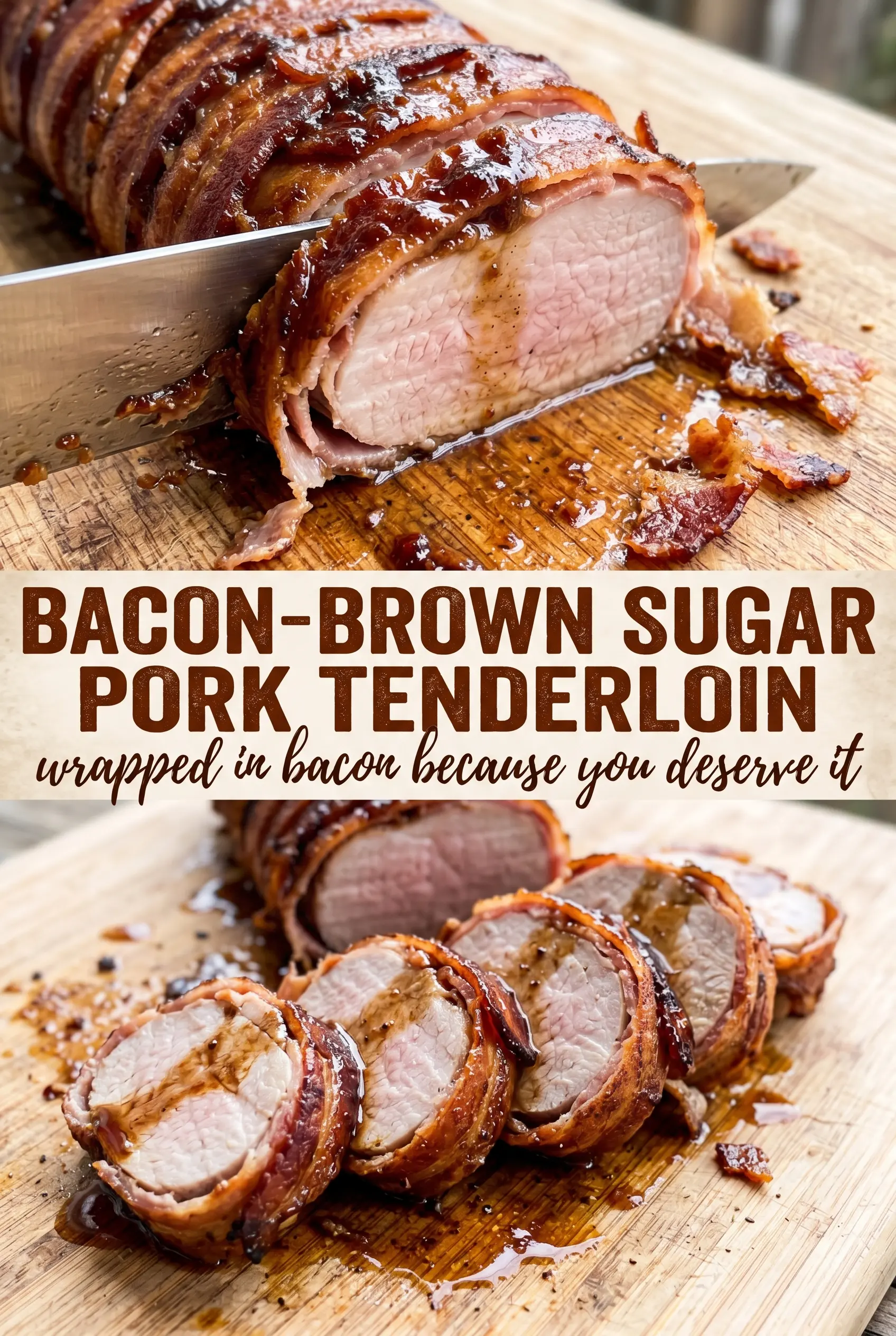
Bacon-wrapped pork tenderloin with a brown sugar glaze hits that sweet spot between weeknight practical and company-worthy. The bacon turns crisp and savory on the outside while the pork stays juicy and pink in the center, and the glaze bakes into a glossy shell instead of sliding off into the pan. You get a roast that slices cleanly, looks impressive on the table, and still comes together with a short ingredient list.
The trick is in the order. The glaze goes on before and after the bacon, but not so heavily that it burns before the pork reaches temperature. Dijon gives the brown sugar something sharp to balance against, soy sauce deepens the saltiness, and a little smoked paprika makes the bacon taste even more like itself. I also like brushing the glaze on the bacon rather than pouring it, because that helps the sugar caramelize right where you want it.
Below, I’ll walk through the part that matters most: how to wrap the tenderloin tightly so the bacon shrinks into a crisp shell instead of curling away. You’ll also find a few smart swaps and the one temperature detail that keeps pork tender instead of dry.
The bacon crisped up all the way around and the brown sugar glaze turned sticky and caramelized without burning. I sliced it after the 5-minute rest and the pork was still juicy in the middle.
Bacon-Brown Sugar Pork Tenderloin is the one to pin for a juicy roast with crispy bacon and a sticky caramelized glaze.
The Bacon Wrap That Stays Put and Crisps Instead of Steaming
Pork tenderloin is lean, which is exactly why bacon works so well here. The bacon brings fat to the party, but it only stays crisp if it’s wrapped snugly and the pork isn’t crowded in the pan. If the strips are loose, they shrink and peel back; if the roast is packed in too tightly, the bacon steams and the glaze turns sticky in the wrong way.
The other thing that matters is heat. Four hundred degrees is high enough to render the bacon and caramelize the sugar, but not so high that the glaze scorches before the pork reaches 145°F. The roast only needs about 25 to 30 minutes, which is another reason tenderloin works here: long enough for the bacon to crisp, short enough to keep the meat tender.
- Pork tenderloin — This cut stays juicy when cooked fast. Don’t swap in pork loin roast and expect the same timing; it’s thicker and needs longer in the oven.
- Bacon — Regular-cut bacon gives the best balance of render and crispness. Thick-cut bacon can work, but it often needs extra time and may leave the pork underdone unless you compensate carefully.
- Brown sugar — This is what gives you that lacquered finish. Dark brown sugar adds a little molasses depth if you have it, but light brown sugar works fine.
- Dijon mustard — It keeps the glaze from tasting flat. Yellow mustard won’t give the same edge, though it can work in a pinch if that’s all you have.
- Soy sauce — A small amount adds salt and color. If you need a gluten-free version, use tamari instead.
- Smoked paprika — This reinforces the bacon’s smokiness and helps the glaze taste more complex. Regular paprika will still work, but the finished roast loses a little depth.
What Each Ingredient Is Actually Doing in This Pork Dish
- Pork (cut properly for the method) — Pat dry so it browns instead of steams. Even thickness ensures uniform cooking.
- Oil or butter (the browning medium) — High-heat oil essential for proper searing. Creates pan flavor.
- Seasonings (salt, pepper, spices) — Build flavor boldly. Pork carries the entire profile.
- Aromatics (garlic, onion, ginger) — Cook with fat to bloom flavors. Become foundation of dish.
- Sauce or liquid (the moisture keeper) — Keeps lean pork from drying. Balance richness with acid.
- Vegetables (if using) — Layer by cooking time so everything finishes together. Hard vegetables first.
- Acid (vinegar, wine, citrus) — Brightens sauce and prevents heavy flavor. Add near end.
- Proper doneness (145°F, slightly pink center) — Pork is safe at this temp and stays juicy. Higher temps dry it out.
How to Layer the Glaze So It Caramelizes Without Burning
Seasoning and First Coat
Start by seasoning the tenderloins with salt and pepper so the pork itself tastes seasoned, not just the bacon. Brush on half the glaze before the bacon goes over the top; that first layer clings to the meat and seasons the roast under the wrap. If the glaze is too thick to brush cleanly, stir it until smooth rather than thinning it with extra liquid, which can make it run off in the oven.
Wrapping the Bacon Tightly
Lay the bacon strips so they overlap slightly and cover the pork from end to end. Pull each strip snug as you wrap; that tension helps the bacon shrink into place instead of curling away as it cooks. Secure the ends with toothpicks where needed, especially on the thinner tip of the tenderloin, since that part is most likely to unravel first.
Roasting to the Right Temperature
Set the wrapped tenderloins in a roasting pan with a little space around each one. Brush the remaining glaze over the bacon, then roast until the bacon looks crisp and deeply browned at the edges and the internal temperature hits 145°F at the thickest part. If the bacon is browning faster than the pork is cooking, tent it loosely with foil for the last few minutes; don’t cover it tightly or you’ll lose the crisp finish.
The Rest That Keeps It Juicy
Let the pork rest for 5 minutes before slicing. That short pause keeps the juices inside the meat instead of running onto the cutting board. Remove the toothpicks before you slice, then cut into thick rounds so you get both the bacon shell and the pink center in every piece.
How to Adapt This Bacon-Wrapped Roast for Different Tables
Gluten-Free Version
Use tamari instead of soy sauce and check that your bacon is gluten-free. The flavor stays the same, and the glaze still caramelizes properly because the sugar and mustard do the heavy lifting.
No-Dijon Swap
Whole grain mustard gives a similar sharpness with a little texture, while yellow mustard softens the flavor a bit more. If you skip mustard entirely, the glaze tastes sweeter and less balanced, so add a small splash of apple cider vinegar to bring back some bite.
Thicker Bacon, Same Method
Thick-cut bacon is workable, but it needs a few extra minutes and sometimes a quick blast under the broiler to finish crisping. Watch the internal temperature closely so you don’t overcook the pork while waiting for the bacon to catch up.
Make It a Little Less Sweet
Cut the brown sugar back by a tablespoon and add a little extra black pepper or smoked paprika. You’ll still get the caramelized finish, but the glaze leans savory instead of sticky-sweet.
Storage and Reheating
- Refrigerator: Store leftovers in an airtight container for up to 3 days. The bacon softens a little, but the flavor stays good.
- Freezer: Freeze sliced pork tightly wrapped for up to 2 months. The bacon won’t be as crisp after thawing, but the meat freezes well.
- Reheating: Warm slices in a 325°F oven, loosely covered, until heated through. The biggest mistake is microwaving on high, which makes the bacon rubbery and can dry out the pork before the center is warm.
Answers to the Questions Worth Asking
Bacon-Brown Sugar Pork Tenderloin
Ingredients
Equipment
Method
- Preheat the oven to 400°F. Let it fully come up to temperature so the bacon crisps quickly.
- Season the pork tenderloins with salt and pepper. Aim for even coverage all over the surface.
- Mix the brown sugar, Dijon mustard, soy sauce, garlic powder, and smoked paprika until smooth. Brush half of the glaze over the pork so it starts caramelizing while it roasts.
- Wrap each tenderloin tightly in bacon strips, overlapping slightly, and secure the ends with toothpicks. Keep the wrap snug so it forms a continuous crispy shell.
- Place the tenderloins in a roasting pan and brush the remaining glaze over the bacon. Make sure glaze coats the bacon surface for caramelized edges.
- Roast for 25–30 minutes at 400°F until the bacon is crispy and the internal temperature reaches 145°F. Look for deep golden bacon and a glossy, caramelized glaze.
- Rest the tenderloin for 5 minutes. Remove the toothpicks and slice to keep juices from running.