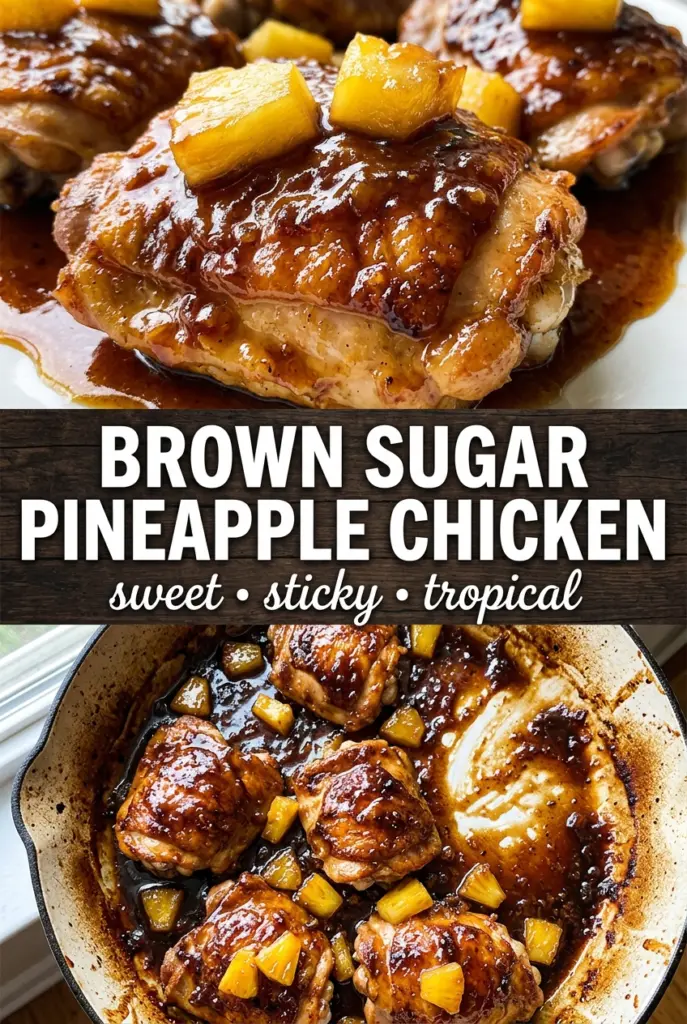
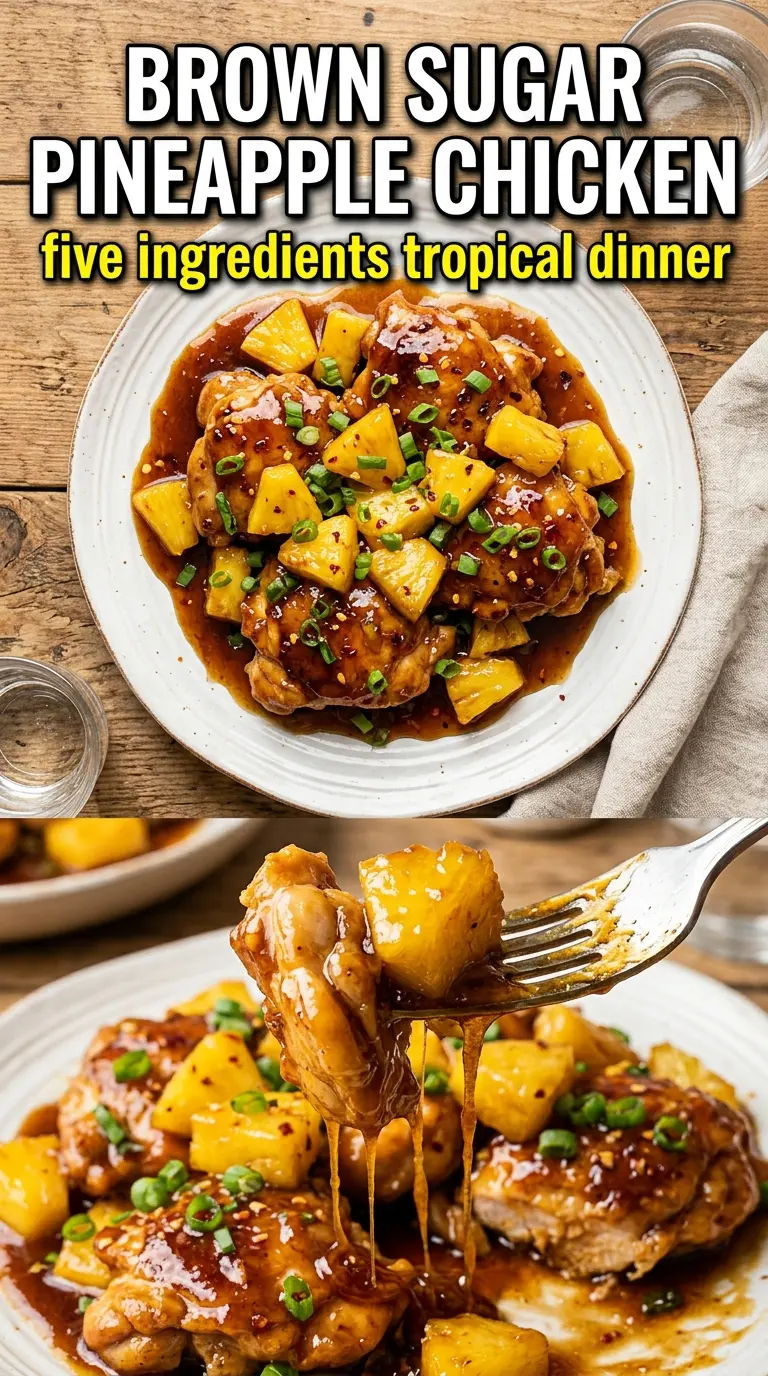
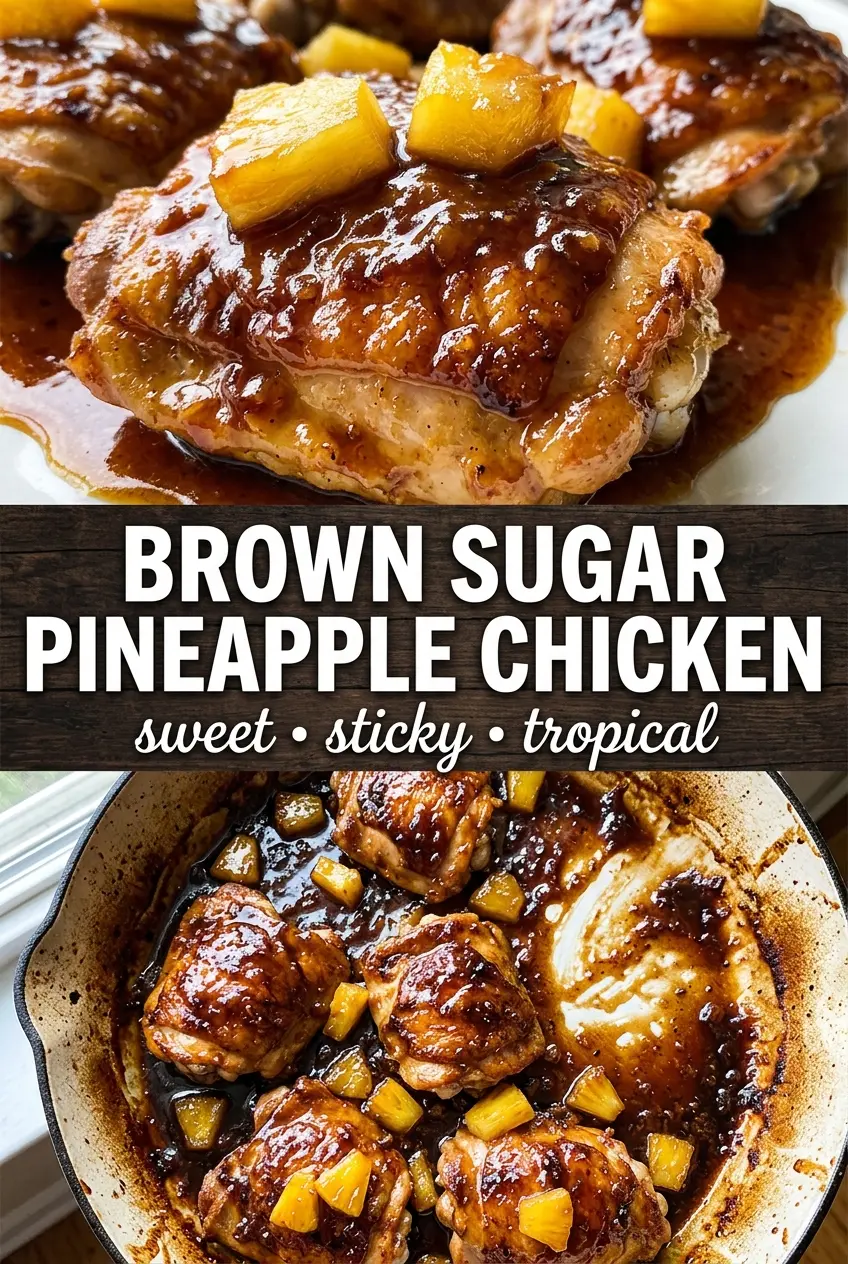
Sticky brown sugar pineapple chicken has the kind of glaze that catches your eye before the first bite: glossy, amber, and clinging to every edge of the chicken. The sauce turns sweet, tangy, and savory in the same pan, with little bursts of pineapple tucked into the glaze so each forkful tastes layered instead of one-note. It’s the sort of skillet dinner that looks polished enough for company but still comes together on a normal weeknight.
What makes this version work is the balance in the sauce and the order you build it. The chicken gets a quick sear first, which gives you browned bits in the pan that deepen the glaze. Then the pineapple juice, brown sugar, soy sauce, ketchup, garlic, and ginger simmer together before the cornstarch slurry goes in, so the sauce thickens cleanly instead of turning pasty. The pineapple chunks go in near the end, which keeps them from dissolving into the sauce.
Below, I’ve included the small details that matter most: how to get the glaze thick without going gummy, which ingredient can be swapped without wrecking the flavor, and how to reheat leftovers without drying out the chicken.
The glaze turned out thick and shiny, and the pineapple chunks stayed intact instead of melting away. I served it over rice and my husband said it tasted like takeout, but better.
Brown Sugar Pineapple Chicken brings a sticky sweet-savory glaze worth saving for nights when you want big flavor from one skillet.
The Trick to a Glossy Glaze Instead of a Thin Pineapple Sauce
The biggest mistake with pineapple chicken is rushing the sauce before the pan has enough flavor in it. If the chicken never gets a good sear, the glaze tastes flat. If the heat is too high when the sugar and cornstarch go in, the sauce can tighten too fast and go sticky in a bad way instead of silky and lacquered.
This recipe works because the sauce starts in the same skillet as the chicken. Those browned bits dissolve into the pineapple juice and soy sauce, which gives the glaze more depth than a sauce mixed in a clean saucepan. The cornstarch slurry needs just a short simmer, long enough to thicken the liquid and coat the back of a spoon, but not so long that the glaze turns dull or gummy.
- Chicken breasts — Boneless, skinless breasts cook quickly and take on the glaze well, but they dry out if you push them past 165°F. If your pieces are thick, pound them to an even thickness so they sear at the same rate.
- Pineapple juice — This is the backbone of the sauce. Fresh or canned both work, but use juice without added sugar if you can, because the brown sugar already brings enough sweetness.
- Brown sugar — Packed brown sugar gives the glaze its deep caramel note and helps it cling. Light or dark both work; dark brown sugar gives a slightly richer finish.
- Soy sauce — This keeps the sauce from tasting like candy. If you need a gluten-free version, use tamari and keep the amount the same.
- Cornstarch slurry — Mix the cornstarch with cold water first so it disperses smoothly. If you dump the powder straight into hot liquid, you’ll get little lumps that never fully dissolve.
- Pineapple chunks — Add them at the end so they stay juicy and distinct. Canned chunks are fine here because they hold their shape and fit the texture of the glaze well.
What Each Ingredient Is Actually Doing in This Chicken
- Chicken (the protein star) — Pat dry so it browns instead of steams. Room temperature cooks more evenly.
- Oil or butter (the browning medium) — High-heat oil is essential. Creates flavor through browning.
- Seasonings (salt, pepper, spices, herbs) — Don’t hold back. Chicken carries the entire flavor profile.
- Aromatics (garlic, ginger, onion) — Cook with fat to bloom flavors. They become the foundation.
- Sauce or liquid (the moisture keeper) — This prevents dryness and adds flavor. Balance richness with acid.
- Acid (lemon, vinegar, wine, or tomato) — This brightens and prevents one-dimensional flavor.
- Optional vegetables — Layer by cooking time so everything finishes together.
- Proper doneness (165°F internal temperature) — Use a thermometer for accuracy. Overcooked is dry.
Getting the Chicken Seared Before the Glaze Goes In
Season the Chicken for a Better Crust
Pat the chicken dry, then season it with salt, pepper, garlic powder, and smoked paprika. Dry chicken browns; damp chicken steams. That thin layer of seasoning also builds the first layer of flavor before the glaze ever touches the pan.
Sear Until the Edges Turn Deep Gold
Heat the olive oil in a large skillet over medium-high heat and lay the chicken in without crowding the pan. You want a steady sizzle, not a furious spatter. Let it cook for 5 to 6 minutes per side until the surface is golden and the center reaches 165°F; if the pan runs too hot, the outside will burn before the middle is done.
Build the Glaze in the Same Skillet
Remove the chicken, then whisk the pineapple juice, brown sugar, soy sauce, ketchup, garlic, and ginger into the hot pan. The mixture should start bubbling around the edges and smell sweet, sharp, and a little savory. Scrape the bottom well so the browned bits dissolve into the sauce, because that’s where the deeper flavor lives.
Thicken, Then Finish with Pineapple
Stir in the cornstarch slurry and simmer for 2 to 3 minutes until the sauce turns glossy and coats a spoon in a thin, even layer. Add the pineapple chunks after the glaze has thickened, not before, or they’ll water it down as they heat. Return the chicken to the pan and turn it in the sauce until every side is coated and the glaze clings in shiny streaks.
How to Adapt This for the Pantry You Have
Make It Gluten-Free
Use tamari or a certified gluten-free soy sauce in place of regular soy sauce. The flavor stays balanced and savory, and the glaze still thickens the same way.
Swap Chicken Thighs for Extra Juiciness
Boneless skinless thighs work well if you want a richer, more forgiving cut. They take a few extra minutes to cook through, but they stay tender even if the pan runs hot.
Turn It Into a Spicier Pineapple Chicken
Add a pinch of crushed red pepper or a spoonful of chili garlic sauce to the glaze. That heat cuts through the sweetness and makes the sauce taste more layered without changing the core method.
Storage and Reheating
- Refrigerator: Store leftovers in an airtight container for up to 4 days. The glaze will tighten as it chills, which is normal.
- Freezer: This freezes fairly well for up to 2 months, though the pineapple chunks soften a bit after thawing. Freeze in portions with extra sauce so the chicken stays moist.
- Reheating: Reheat gently in a skillet over low heat with a splash of water or pineapple juice. High heat will make the glaze seize and the chicken can dry out before the center warms through.
Answers to the Questions Worth Asking
Brown Sugar Pineapple Chicken
Ingredients
Equipment
Method
- Season the chicken breasts with salt, pepper, garlic powder, and smoked paprika, then place them in the skillet or a bowl and rest for 20 minutes to marinate for better flavor penetration.
- Keep the chicken at cool room temperature only if your kitchen is very warm; otherwise refrigerate covered during the 20-minute marinating window.
- Heat the olive oil in a large cast iron skillet over medium-high heat, then sear the chicken for 5-6 minutes per side until golden and cooked through to 165°F.
- Remove the chicken to a plate while you make the glaze in the same pan.
- Whisk pineapple juice, packed brown sugar, soy sauce, ketchup, minced garlic, and grated ginger directly in the same pan, then bring the mixture to a simmer over medium heat.
- Stir in the cornstarch slurry and cook for 2-3 minutes until the sauce thickens to a glaze.
- Add the pineapple chunks and stir to coat, then simmer just until the sauce turns glossy and lightly caramelized.
- Return the chicken to the pan and turn to coat in the glaze, then cook for 2 more minutes so the edges caramelize and the glaze clings.
- Turn off the heat, then garnish with sesame seeds and sliced green onions.
- Serve the brown sugar pineapple chicken over steamed rice and spoon extra amber glaze over the top.