
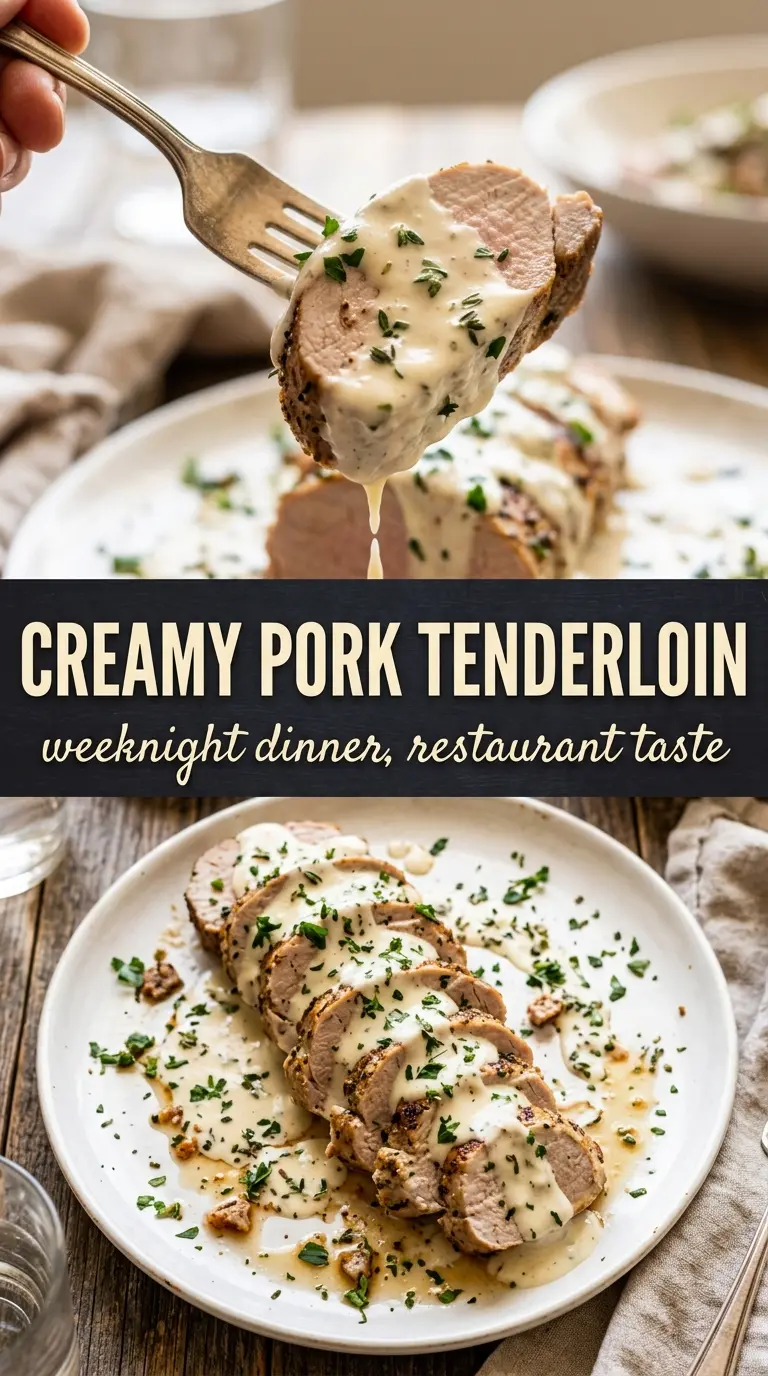
Sliced pork tenderloin in a silky mushroom cream sauce earns its place on the table fast. The pork stays lean and tender, the mushrooms bring depth, and the pan sauce turns glossy and herb-flecked without feeling heavy. What makes this version worth keeping is the way the pork gets a hard sear first, then finishes in the oven while the sauce comes together in the same skillet.
The whole dish depends on a few small choices that matter. A hot pan gives the tenderloin color before it dries out, dry white wine loosens the browned bits into the sauce, and Dijon gives the cream just enough edge to keep it from tasting flat. Parmesan thickens the sauce as it melts, so you get a spoonable finish instead of something thin and runny.
Below, I’ll walk through the part that keeps the pork juicy, the ingredient swaps that still work, and the reheating method that keeps the sauce from turning grainy the next day.
The pork stayed juicy, and the sauce thickened up beautifully once I added the parmesan off the heat. My husband kept going back for more mushrooms.
Save this creamy pork tenderloin for the night you want a skillet dinner with golden mushrooms and a silky pan sauce.
The Step That Keeps Pork Tenderloin Juicy Instead of Dry
Pork tenderloin cooks fast, which is exactly why it goes from tender to dry if you chase color for too long. The goal here is a deep golden crust in the skillet, then a short finish in the oven until the center reaches 145°F. That two-stage method gives you control. If you try to cook the tenderloin all the way through on the stovetop, the outside usually overcooks before the center catches up.
Resting matters just as much as the sear. Slice too early and the juices run straight onto the cutting board instead of staying in the meat. Five minutes is enough to let the pork settle before you cut it into medallions.
What Each Ingredient Is Doing in the Pan Sauce
- Pork tenderloin — This cut stays tender when it’s cooked quickly and rested properly. Trim any silver skin before cooking if your butcher hasn’t already, because that tough strip won’t break down in the skillet.
- Cremini mushrooms — These give the sauce its savory base and hold up better than button mushrooms. Let them cook until they’ve released their moisture and started to brown; if they just steam, the sauce tastes flat.
- Dry white wine — This deglazes the pan and pulls all those browned pork bits into the sauce. Chicken broth works in a pinch, but the wine adds a brighter, cleaner finish that keeps the cream from feeling too heavy.
- Heavy cream — This is what makes the sauce silky and stable. Half-and-half can work, but it won’t thicken as well and it’s more likely to break if you simmer it too hard.
- Dijon mustard — You won’t taste mustard in a sharp way, but it wakes up the sauce and keeps the cream from tasting one-note. It also helps the sauce emulsify a little better.
- Parmesan — The cheese adds body and a salty finish, but it should go in after the cream has started to simmer gently. High heat can make it grainy.
Building the Sauce Without Breaking It
Searing the Pork First
Season the tenderloins well and sear them in hot oil until every side has color, not just the widest ones. You’re looking for a browned crust that releases from the pan on its own; if it sticks, it needs another moment. That crust is what gives the sauce depth later. Move the pork to the oven once it’s golden all over, and use a thermometer instead of guessing on doneness.
Cooking the Mushrooms Until They Brown
After the pork comes out, keep the same skillet and add the butter and mushrooms. At first they’ll look crowded and wet, then the liquid will cook off and the mushrooms will start to sizzle again. That second stage is where the flavor builds. If you rush this part and add the garlic too early, it can burn before the mushrooms have a chance to brown.
Finishing the Sauce Gently
Stir in the garlic and thyme for just a short moment, then deglaze with wine and let it reduce so the alcohol smell cooks off. Add the cream, Dijon, and parmesan over gentle heat and stir until the sauce coats the back of a spoon. If it looks thin at first, keep it at a low simmer; cream thickens as it reduces, and high heat is what makes it separate.
Bringing the Pork Back to the Skillet
Slice the rested pork into medallions and nestle them into the sauce or spoon the sauce over the top. The goal is to warm the pork through, not cook it again. If you leave it on the heat too long, even tenderloin can turn dry at the edges. Finish with parsley for freshness and a little color against the rich sauce.
How to Adapt This Creamy Pork Tenderloin for Different Tables
Make It Dairy-Free
Use olive oil instead of butter, and swap the heavy cream for full-fat coconut cream or an unsweetened dairy-free cooking cream. The sauce won’t taste quite as sharp and cheesy, so add a little extra Dijon and a pinch more salt to keep it balanced. Skip the parmesan unless you’re using a dairy-free version that melts smoothly.
Skip the Wine and Keep the Pan Flavor
Use low-sodium chicken broth instead of wine if that’s what you have. Let it reduce a little longer so the sauce doesn’t taste watered down. You’ll lose some brightness, but the mushrooms, garlic, and Dijon still carry the dish.
Turn It Into a Gluten-Free Dinner
This recipe is naturally gluten-free as written as long as your wine, mustard, and parmesan are certified gluten-free. Serve it with mashed potatoes, rice, or roasted vegetables and you won’t need to change the cooking method at all.
Add More Vegetables to the Sauce
A handful of baby spinach or a few chopped sun-dried tomatoes can go in at the very end. Spinach wilts into the cream in seconds, while sun-dried tomatoes add a sweeter, tangier note that cuts through the richness.
Storage and Reheating
- Refrigerator: Store leftovers in an airtight container for up to 3 days. The sauce will thicken as it chills.
- Freezer: I don’t recommend freezing this one. Cream sauces often separate after thawing, and the texture of the mushrooms gets soft.
- Reheating: Warm it slowly on the stovetop over low heat with a splash of cream or broth. The biggest mistake is blasting it in the microwave, which can make the pork tough and the sauce grainy.
Answers to the Questions Worth Asking

Creamy Pork Tenderloin
Ingredients
Equipment
Method
- Season the tenderloins all over with salt and pepper to taste.
- Heat olive oil in a cast iron skillet over medium-high heat and sear the tenderloins 2–3 minutes per side until golden all over.
- Transfer the skillet to a 400°F oven and roast for 15–18 minutes until the centers reach 145°F.
- Rest the pork tenderloin 5 minutes, then slice into medallions.
- In the same skillet, melt the butter and cook the cremini mushrooms for 5 minutes until golden.
- Add the minced garlic and fresh thyme, then cook 30 seconds.
- Deglaze with the dry white wine and simmer for 2 minutes.
- Stir in the heavy cream, Dijon mustard, and parmesan, then cook until thickened and glossy.
- Serve the medallion pork over the creamy mushroom sauce and garnish with fresh parsley.