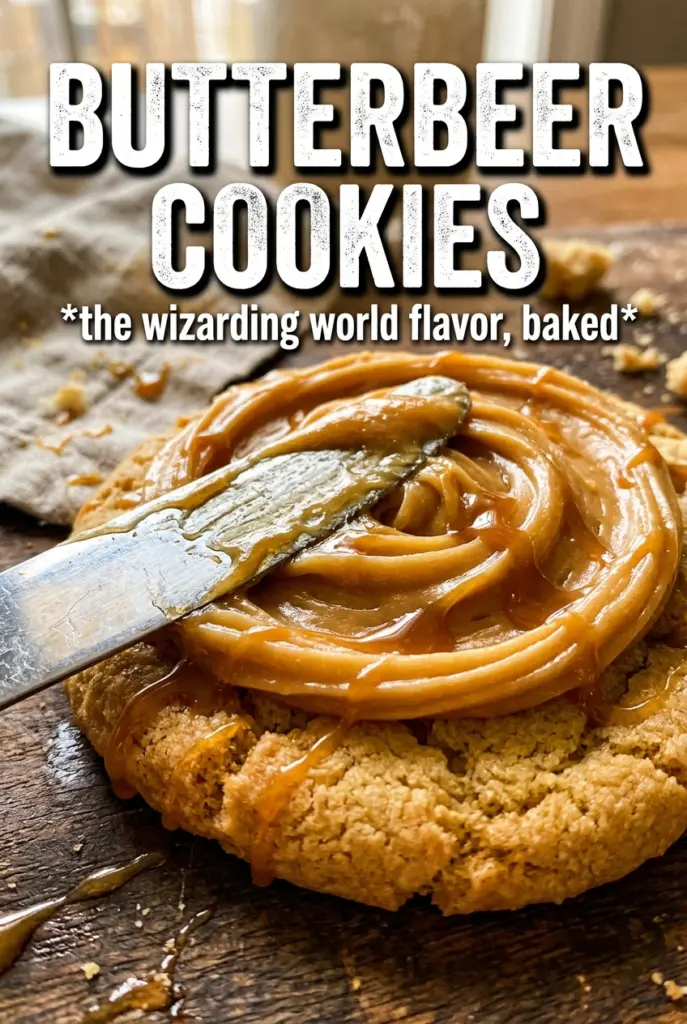
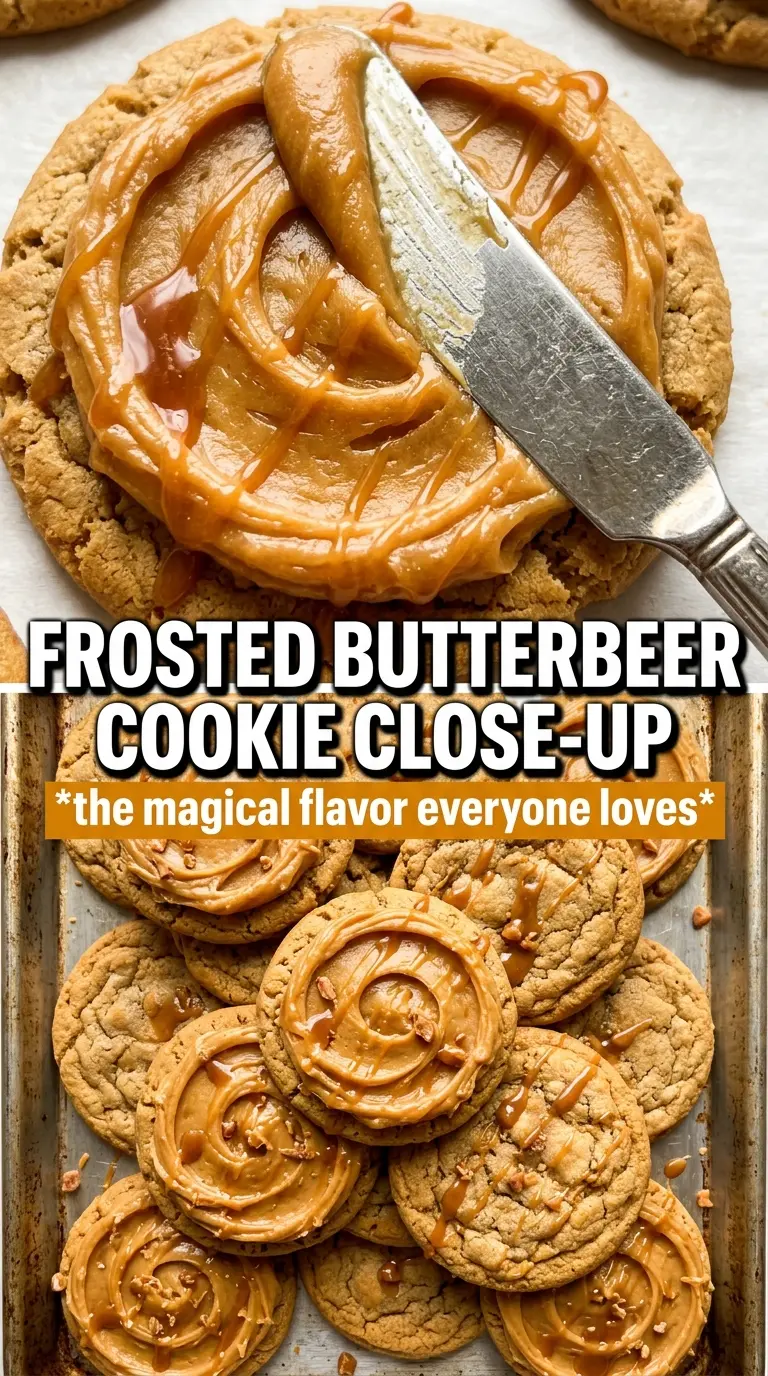
Butterbeer cookies bake up soft in the center with lightly crisp edges and a warm butterscotch flavor that tastes nostalgic without being one-note. The frosting takes them from good to impossible to stop eating: tangy cream cheese, buttery sweetness, and a caramel finish that settles into every swirl. These are the kind of cookies people notice first by smell, then by the glossy frosting on top, and then by how fast the tray disappears.
The dough works because it leans on brown sugar, butter extract, and butterscotch extract for a flavor that reads like the drink, not just a basic sugar cookie with chips tossed in. Chilling isn’t necessary here, but creaming the butter and sugars long enough to get them pale and fluffy matters, because that little bit of air gives the cookies a softer bite. Bake them until the edges are set and the centers still look just a touch underdone; they finish on the pan as they cool.
Below, I’ve included the small details that keep the cookies soft, the frosting spreadable, and the caramel drizzle from sliding off the top.
The cookies stayed soft for days, and the butterscotch frosting set up enough that the caramel drizzle didn’t run everywhere. The flavor tasted like a butterbeer treat from the first bite, especially with the little pockets of melted chips.
Love the soft, butterscotch-filled centers and thick frosting? Save these Butterbeer Cookies With Butterscotch Frosting for the next time you want a nostalgic dessert with a caramel finish.
Why These Cookies Stay Soft Instead of Drying Out
The biggest mistake with butterbeer-style cookies is baking them until they look fully set in the oven. That’s how you lose the soft middle. These should come out when the edges are lightly golden and the centers still look a little puffy and underbaked; the carryover heat finishes the job on the pan.
Brown sugar does a lot of the work here, since it holds moisture better than white sugar and brings that deeper caramel note that fits the butterscotch flavor. The butterscotch chips help, but they don’t do the heavy lifting on their own. The extract is what makes the cookie taste like butterbeer instead of just a sweet chip cookie.
- Butter extract or vanilla — Butter extract gives the flavor a more bakery-style depth. If you only have vanilla, use it, but the cookie will taste softer around the edges and less like the drink-inspired version.
- Butterscotch extract — This is the ingredient that makes the flavor read as butterscotch from the first bite. Don’t skip it if you want the cookies to taste distinct.
- Brown sugar — Packed brown sugar keeps the texture chewy and adds moisture. Light brown sugar works fine; dark brown sugar makes the cookies taste a little richer and more molasses-forward.
- Butterscotch chips — Stir them in at the end so they stay intact. If they melt too much, the cookies lose those sweet pockets of flavor that make each bite interesting.
What Each Ingredient Is Actually Doing in This Recipe
- Primary ingredient (the star) — Quality matters most. Choose the best you can find.
- Cooking medium (oil, butter, or broth) — This carries flavors and prevents dryness.
- Seasonings (salt, pepper, spices, herbs) — Layer flavors so nothing overpowers. Build depth gradually.
- Aromatics (garlic, onion, herbs) — Cook with fat to bloom flavors. Become the foundation.
- Supporting ingredients — Complement the main ingredient without overpowering it.
- Sauce or liquid (if applicable) — Brings flavors together. Balance richness with acid.
- Acid (lemon, vinegar, wine, or other) — Brightens and prevents flat-tasting results.
- Final finish (garnish, glaze, or sauce) — Prevents one-dimensional taste and adds visual appeal.
What the Frosting Needs to Hold Its Shape
The frosting is a cream cheese-based swirl, which means the balance matters. Too much butter and it turns loose. Too much powdered sugar and it gets stiff and grainy. The butterscotch sauce brings flavor and a little softness, but it also adds moisture, so the cream cheese needs to be fully softened before you beat everything together.
If your frosting looks heavy, keep beating it until it turns smooth and pipeable. If it looks thin, chill it for 10 to 15 minutes before piping. Cream cheese frosting can go from perfect to messy in a minute if it gets too warm.
- Cream cheese — This gives the frosting tang and enough body to keep the cookies from tasting cloying. Full-fat cream cheese is worth using here; low-fat versions can turn watery.
- Butterscotch sauce — Use a sauce, not a thick candy topping. A thinner sauce blends more cleanly and gives the frosting that butterscotch note without making it gluey.
- Powdered sugar — This sets the frosting. Add it gradually so you can stop when the frosting holds its swirl instead of guessing and ending up with something too sweet and stiff.
- Caramel drizzle — Drizzle it after frosting, not before. If you add it too early, the cookies can slide and the topping sinks into the frosting.
Building the Dough Without Overmixing It
Whisk the dry ingredients first so the baking soda is distributed evenly. Then beat the butter and sugars until the mixture looks lighter in color and a bit fluffy. That step matters more than people think, because it gives the cookies a softer crumb instead of a dense, greasy one.
Once the flour goes in, switch to a gentler hand. Stop mixing as soon as the flour disappears, then fold in the butterscotch chips. Overmixing after the flour is added develops too much gluten, and these cookies can turn tough instead of tender.
Creaming the Butter and Sugars
Beat the softened butter with both sugars until the mixture looks pale and slightly billowy. You’re not waiting for perfection, just enough aeration that the dough changes texture under the beaters. If the butter is too cold, it won’t cream properly; if it’s melted, the cookies spread too much and lose their soft center.
Folding in the Flour
Add the dry ingredients in one batch or two small additions, then stop the mixer as soon as the flour disappears. The dough should look thick and slightly sticky. If you keep mixing until it looks silky, you’ve gone too far and the cookies will bake up tougher than they should.
Baking to the Right Finish
Scoop the dough into 2-tablespoon portions so the cookies bake evenly. Pull them when the edges are just turning golden and the tops no longer look wet in the center. They’ll look a little too soft at first, but that’s the point; let them sit on the baking sheet for a few minutes before moving them to a rack.
How to Adapt These Butterbeer Cookies for Different Kitchens
Dairy-Free Version
Use a plant-based butter that bakes well and swap in dairy-free cream cheese for the frosting. The cookies will still be soft and rich, but the frosting may be a touch looser, so chill it before piping. Keep the butterscotch sauce dairy-free too, since a dairy-heavy sauce can undo the swap.
Vanilla-Only Cookie Base
If you can’t find butter extract or butterscotch extract, use vanilla in both spots and lean harder on the chips and frosting for flavor. The cookies will taste more like a brown sugar vanilla cookie with butterscotch topping, which is still good, just less clearly butterbeer-inspired.
Extra-Glossy Finish
For a bakery-style look, pipe the frosting high and drizzle the caramel in a thin zigzag instead of pouring it on. Add the extra butterscotch chip on top while the frosting is still soft enough to catch it. You’ll get a cleaner presentation and a little more texture in each bite.
Storage and Reheating
- Refrigerator: Store frosted cookies in an airtight container for 3 to 4 days. The cookies stay soft, but the frosting firms up in the fridge.
- Freezer: Freeze the unfrosted cookies for up to 2 months. Thaw at room temperature, then frost and drizzle after they’re fully defrosted for the cleanest result.
- Reheating: These don’t need reheating, and microwaving frosted cookies will melt the topping fast. If you want the cookies slightly softer, let them sit at room temperature for 20 to 30 minutes before serving.
Questions I Get Asked About This Recipe
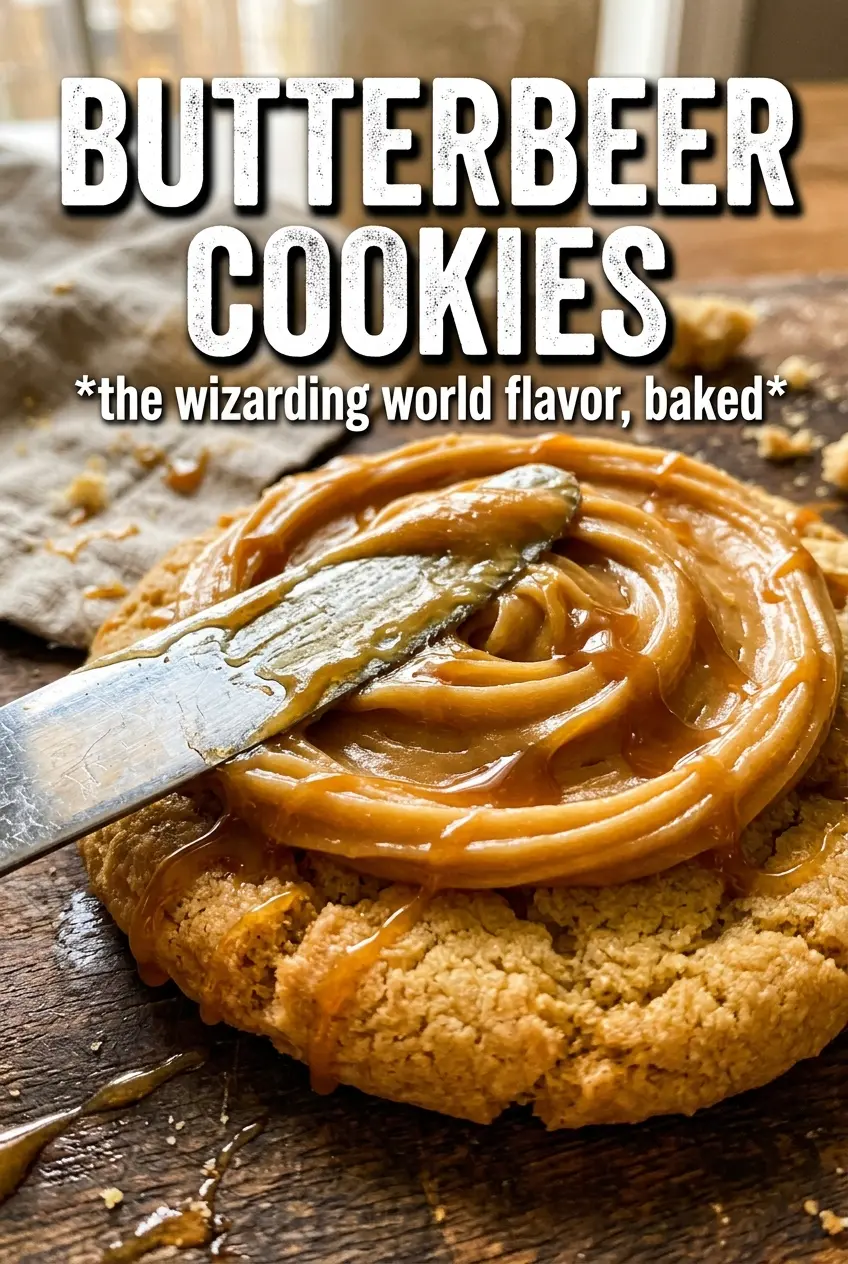
Butterbeer Cookies With Butterscotch Frosting
Ingredients
Equipment
Method
- Preheat oven to 375F and line baking sheets with parchment for easy release.
- Whisk together all-purpose flour, baking soda, and salt until evenly combined.
- In a stand mixer, beat softened unsalted butter with brown sugar and granulated sugar until fluffy.
- Add the eggs, butter extract or vanilla extract, and butterscotch extract, and beat until smooth.
- Fold the dry ingredients into the wet ingredients just until no dry streaks remain.
- Fold in butterscotch chips so they’re evenly distributed through the dough.
- Scoop dough into 2-tablespoon rounds and space them on the lined sheet pan.
- Bake at 375F for 10-12 minutes, until the cookies are golden at the edges with set centers.
- Cool cookies completely before frosting, so the swirl holds its shape.
- Beat cream cheese, unsalted butter, butterscotch sauce, powdered sugar, and vanilla until smooth and thick.
- Pipe a generous swirl of butterscotch frosting onto each cooled cookie.
- Drizzle with caramel sauce and top with a butterscotch chip.