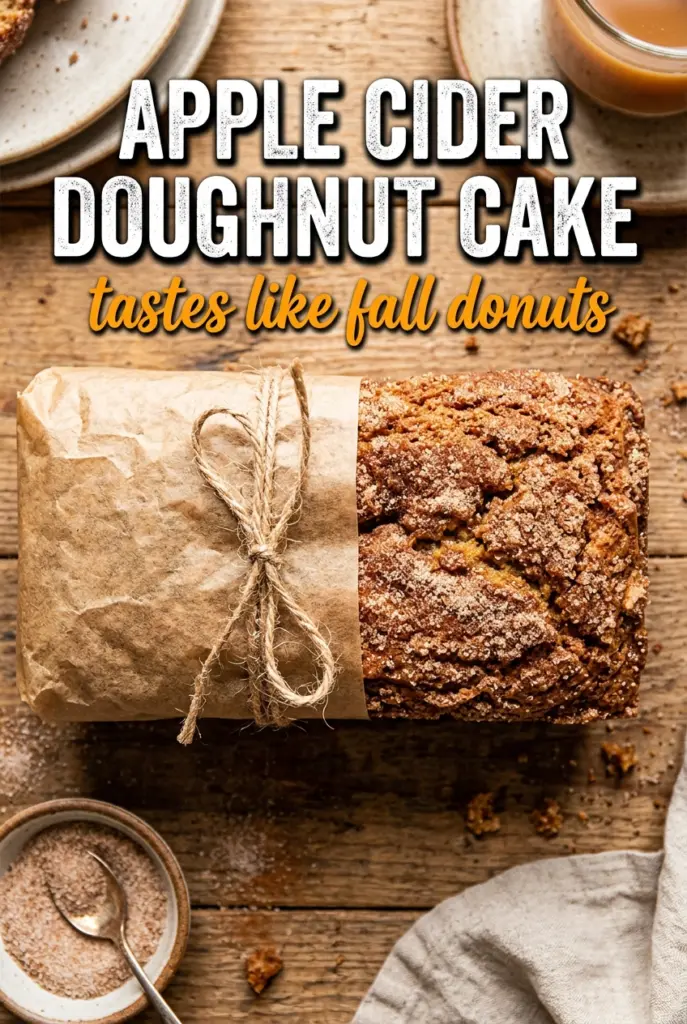
Apple Cider Doughnut Loaf Cake bakes up with a deep golden crust, a tender spiced crumb, and that unmistakable cinnamon-sugar finish that makes it taste like the best part of a cider mill doughnut in loaf form. The top gets brushed with butter while the cake is still warm, so the sugar coating clings in the same way it does on a fresh doughnut instead of sliding off like a dry glaze.
The cider gets reduced first, and that step matters. It concentrates the apple flavor without adding extra liquid, which keeps the loaf from turning bland or soggy. Sour cream adds the soft, almost plush texture you want here, while oil keeps the crumb moist for days. The spice blend is warm but balanced, not heavy-handed, so the cider still comes through.
Below, I’ve included the one timing detail that keeps the crumb light, plus the easiest way to coat the loaf so every slice gets that bakery-style finish.
The cider reduction made the flavor pop, and the cinnamon sugar stuck perfectly once I brushed the loaf while it was still warm. My kitchen smelled like a doughnut shop.
Love that buttery cinnamon-sugar crust? Save this Apple Cider Doughnut Loaf Cake for the next time you want bakery-style flavor from a simple loaf pan.
The Trick to Getting Doughnut Flavor in a Loaf, Not a Muffin
The biggest mistake with apple cider bakes is treating cider like a background note. If you pour it in straight from the bottle, the flavor gets lost and the loaf tastes more like spice cake than cider doughnut. Reducing the cider first concentrates the apple flavor and keeps the batter from getting too wet, which matters because this loaf already gets plenty of moisture from oil and sour cream.
The other thing that separates this from a standard quick bread is the finish. A cinnamon-sugar coating works best when the loaf is brushed with melted butter while still warm, not hot from the oven and not fully cool. Too hot and the coating melts into patches; too cool and it won’t stick evenly. That little timing window is what gives you the bakery-style crust.
What Each Ingredient Is Actually Doing in This Loaf
- Apple cider — Reducing it to 1/4 cup intensifies the apple flavor without adding extra liquid. Fresh cider gives the best result here because you want a clean, fruity note, not a cooked-juice taste.
- Sour cream — This is what gives the crumb its soft, almost velvety texture. Plain yogurt can work in a pinch, but the loaf will be a little tangier and not quite as plush.
- Vegetable oil — Oil keeps the cake moist for days, which is exactly what you want in a loaf like this. Butter can be used, but the texture will be slightly firmer and less tender.
- Brown sugar — It adds depth and a little moisture that granulated sugar can’t fully replace. Packed brown sugar helps the loaf lean into that warm doughnut-shop flavor.
- Cardamom and nutmeg — These are small amounts, but they make the spice profile taste like a real doughnut instead of just cinnamon cake. Don’t skip them unless you have to.
Building the Batter So It Stays Tender
Reducing the Cider First
Pour the cider into a small saucepan and simmer it over medium heat until it measures 1/4 cup. You want steady bubbling, not a hard boil, because that can push it past the mark too fast. Let it cool before it goes into the batter or it can warm the eggs and sour cream and make the mixture look curdled.
Mixing the Wet Ingredients Smoothly
Whisk the oil, both sugars, eggs, vanilla, reduced cider, and sour cream until the mixture looks glossy and even. If you still see streaks of sour cream, keep whisking; those pockets can leave little dense spots in the baked loaf. The batter should smell like apple, vanilla, and warm spice before the flour goes in.
Folding the Dry Ingredients Just Until Combined
Add the flour mixture and fold only until you no longer see dry patches. Overmixing is what turns quick bread tight and rubbery, especially once the baking powder and baking soda are activated. A few small lumps are fine; a smooth, overworked batter is not what you want here.
Finishing With Butter and Cinnamon Sugar
Let the loaf rest in the pan briefly, then turn it out while it’s still warm enough to soak up the butter. Brush all sides, then roll or shower it with the cinnamon sugar so the coating lands on a tacky surface. If the loaf cools completely first, the sugar won’t cling the same way and you’ll lose that doughnut-style crust.
Three Ways to Work This Into Your Kitchen Routine
Dairy-Free Version
Swap the sour cream for an unsweetened dairy-free yogurt with some body, and use plant-based butter for the coating. The cake will still be tender, but the tang will be a little softer and the crust may be slightly less rich.
Gluten-Free Adaptation
Use a 1:1 gluten-free baking blend that includes xanthan gum. The loaf will be a touch more fragile when warm, so let it cool in the pan a bit longer before turning it out, and expect a slightly more delicate crumb.
Extra-Spiced Cider Loaf
If you want a louder spice note, add another 1/4 teaspoon of cinnamon and a pinch more cardamom. That pushes the loaf closer to a classic cider doughnut, but it can cover up the apple flavor if you go much farther.
Storage and Reheating
- Refrigerator: Store covered for up to 4 days. The cinnamon sugar softens a little, but the crumb stays moist.
- Freezer: Freeze the uncoated loaf tightly wrapped for up to 2 months. Add the butter and cinnamon sugar after thawing so the coating stays crisp and sweet.
- Reheating: Warm slices briefly in the microwave or a low oven. Don’t heat long enough to melt off the coating if you’ve already added it.
Answers to the Questions Worth Asking
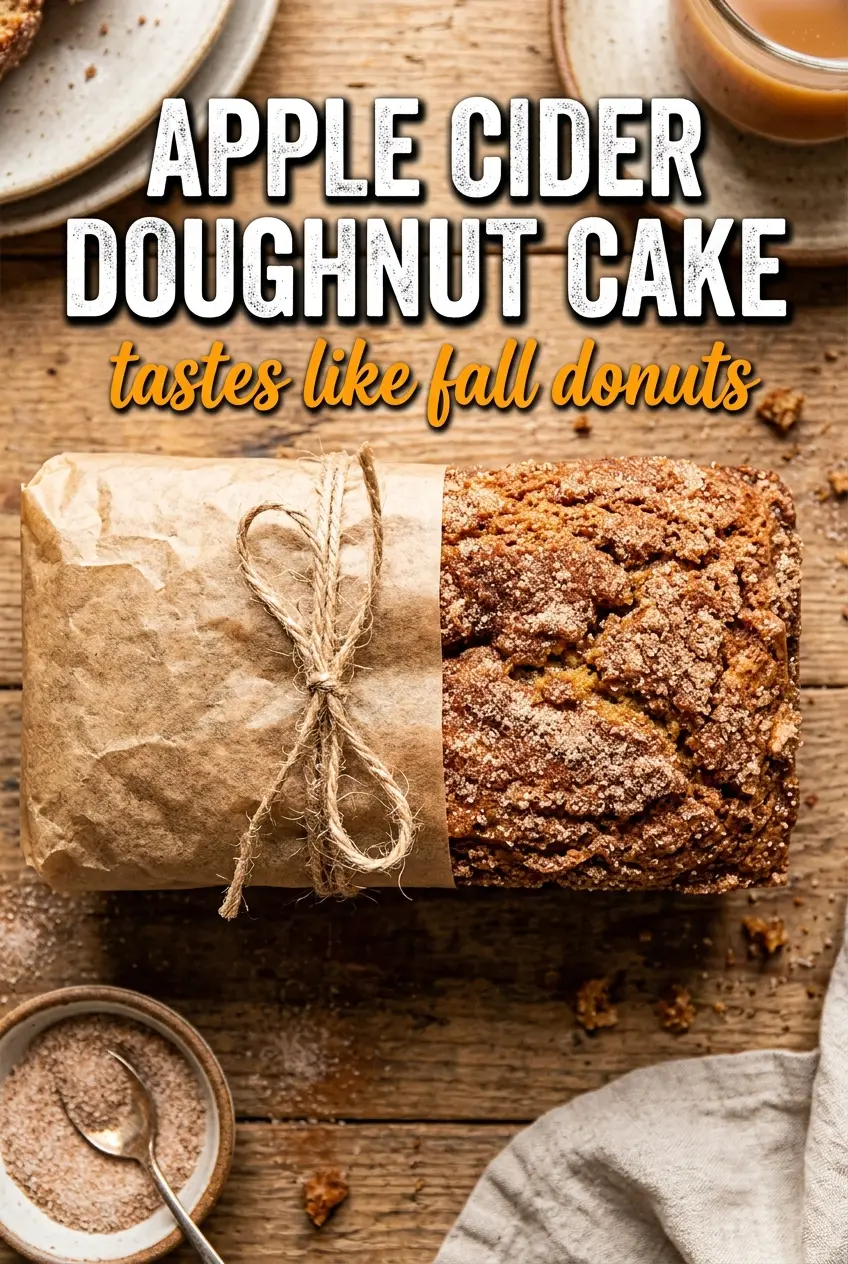
Apple Cider Doughnut Loaf Cake
Ingredients
Equipment
Method
- Reduce the apple cider to 1/4 cup over medium heat, then cool.
- Preheat the oven to 350F and grease a 9x5 loaf pan.
- Whisk the all-purpose flour, baking powder, baking soda, cinnamon, nutmeg, allspice, cardamom, and salt together.
- Whisk the vegetable oil, granulated sugar, brown sugar, eggs, vanilla extract, reduced apple cider, and sour cream until smooth.
- Fold the flour mixture into the wet ingredients until just combined.
- Bake for 60-65 minutes at 350F until a toothpick comes out clean.
- Remove the loaf from the pan while warm and brush all sides with melted butter.
- Roll in or sprinkle generously with cinnamon sugar, then let the coating set briefly before slicing.