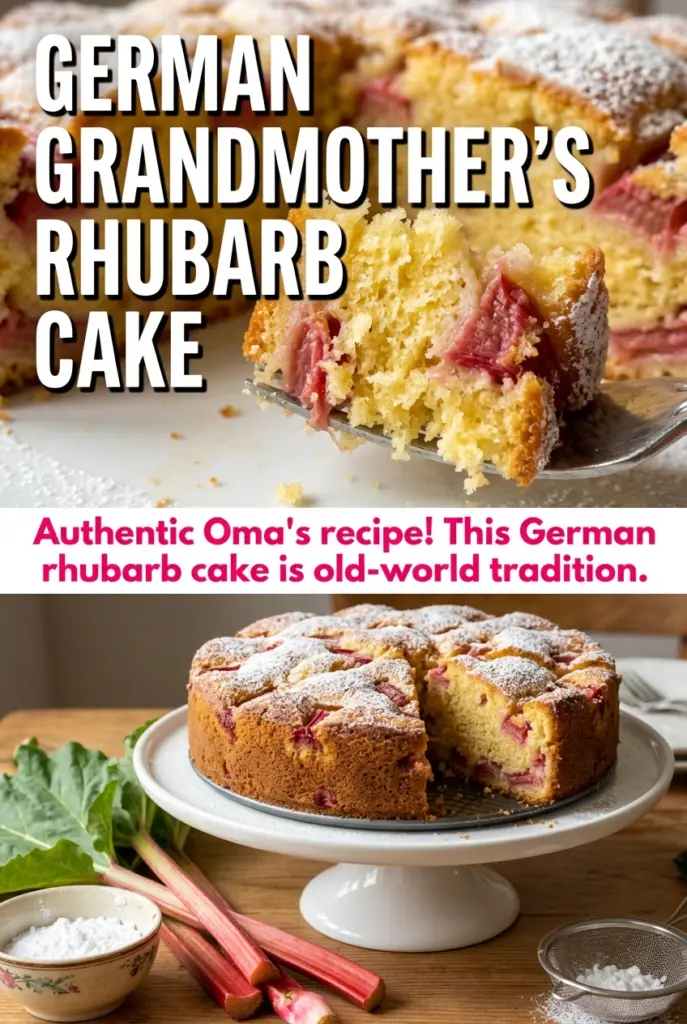
Oma’s Rhubarb Cake bakes up with a soft, buttery crumb and little pockets of tart rhubarb that stay bright instead of disappearing into the batter. The top gets just enough set to hold a dusting of powdered sugar, and the whole pan tastes like the kind of cake that gets cut into squares and quietly disappears one slice at a time.
What makes this version work is the balance between the sweet batter and the macerated rhubarb. Tossing the rhubarb with sugar first draws out some juice and softens the sharp edge, so it bakes into the cake instead of leaking harshly into the crumb. Buttermilk and baking soda keep the texture tender and give the cake a little lift, which matters in a simple sheet cake like this where there isn’t much else to hide behind.
Below you’ll find the small details that keep the cake from turning dense or watery, plus a few smart swaps if your rhubarb is extra sour or you want to make it ahead.
I let the rhubarb sit with the sugar like you said, and the cake came out tender instead of soggy. The edges were golden, the center stayed soft, and the powdered sugar on top was the perfect finish.
Save Oma’s Rhubarb Cake for a tender German sheet cake with tart rhubarb pockets and a simple powdered sugar finish.
The Part That Keeps Rhubarb Cake From Turning Heavy
Rhubarb cakes go wrong when the fruit goes in raw and the batter has to carry too much moisture. The sugar soak solves part of that problem before the batter even starts. It pulls out some liquid, softens the sharp bite, and keeps the pieces from bleeding aggressively through the crumb.
The other place people lose the texture is overmixing after the flour goes in. Once the dry ingredients are added, the batter only needs enough mixing to disappear the streaks. If you keep beating it, the cake turns tight instead of tender, and that is the difference between a slice that holds together and one that eats like a brick.
What the Butter, Buttermilk, and Rhubarb Are Each Doing
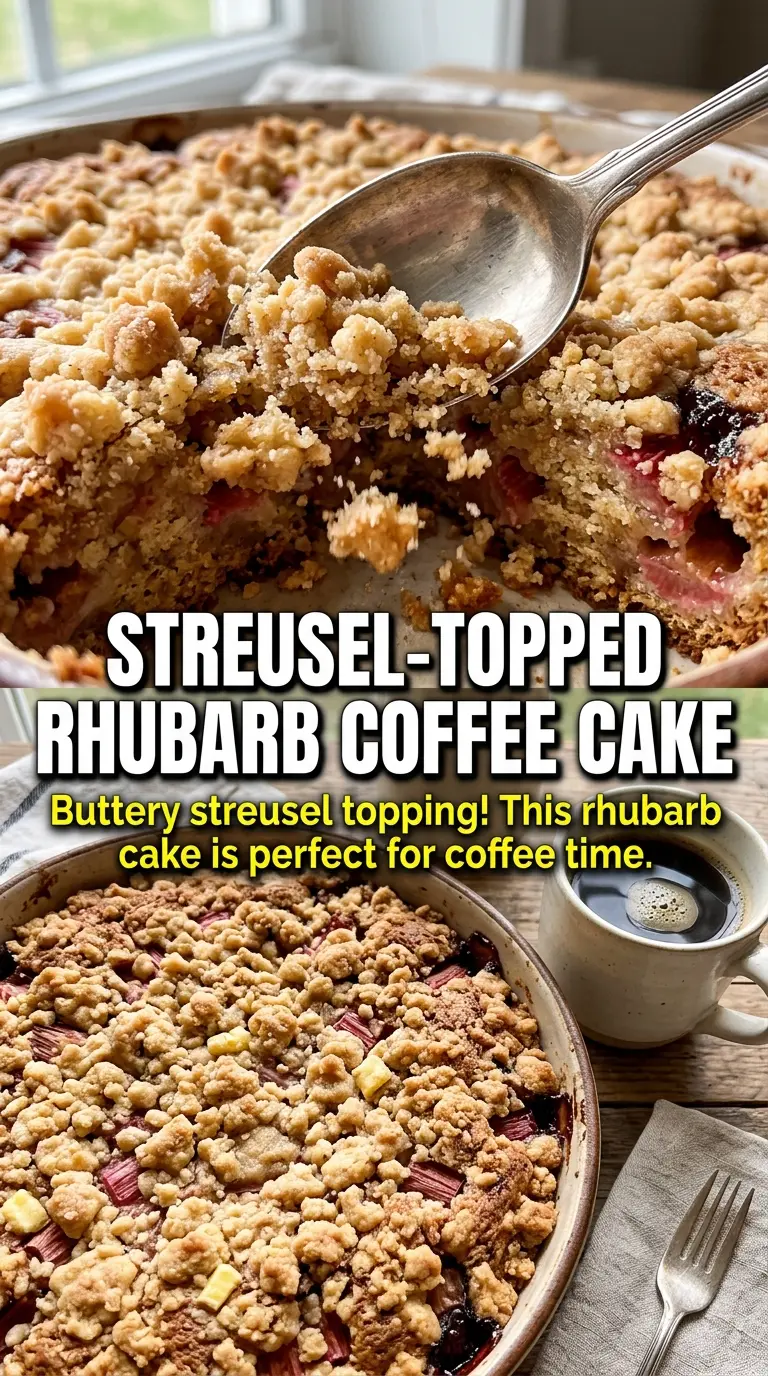
- Rhubarb — Fresh rhubarb gives the cake its tart backbone. Frozen rhubarb works if it’s thawed and drained first, but fresh pieces hold their shape better and give you cleaner pockets in the crumb.
- Buttermilk — This keeps the cake soft and gives the baking soda something acidic to react with. Regular milk will work in a pinch, but the cake will lose some tenderness and the lift won’t be quite the same.
- Butter — Softened butter traps air when you cream it with sugar, which helps the cake bake up light instead of flat. Cold butter won’t cream properly, and melted butter changes the texture into something denser and more muffin-like.
- Vanilla — It doesn’t make the cake taste like vanilla cake; it rounds out the sharpness of the rhubarb and keeps the batter from tasting one-note.
Building the Batter Without Deflating It
Soak the Rhubarb First
Toss the diced rhubarb with the sugar and let it sit for 15 minutes while you prep the rest. You’ll see juices collect in the bowl, which is exactly what you want. If the fruit looks extremely wet, lift it out with a slotted spoon so you don’t pour all that liquid into the batter.
Cream Until the Mixture Looks Pale and Fluffy
Beat the butter and sugar until the color lightens and the mixture looks airy at the edges. That step builds structure, and it’s worth doing properly because the cake has no other heavy lifting ingredient. Add the eggs one at a time so the batter stays smooth instead of looking curdled.
Fold in the Dry Ingredients With a Light Hand
Alternate the flour mixture with the buttermilk, beginning and ending with the dry ingredients. This keeps the batter from separating and helps it stay smooth. Once the flour disappears, stop mixing. The folded rhubarb goes in last so it doesn’t break down and stain the entire pan pink.
Bake Until the Center Springs Back
Pour the batter into the prepared pan and bake until the top is set, the edges are lightly golden, and a toothpick in the center comes out clean. If the top is browning too quickly before the middle sets, lay a piece of foil loosely over the pan for the last 10 minutes. Let the cake cool completely before dusting it, or the powdered sugar will melt into the surface.
How to Adapt This Rhubarb Cake for Different Kitchens
Dairy-Free Version
Swap the butter for a good plant-based baking stick and use unsweetened dairy-free yogurt thinned with a little lemon juice in place of the buttermilk. The cake will still be tender, though the flavor will be a little less rich and the crumb a touch lighter.
Using Frozen Rhubarb
Frozen rhubarb works, but thaw it first and drain off excess liquid before tossing it with sugar. If you skip that step, the batter gets loose and the center takes longer to set.
Sweeter Topping, Same Cake
If your rhubarb is especially tart, add a little extra powdered sugar on top after baking instead of increasing the sugar in the batter. That keeps the crumb balanced without making the cake cloying.
Storage and Reheating
- Refrigerator: Store covered for up to 4 days. The crumb stays moist, though the powdered sugar topping will absorb into the surface.
- Freezer: This cake freezes well. Wrap individual slices tightly and freeze for up to 2 months, then thaw at room temperature.
- Reheating: Warm slices for 10 to 15 seconds in the microwave if you want them slightly soft. Don’t overheat them, or the rhubarb turns jammy and the cake dries out at the edges.
Answers to the Questions Worth Asking
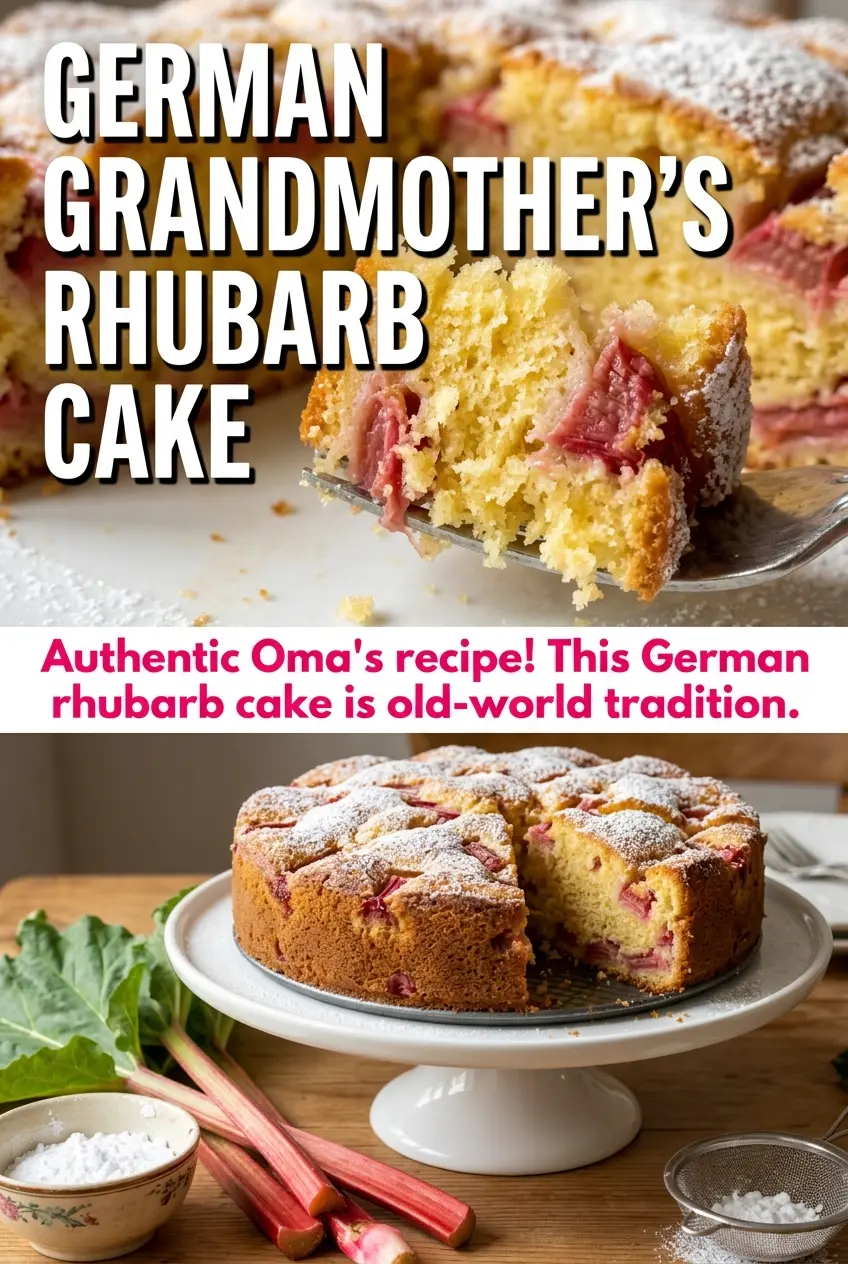
Oma's Rhubarb Cake
Ingredients
Equipment
Method
- Toss diced rhubarb with 1/2 cup sugar and set aside to macerate for 15 minutes, until syrupy and glossy.
- Preheat oven to 350°F and grease a 9x13-inch baking pan so the cake releases easily after baking.
- Cream together softened butter and 1 1/2 cups sugar until light and fluffy, using a thick, pale mixture as the visual cue.
- Beat in the eggs one at a time, then mix in the vanilla extract until smooth.
- Combine the all-purpose flour, baking soda, and salt in a separate bowl until evenly distributed.
- Add the dry ingredients to the butter mixture alternating with buttermilk, mixing until just combined to keep the crumb tender.
- Fold in the sugared rhubarb, then pour the batter into the prepared pan and smooth the top.
- Bake at 350°F for 40-45 minutes, until a toothpick inserted in the center comes out clean.
- Cool completely for 30 minutes before dusting with powdered sugar so the topping clings lightly.
- Dust with powdered sugar and serve at room temperature, with visible pink rhubarb pieces throughout the slices.