
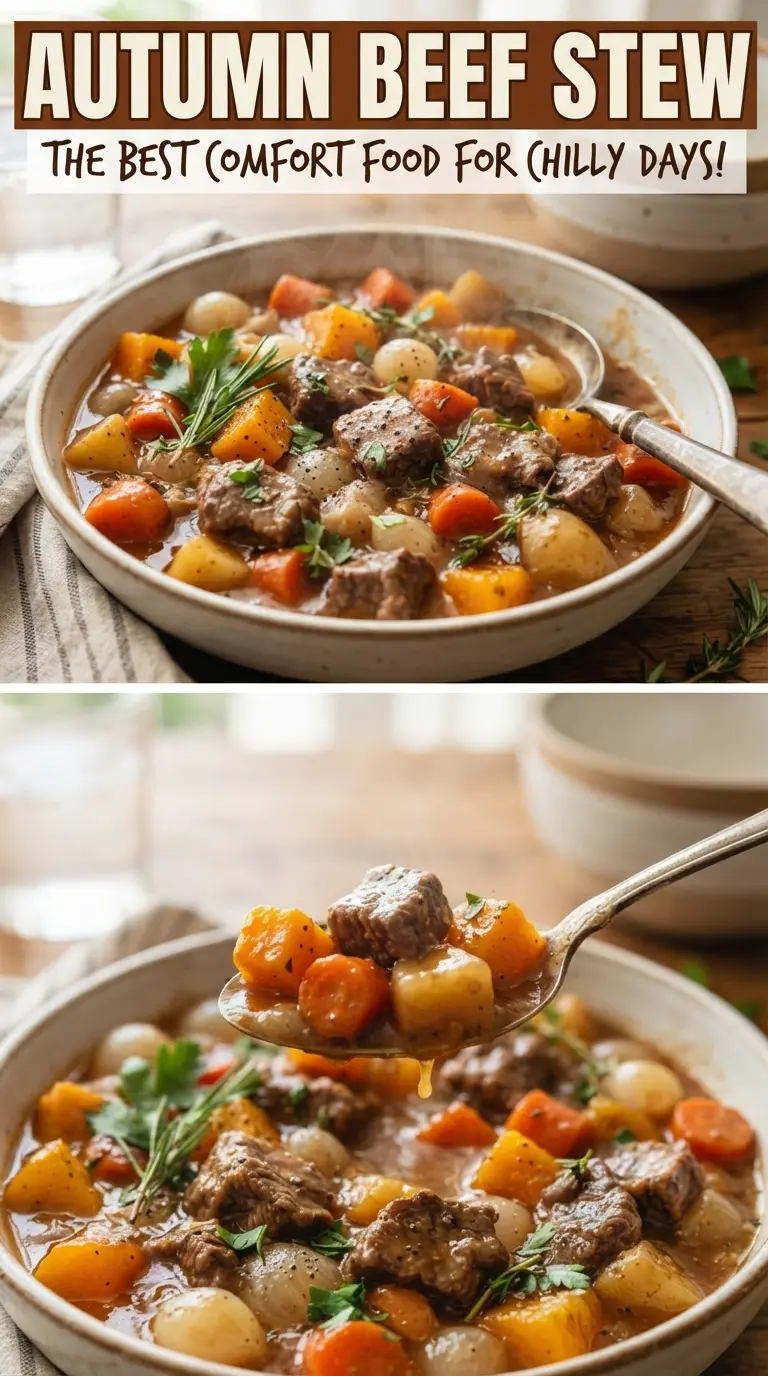
Beef stew gets a lot better when the broth is built around apple cider, maple, and a handful of dried cranberries. The result is still deeply savory, but it has a round, almost glossy sweetness that plays against the browned beef and earthy vegetables in a way plain broth never can. The squash and parsnips hold their shape long enough to stay spoonable instead of collapsing into the pot, which gives every bowl more texture and a little contrast in every bite.
The key is treating the stew like two jobs instead of one: first, build real color on the beef, then use the cider to lift every browned bit off the bottom before the liquid goes in. That step matters because those stuck-on bits are where the depth comes from. The maple doesn’t make it taste sugary; it just smooths the edges of the cider and gives the broth a darker, more complete finish.
Below you’ll find the timing that keeps the beef tender without falling apart too early, plus a few smart ways to swap the vegetables or make the pot work with what you already have on hand.
The broth turned out rich and silky, and the cranberries gave the stew this little burst of sweetness at the end that kept it from tasting heavy. My beef was tender right at the two-hour mark.
Save this autumn beef stew for the nights when you want tender chuck, maple-kissed broth, and vegetables that stay hearty in every bowl.
The Browning Step That Keeps the Stew Deep Instead of Flat
If the beef goes into the pot pale, the stew tastes pale. Flour helps the cubes brown a little faster and gives the broth a faint body later, but the real flavor starts with a hot pan and patience between batches. Crowding the meat steams it, and steamed beef gives you gray edges instead of the dark crust you want.
The cider scrape is the other part that most people rush past. When the apple cider hits the pan, it loosens the browned bits on the bottom and pulls that flavor into the liquid before the broth goes in. That is what makes this stew taste layered instead of like beef simmered in plain stock.
- Beef chuck — Chuck is the right cut here because it has enough connective tissue to turn tender over a long simmer. Lean stew meat can work in a pinch, but it dries out before the vegetables finish cooking.
- Apple cider — Use real cider, not vinegar and not apple juice concentrate. It adds fruit depth without reading as dessert, and it balances the maple and cranberries later on.
- Fresh sage and thyme — Fresh herbs matter here because the stew is long-cooked and the flavor needs to stay present. Dried thyme can stand in if needed; use half the amount and crush it between your fingers before adding it.
- Butternut squash, parsnips, and carrots — This mix gives you sweetness, earthiness, and structure. Cut everything close to the same size so the vegetables finish at the same time instead of leaving you with mush on one side of the pot and firm chunks on the other.
What Each Ingredient Is Actually Doing in This Recipe
- Primary ingredient (the star) — Quality matters most. Choose the best you can find.
- Cooking medium (oil, butter, or broth) — This carries flavors and prevents dryness.
- Seasonings (salt, pepper, spices, herbs) — Layer flavors so nothing overpowers. Build depth gradually.
- Aromatics (garlic, onion, herbs) — Cook with fat to bloom flavors. Become the foundation.
- Supporting ingredients — Complement the main ingredient without overpowering it.
- Sauce or liquid (if applicable) — Brings flavors together. Balance richness with acid.
- Acid (lemon, vinegar, wine, or other) — Brightens and prevents flat-tasting results.
- Final finish (garnish, glaze, or sauce) — Prevents one-dimensional taste and adds visual appeal.
Building the Pot So the Vegetables Finish Tender, Not Mushy
Getting Color on the Beef
Season the beef, toss it with flour, and brown it in hot oil in small batches until the surfaces are dark and dry-looking. You are not cooking the meat through at this stage; you’re building the crust that gives the stew its backbone. If the pieces stick at first, leave them alone for a minute longer and they’ll release when they’re ready.
Cooking the Onion Base
Once the beef is out, cook the onion in the same pot until it softens and picks up the browned residue. Add the garlic and tomato paste and stir until the paste darkens a shade and smells a little sweet and toasty. If the garlic goes in too early or the heat is too high, it burns and turns the whole pot bitter, so keep the pan at a steady medium pace.
Deglazing and Simmering the Beef
Pour in the cider and scrape every browned bit from the bottom. Add the broth, maple syrup, herbs, and beef, then cover and let it simmer gently until the chuck starts to give. A hard boil tightens beef instead of relaxing it, so the liquid should move with only an occasional lazy bubble.
Adding the Vegetables at the Right Time
Stir in the squash, parsnips, and carrots after the beef has had time to soften. These vegetables need less time than the meat, and adding them earlier turns the squash into puree before the stew is done. When they’re ready, a knife slides in with almost no resistance, but the pieces should still hold their shape in the broth.
Finishing with Cranberries
Add the cranberries near the end so they keep a little chew and give the stew bright spots of sweetness. They should soften and plump, not disappear completely. Taste the broth before serving and adjust only if needed, because the cider and maple already bring enough sweetness to balance the savory base.
How to Adapt This Autumn Beef Stew Without Losing What Makes It Work
Swap the Squash for Potatoes
If you want a more classic stew feel, use Yukon Gold potatoes instead of butternut squash. They’ll make the broth a little starchier and less sweet, which shifts the stew toward a more traditional beef-and-gravy profile.
Make It Gluten-Free
Replace the all-purpose flour with a gluten-free flour blend that’s meant for thickening. The crust on the beef won’t brown quite the same way, but the stew will still thicken and coat the spoon once it simmers down.
Use Red Wine Instead of Cider
Red wine gives you a deeper, less sweet stew with more of a classic braised flavor. It works best if you want the cranberries and maple to stay in the background rather than lead the dish.
Storage and Reheating
- Refrigerator: Keeps for 4 days. The broth thickens a little as it chills, which helps the stew taste even richer the next day.
- Freezer: Freezes well for up to 3 months. Cool it completely first, then freeze in portions so the vegetables don’t break down from repeated thawing.
- Reheating: Warm it slowly on the stove over low heat with a splash of broth if needed. A fast boil will toughen the beef and can make the squash collapse into the liquid.
Answers to the Questions Worth Asking

Autumn Beef Stew
Ingredients
Equipment
Method
- Season the beef chuck with salt and black pepper, then toss it with the all-purpose flour until coated. Heat the olive oil in a Dutch oven until shimmering, then brown the beef in batches so each piece sears well.
- Add the diced onion and cook for 5 minutes until softened and lightly golden. Add the minced garlic and tomato paste and cook for 1 minute, stirring so the paste darkens slightly.
- Pour in the apple cider and scrape the bottom of the pot to release browned bits, then let it bubble briefly. Add the beef broth, maple syrup, chopped sage, thyme leaves, and the browned beef.
- Cover the Dutch oven and simmer for 1 hour 45 minutes until the beef is tender and the gravy thickens slightly, keeping a steady gentle bubble. If needed, adjust heat to maintain a consistent simmer.
- Add the butternut squash, sliced parsnips, and sliced carrots, then simmer for 45 minutes until the vegetables are tender. Look for easy piercing with a fork and a thick, cohesive stew texture.
- Stir in the dried cranberries and simmer for 10 minutes more so they plump and spread through the stew. Serve hot, with fresh sage on top if desired.