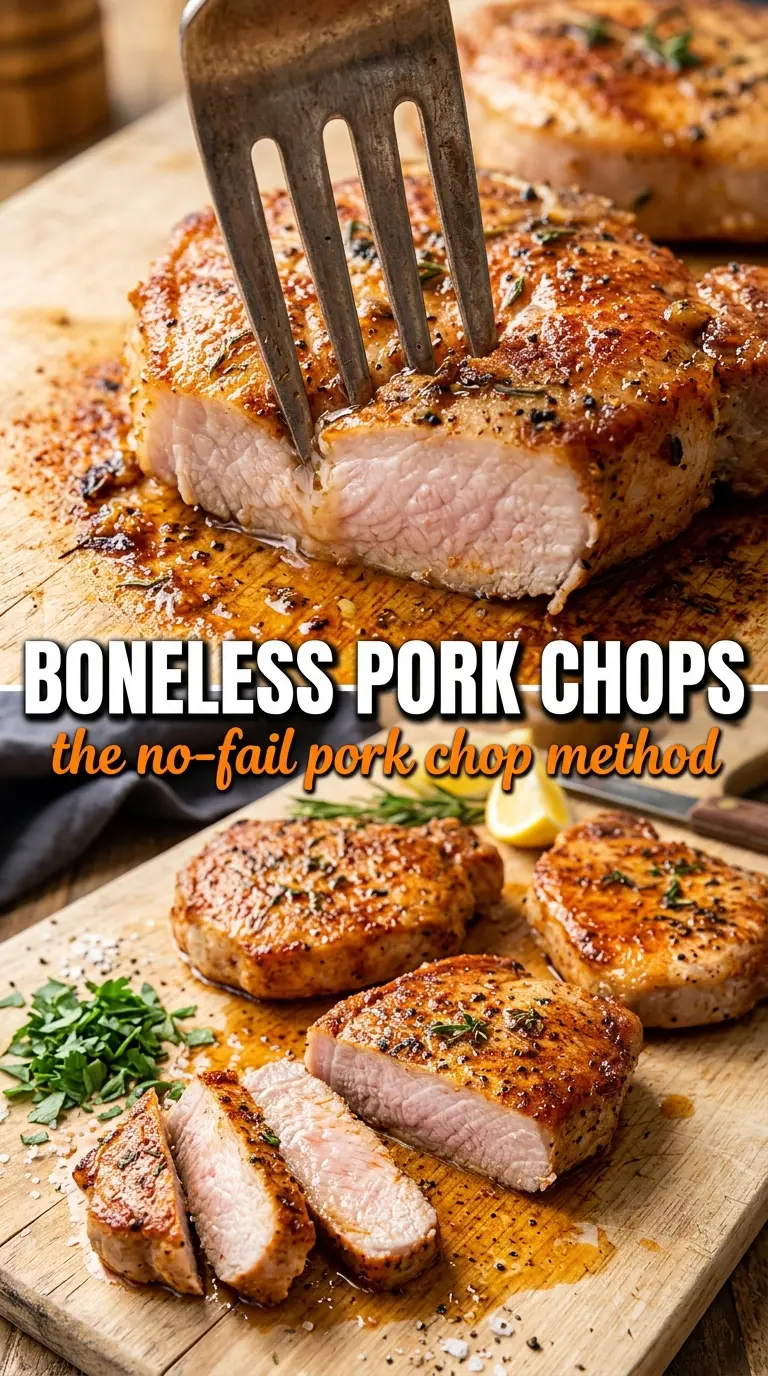
Boneless pork chops can go from dry and forgettable to juicy with a crisp, browned crust in less than 20 minutes, and the difference comes down to heat, timing, and not fussing with them once they hit the pan. The outside should pick up a deep golden sear while the center stays tender and just barely pink at 145°F. When that happens, you get the kind of weeknight dinner that tastes like you paid attention, even though it barely took any time at all.
This version leans on a dry spice rub first, then finishes with butter, garlic, and thyme for a pan sauce that clings to the meat instead of pooling uselessly in the skillet. Patting the chops dry matters more than people think, because surface moisture is what stands between you and a proper crust. The other important piece is thickness: these are sized for fast cooking, but thick enough to stay juicy if you keep the heat where it belongs.
Below, I’ll walk you through the sear, the baste, and the short rest that keeps the juices in the chop instead of running onto the cutting board. I’ve also included the swaps that work when you want a different seasoning profile or need to adapt the recipe to what’s in your kitchen.
I’ve made pork chops plenty of times, but this was the first batch that actually stayed juicy all the way through. The crust set up fast, the garlic butter spooned over the top made the whole skillet smell amazing, and they were done right at 145 like you said.
Golden skillet pork chops with garlic butter are the kind of dinner worth pinning for a fast night when you still want a real pan sauce.
The Reason Boneless Pork Chops Turn Dry Before They Should
Boneless pork chops usually get ruined one of two ways: the pan is too cool, or the cook leaves them in the skillet too long waiting for a color that should have happened faster. Thin chops especially need a hot pan and a short cook, because every extra minute keeps driving out moisture. The goal here is a deep sear first, then a quick finish with butter basting so the chops cook through without turning chalky.
The other thing that changes the outcome is not moving them while the crust forms. If you slide, poke, or flip too early, the surface tears and sticks, which leaves you with patchy browning instead of that clean, dark crust. Once the chop releases easily from the pan, it’s telling you the sear is there.
- Boneless pork chops — 3/4-inch chops are the sweet spot here because they brown quickly and still have enough interior time to stay juicy. Thinner chops work, but they need less time on the second side.
- Smoked paprika, garlic powder, and onion powder — this dry seasoning blend gives the chops a savory crust without burning in the pan the way fresh garlic would at the start. Smoked paprika brings a little warmth and color, not heat.
- Olive oil — use an oil that can handle medium-high heat. You need enough to coat the skillet bottom so the chops sear evenly instead of dry-frying in spots.
- Butter, smashed garlic, and thyme — this is the finishing layer, and it goes in after the pork is already browned. Butter adds richness, garlic perfumes the pan, and thyme keeps the finish from tasting flat.
- Lemon wedges — a squeeze at the end cuts through the butter and wakes up the pork. It’s not decoration; it sharpens the whole plate.
What Each Ingredient Is Actually Doing in This Pork Dish
- Pork (cut properly for the method) — Pat dry so it browns instead of steams. Even thickness ensures uniform cooking.
- Oil or butter (the browning medium) — High-heat oil essential for proper searing. Creates pan flavor.
- Seasonings (salt, pepper, spices) — Build flavor boldly. Pork carries the entire profile.
- Aromatics (garlic, onion, ginger) — Cook with fat to bloom flavors. Become foundation of dish.
- Sauce or liquid (the moisture keeper) — Keeps lean pork from drying. Balance richness with acid.
- Vegetables (if using) — Layer by cooking time so everything finishes together. Hard vegetables first.
- Acid (vinegar, wine, citrus) — Brightens sauce and prevents heavy flavor. Add near end.
- Proper doneness (145°F, slightly pink center) — Pork is safe at this temp and stays juicy. Higher temps dry it out.
The 7 Minutes That Decide Whether the Pork Stays Juicy
Dry the Surface First
Pat the pork chops until the surface looks matte, not damp. Moisture is the enemy of browning, and a wet chop will steam before it sears. Season both sides right after drying so the spice mixture sticks and starts working on the meat while the pan heats.
Build the Crust Without Touching It
Heat the oil until it shimmers, then lay the chops in the skillet and leave them alone for 4 to 5 minutes. You’re looking for a deep golden crust that releases cleanly when it’s ready; if it fights you, it needs another minute. Moving them too early scrapes off the best part of the crust and leaves pale patches behind.
Finish with Butter Basting
Once you flip the chops, add the butter, smashed garlic, and thyme. Tilt the pan and spoon the foaming butter over the meat for 3 to 4 minutes so the top cooks while the flavor builds in the pan drippings. Pull the chops when the center hits 145°F, because carryover heat will finish the job during the rest.
Give Them a Short Rest
Set the chops aside for 3 minutes before serving. That short rest keeps the juices in the meat instead of spilling out the second you cut in. If you slice too soon, even a perfectly cooked chop will look dry on the plate.
How to Adapt These Skillet Pork Chops for Different Nights
Dairy-Free Pork Chops
Swap the butter for an extra tablespoon of olive oil or a dairy-free butter substitute. You’ll lose a little of the rich pan sauce feel, but the garlic, thyme, and pork drippings still carry plenty of flavor.
Garlic-Herb Pork Chops
Add a pinch of dried rosemary or a little crushed fennel seed to the seasoning mix if you want a stronger herb note. Keep the fresh garlic for the butter stage, not the initial sear, or it can scorch before the chops finish.
Thinner Chops, Faster Timing
If your chops are closer to 1/2 inch thick, shorten the first side to about 3 minutes and the second side to 2 to 3 minutes with the butter. Thin chops go from done to dry fast, so use the thermometer and pull them early.
What to Serve with the Pan Sauce
These chops go well with mashed potatoes, rice, green beans, or roasted carrots because all of them catch the buttery drippings. If you’re keeping the plate lighter, spoon the pan juices right over sliced pork and serve with a lemon wedge.
Storage and Reheating
- Refrigerator: Store in an airtight container for up to 3 days. The crust softens a bit, but the pork stays tender if it was cooked properly.
- Freezer: Freeze cooked chops for up to 2 months, wrapped tightly and sealed well. Thaw overnight in the fridge; freezing is fine, but the crust won’t stay crisp.
- Reheating: Reheat gently in a covered skillet over low heat with a splash of water or broth, or in a 300°F oven until warmed through. High heat dries pork out fast, which is the main mistake people make when reheating it.
Answers to the Questions Worth Asking

Boneless Pork Chops with Golden Skillet Crust
Ingredients
Equipment
Method
- Pat the pork chops dry and season on both sides with garlic powder, smoked paprika, onion powder, salt, and black pepper, pressing lightly so it adheres.
- Heat the olive oil in a cast iron skillet over medium-high heat until shimmering.
- Add the pork chops and cook without moving for 4–5 minutes until a deep golden crust forms, then flip.
- Add the butter, smashed garlic, and thyme to the pan and baste the chops continuously for 3–4 minutes until cooked through and the internal temperature reaches 145°F.
- Rest the pork chops for 3 minutes, then serve with lemon wedges.