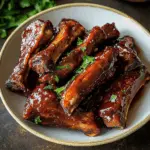
Golden chicken thighs tucked into a silky coconut sauce are the kind of dinner that disappears fast and gets requested again before the plates are cleared. The skin stays crisp enough to give you that first salty bite, then the sauce comes in creamy and fragrant with ginger, garlic, and lime. It tastes like you spent a lot longer at the stove than you actually did.
What makes this version work is the order. The chicken gets a proper sear first, which leaves the skillet with browned bits that turn into the base of the sauce instead of getting washed away. Full-fat coconut milk matters here; light coconut milk turns thin and leaves you with a brothier finish. A little soy sauce deepens the flavor without making the dish taste overtly Asian restaurant-style, and the lime at the end keeps the coconut from feeling heavy.
Below, I walk through the part that matters most: how to keep the sauce creamy, not split, and how to know exactly when the chicken is done. There are also a few smart swaps if you want to make it dairy-free, lower-carb, or work with boneless chicken instead.
The sauce turned out silky and thick, not watery at all, and the chicken stayed juicy even after simmering. My husband kept going back for more rice just to get the extra coconut-lime sauce.
Pin this creamy coconut milk chicken for a fast skillet dinner with crisp chicken, ginger-garlic coconut sauce, and a bright lime finish.
The Secret to Keeping Coconut Milk Sauce Creamy Instead of Broken
The most common mistake with coconut milk chicken is rushing the simmer. Full-fat coconut milk can handle heat, but it doesn’t like a hard boil after the chicken goes back in. Keep the pan at a gentle bubble, just enough movement that you can see the sauce around the edges shifting. If it boils aggressively, the sauce can separate and the texture goes from silky to greasy.
The other thing that matters is the sear. You want the skin deeply golden before you flip it, because that color and flavor are what give the sauce its backbone. If the chicken is pale when it comes out of the pan, the finished dish tastes flatter no matter how good the coconut milk is. That first 10 minutes at the stove are carrying most of the flavor here.
- Chicken thighs — Bone-in, skin-on thighs stay juicy through the simmer and give you the best flavor. Boneless thighs will work, but they cook faster and won’t give you the same rich pan drippings.
- Full-fat coconut milk — This is not the place for the light stuff. You need the fat for body and for a sauce that coats the chicken instead of pooling thinly in the skillet.
- Coconut oil — It reinforces the coconut flavor and handles the sear well. If you don’t have it, use a neutral oil, but the dish loses a little of that rounded coconut aroma.
- Ginger, garlic, and onion — These build the savory base. Fresh ginger matters most here; powdered ginger won’t give the same bright warmth.
- Soy sauce and lime — Soy sauce deepens the sauce without making it taste salty in a one-note way, and lime wakes everything up at the end. Add the lime after simmering, or the acidity can dull the creamy texture.
What Each Ingredient Is Actually Doing in This Chicken

- Chicken (the protein star) — Pat dry so it browns instead of steams. Room temperature cooks more evenly.
- Oil or butter (the browning medium) — High-heat oil is essential. Creates flavor through browning.
- Seasonings (salt, pepper, spices, herbs) — Don’t hold back. Chicken carries the entire flavor profile.
- Aromatics (garlic, ginger, onion) — Cook with fat to bloom flavors. They become the foundation.
- Sauce or liquid (the moisture keeper) — This prevents dryness and adds flavor. Balance richness with acid.
- Acid (lemon, vinegar, wine, or tomato) — This brightens and prevents one-dimensional flavor.
- Optional vegetables — Layer by cooking time so everything finishes together.
- Proper doneness (165°F internal temperature) — Use a thermometer for accuracy. Overcooked is dry.
Getting the Chicken Sear and Sauce Base Right
Seasoning the Thighs
Coat the chicken evenly with salt, pepper, garlic powder, and turmeric, then let it sit while the skillet heats. The turmeric is subtle, but it gives the sauce a warm golden color that makes the finished dish look as good as it tastes. If the chicken goes into the pan wet from seasoning paste or excess moisture, the skin steams instead of crisping. Patting the thighs dry before seasoning gives you a much better sear.
Building the Golden Crust
Place the thighs skin-side down in hot coconut oil and leave them alone for 6 to 7 minutes. If you keep moving them, the skin never has time to release and crisp properly. You want to hear a steady sizzle and see the edges turn deep amber before you flip. After the second side gets a few minutes of color, pull the chicken out so the fond stays in the pan and the meat doesn’t overcook while you build the sauce.
Turning the Skillet Bits Into Sauce
Add the onion to the same skillet and cook it until it softens and picks up the browned bits stuck to the bottom. Then stir in the garlic, ginger, and red pepper flakes for just a minute, long enough to smell them bloom but not long enough for the garlic to brown. Pouring in the coconut milk and broth after that loosens everything into the sauce. If the pan looks a little crusty before the liquids go in, that’s good — those bits are flavor.
Finishing the Simmer
Return the chicken skin-side up so the top stays out of the sauce while the meat finishes cooking. Cover and simmer gently until the chicken reaches 165°F at the thickest part. The sauce should look slightly thickened and glossy, not reduced to a paste. Stir in the lime juice and zest at the end, then taste before serving; sometimes it needs a pinch more salt after the citrus goes in.
How to Adapt This for Different Diets and Different Chicken Cuts
Boneless Chicken Thighs for a Faster Dinner
Boneless thighs shave off a few minutes and still stay tender, but they won’t give you the same deep seared flavor or pan drippings as bone-in pieces. Reduce the simmer time and start checking early, because they can go dry if left in the sauce too long. The finished dish will be a little lighter in texture and a little less rustic.
Gluten-Free Without Losing the Savory Edge
Use tamari or a certified gluten-free soy sauce in place of standard soy sauce. The flavor stays deep and salty, so the dish still tastes balanced against the coconut milk. No other changes are needed.
Dairy-Free Is Already Built In
This recipe is naturally dairy-free as written, which is part of why the sauce feels so rich without cream. Stick with full-fat coconut milk so the texture stays lush and spoonable. Anything lower in fat will make the sauce thinner.
Serving It Over Cauliflower Rice Instead of Jasmine Rice
If you want a lower-carb plate, cauliflower rice works well because the sauce is the star and it doesn’t need a strongly flavored base. Sauté the cauliflower rice separately so it doesn’t water down the coconut sauce on the plate. You’ll lose the extra soak-up power of jasmine rice, but the dish still lands with plenty of richness.
Storage and Reheating
- Refrigerator: Store leftovers in an airtight container for up to 4 days. The sauce may thicken in the fridge, which is normal.
- Freezer: It freezes well for up to 2 months, though the coconut sauce may separate slightly after thawing. Freeze in portions and thaw overnight in the refrigerator for the smoothest result.
- Reheating: Reheat gently on the stove over low heat with a splash of broth or water. High heat is the mistake here; it can split the sauce and dry out the chicken.
Questions I Get Asked About This Recipe

Creamy Coconut Milk Chicken
Ingredients
Equipment
Method
- Season the chicken thighs with salt, pepper, garlic powder, and turmeric until evenly coated.
- Heat the coconut oil in a large skillet over medium-high heat; sear the chicken skin-side down for 6-7 minutes until the skin is golden.
- Flip the chicken and sear for 3 more minutes, then remove to a plate.
- Cook the diced onion in the same skillet for 3 minutes, stirring until softened.
- Add the minced garlic, grated ginger, and red pepper flakes, and cook for 1 minute until fragrant.
- Pour in the coconut milk and chicken broth, stir in the soy sauce, and bring the mixture to a simmer.
- Return the chicken to the skillet skin-side up, cover, and simmer over medium-low for 18-20 minutes until the internal temperature reaches 165°F.
- Stir in the lime juice and lime zest, then garnish with fresh cilantro and serve over jasmine rice with lime wedges.