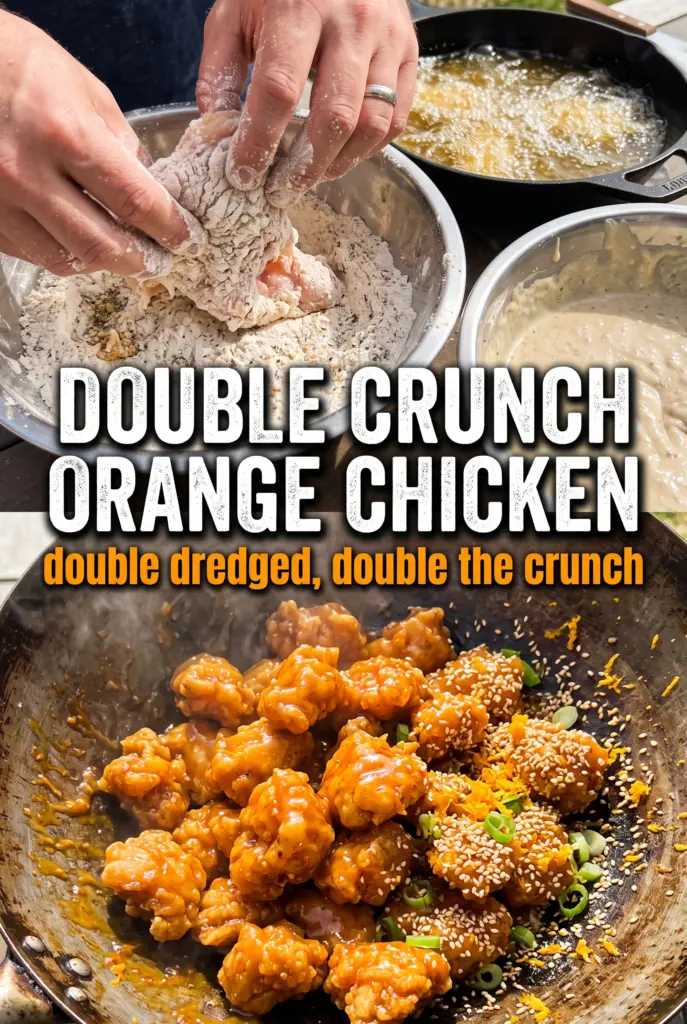
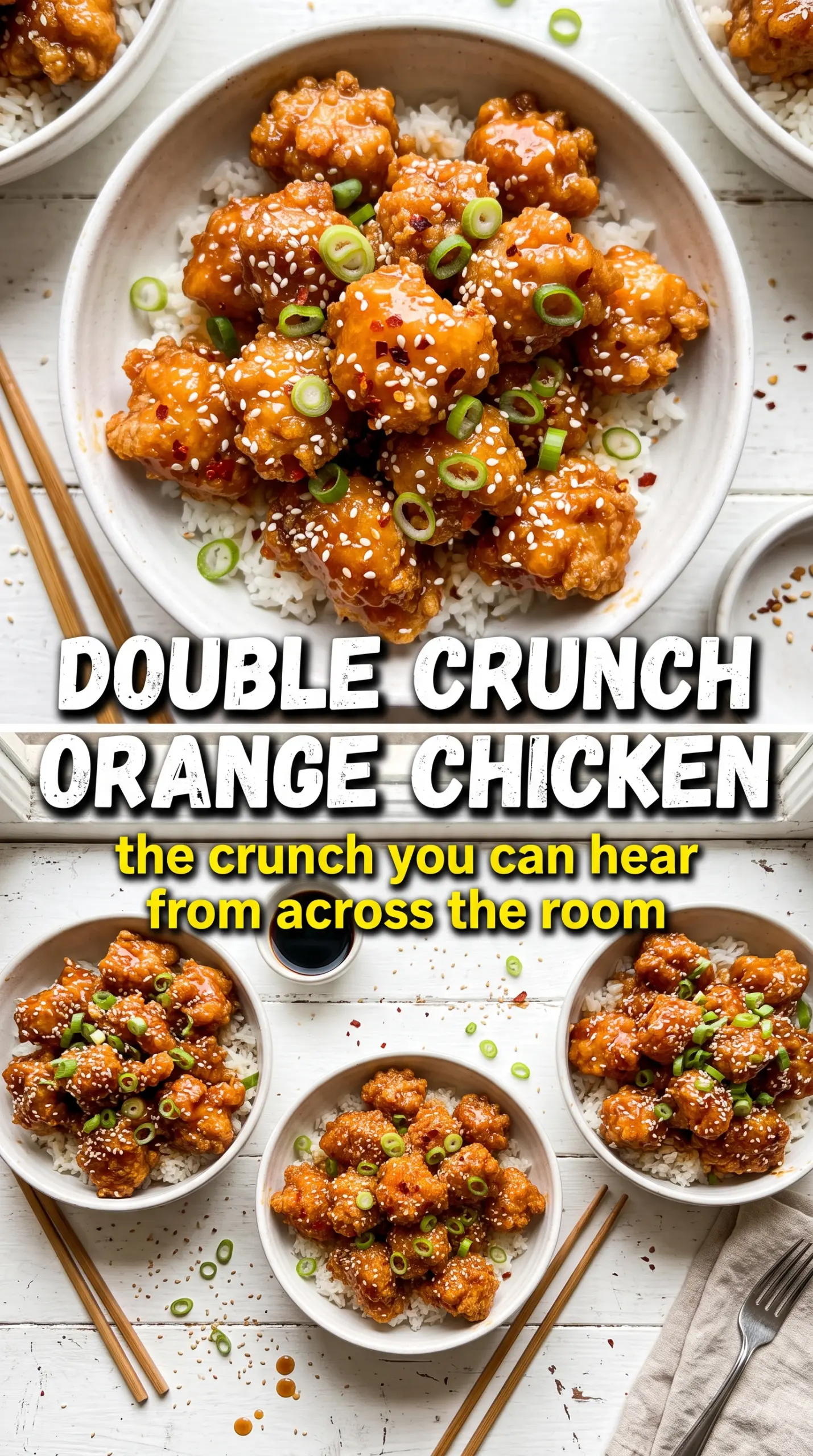
Double crunch orange chicken lands with the kind of crisp edge that holds up under sauce instead of going soft the second it hits the bowl. The chicken stays shattery and golden, then gets coated in a bright orange glaze that tastes like fresh citrus first, savory soy and garlic second, and a little caramelized sweetness at the finish. It’s the kind of takeout-style dinner that gets eaten fast because every bite has contrast.
The double-dip is what makes this version work. A first coat of egg and flour builds the base, then the second pass gives the chicken enough rough texture to fry up with real craggy crunch. The sauce matters just as much: fresh orange juice and zest keep it from tasting flat, while a quick cornstarch slurry thickens it into a glossy coating that clings without turning syrupy.
Below you’ll find the exact fry temperature that keeps the coating from absorbing oil, plus the small timing details that keep the sauce from dulling that crisp shell too early.
The chicken stayed crisp even after I tossed it in the sauce, and the orange flavor was bright without being too sweet. I followed the fry time exactly and it came out better than the takeout version we usually get.
Double crunch orange chicken with extra-crispy coating and sticky citrus glaze
The Trick That Keeps the Coating Crunchy Under the Sauce
The biggest mistake with orange chicken is frying a coating that looks crisp, then drowning it in sauce before the shell has a chance to set. This version works because the chicken gets a double dredge, which builds a rougher, thicker crust that stands up to tossing. A single dip can taste fine, but it gives you a smoother surface that softens faster once the glaze hits it.
The other key move is frying at 375°F. If the oil runs too cool, the coating drinks oil and turns heavy. If it runs too hot, the outside browns before the chicken cooks through. At the right temperature, the crust turns deeply golden in about 5 to 6 minutes and comes out audibly crisp when it hits the rack or paper towels.
- Double dredging creates the craggy texture that makes this recipe stand out.
- Thigh meat stays juicy through frying better than breast meat and gives you more forgiveness if a piece goes a little longer in the oil.
- The sauce waits until the chicken is done so the crust gets coated, not steamed.
What Each Ingredient Is Actually Doing in the Sauce and Coating
- Cornstarch and flour work together here. Cornstarch gives the shatter, flour gives the structure, and the mix fries up lighter than flour alone. If you swap in all flour, the crust turns more bready and less crisp.
- Chicken thighs are the right choice for frying. They stay tender and juicy, and that matters because the coating is already doing a lot of work. Chicken breast can work, but it dries out faster and gives you less margin.
- Fresh orange juice and zest are what make the sauce taste alive. Bottled juice tastes flatter and sweeter, and you lose the perfume that comes from the zest. If you’re tempted to skip the zest, don’t — it’s the difference between orange-flavored and bright orange chicken.
- Hoisin, soy sauce, garlic, and ginger keep the glaze from tasting one-note. The hoisin brings a little body and depth, soy adds salt and savoriness, and the garlic-ginger base gives the sauce the same back-notes you get from good takeout.
- The cornstarch slurry is the finish that makes the sauce cling. Add it only after the liquid is boiling so it thickens cleanly instead of turning grainy or thin.
Getting the Fry and Sauce to Meet at the Right Moment
Mixing the Dredge
Stir the cornstarch, flour, garlic powder, salt, and pepper together before any chicken goes in. A thorough mix keeps the coating even, so you don’t end up with clumps of plain flour in one batch and heavy salt pockets in another. Beat the eggs in a separate bowl and keep one hand for wet and one for dry if you want to avoid the paste-on-your-fingers mess that slows everything down.
Building the Double Crunch
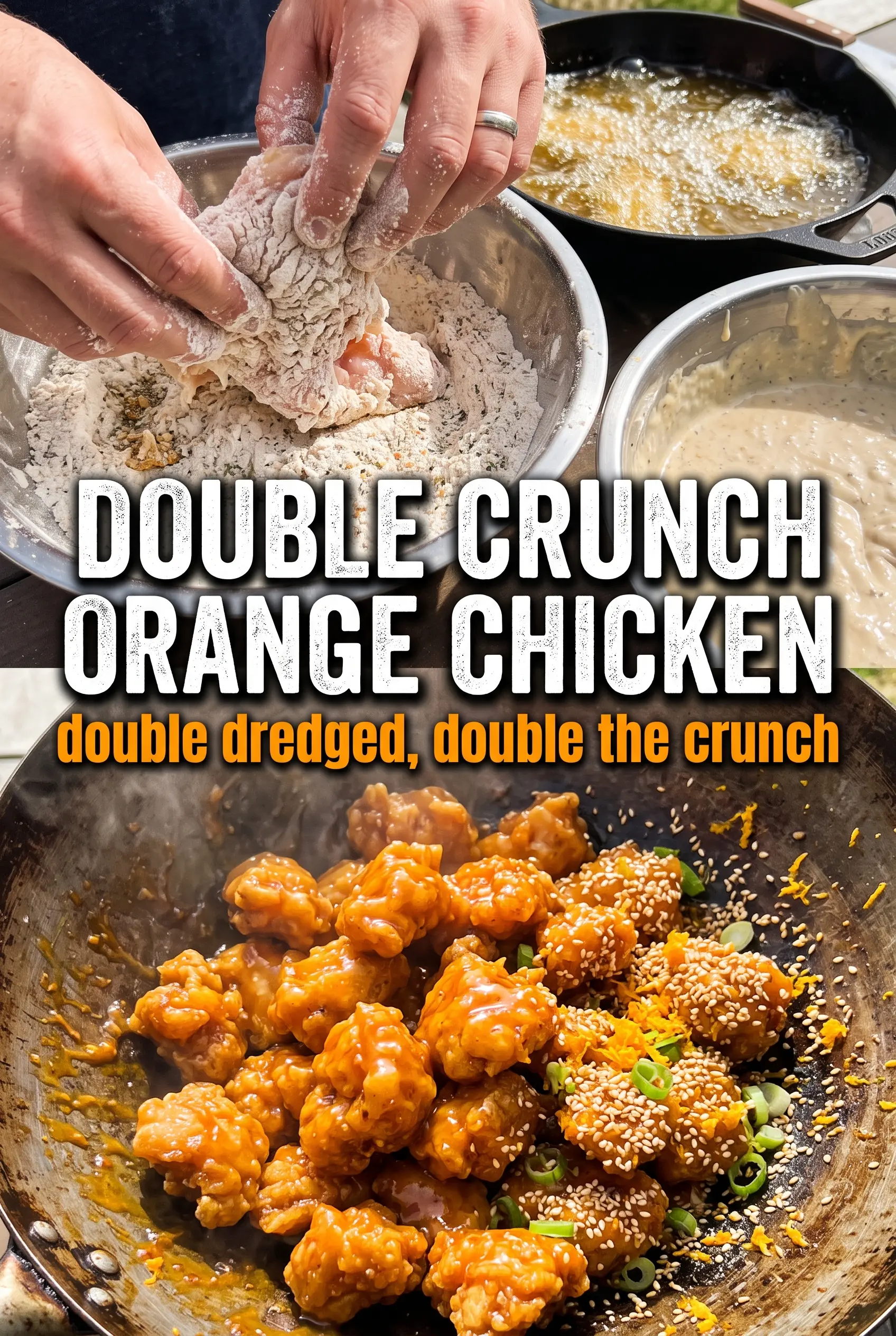
Coat each piece in egg and dredge it through the flour mixture, then go back into the egg and flour again. Press the coating on lightly so it sticks, but don’t pack it down into a smooth shell. Those uneven bits are what fry into the best crunch. If the chicken looks wet in spots before frying, the crust will slide off, so let the pieces sit on a tray for a minute while the oil heats.
Frying to Deep Gold
Fry in batches and keep the oil around 375°F. Crowding the pan drops the temperature fast, which leads to greasy chicken instead of crisp chicken. The pieces should sizzle immediately, turn deep golden in 5 to 6 minutes, and feel firm when you lift one out. Drain them on a rack if you have one; a paper-towel pile underneath works in a pinch, but a rack keeps the bottom from steaming.
Cooking the Orange Glaze
Bring the orange juice, zest, soy sauce, brown sugar, rice vinegar, hoisin, garlic, ginger, and sesame oil to a boil before you add the slurry. That boil is what activates the thickening power of the cornstarch. Once the slurry goes in, stir constantly and cook just until the sauce turns glossy and coats a spoon. If it goes too long, it can turn sticky and overreduced instead of silky.
Tossing Without Losing the Crunch
Put the fried chicken in a large bowl and pour the sauce over it right before serving. Toss quickly and stop as soon as every piece is coated. The longer the chicken sits in the sauce, the softer the crust gets, so have the rice ready and serve it immediately. A scatter of sesame seeds and sliced green onions gives it the right finish and keeps the bowl from tasting heavy.
How to Adjust This Without Losing the Crunch or the Balance
Gluten-Free Version
Use a gluten-free all-purpose flour blend in place of the regular flour and swap in tamari for the soy sauce. The coating will still crisp, though it may be a touch more delicate, so handle the chicken gently after frying and toss it in sauce at the very end.
Lower-Sugar Orange Chicken
Cut the brown sugar back to 2 tablespoons if you want a sharper citrus finish. The sauce will taste less like classic takeout glaze and more like a bright orange-savory sauce, and that works well if you don’t want the sticky sweetness to dominate.
Baked Instead of Fried
Bake the coated chicken on a well-oiled rack over a sheet pan at high heat until it’s deeply browned and cooked through. You’ll lose some of the jagged, shattering crunch from frying, but you still get a crisp exterior and the same bold orange glaze.
Storage and Reheating
- Refrigerator: Store leftovers up to 3 days. The coating softens in the sauce, but the flavor stays strong.
- Freezer: Freeze the fried chicken and sauce separately if you want the best texture. Sauce freezes well; the coated chicken will lose some crunch after thawing, so this isn’t the ideal make-ahead for a crispy finish.
- Reheating: Reheat the chicken in a 400°F oven or air fryer until hot and re-crisped, then warm the sauce separately and toss right before serving. If you reheat it all together, the crust steams and goes soggy fast.
Answers to the Questions Worth Asking
Double Crunch Orange Chicken
Ingredients
Equipment
Method
- Mix cornstarch, flour, garlic powder, salt, and pepper in a wide bowl. Set up a tray lined with sheet pan for the double-dipped chicken and keep the coating ready.
- Dip the chicken pieces into the beaten eggs until coated. Let excess egg drip off so the first flour layer can grip evenly.
- Dredge the egg-coated chicken in the flour mixture, pressing lightly to adhere. Place the pieces on the lined sheet pan.
- Double-dip by returning coated chicken to the beaten eggs, then dredge again in the flour mixture. Lay back on the sheet pan so the coating sets before frying.
- Heat vegetable oil to 375°F in a cast iron skillet or Dutch oven. Keep the oil at temperature for consistent crisping.
- Fry the chicken at 375°F for 5-6 minutes until deeply golden and cooked through. Pull to a rack or sheet pan to drain and set.
- In a saucepan, combine orange juice, orange zest, soy sauce, brown sugar, rice vinegar, hoisin sauce, garlic, ginger, and sesame oil. Bring to a boil until the liquid looks vivid orange and slightly thickened.
- Stir in the cornstarch slurry and cook for 2-3 minutes until thick and glossy. Reduce heat if needed so the sauce bubbles steadily without turning dark.
- Toss the crispy chicken in the orange sauce until evenly coated. Use a gentle toss so the coating stays crisp.
- Serve the double crunch orange chicken over steamed rice and top with sesame seeds and sliced green onions. Add the garnish right before serving for a fresh pop of color and aroma.