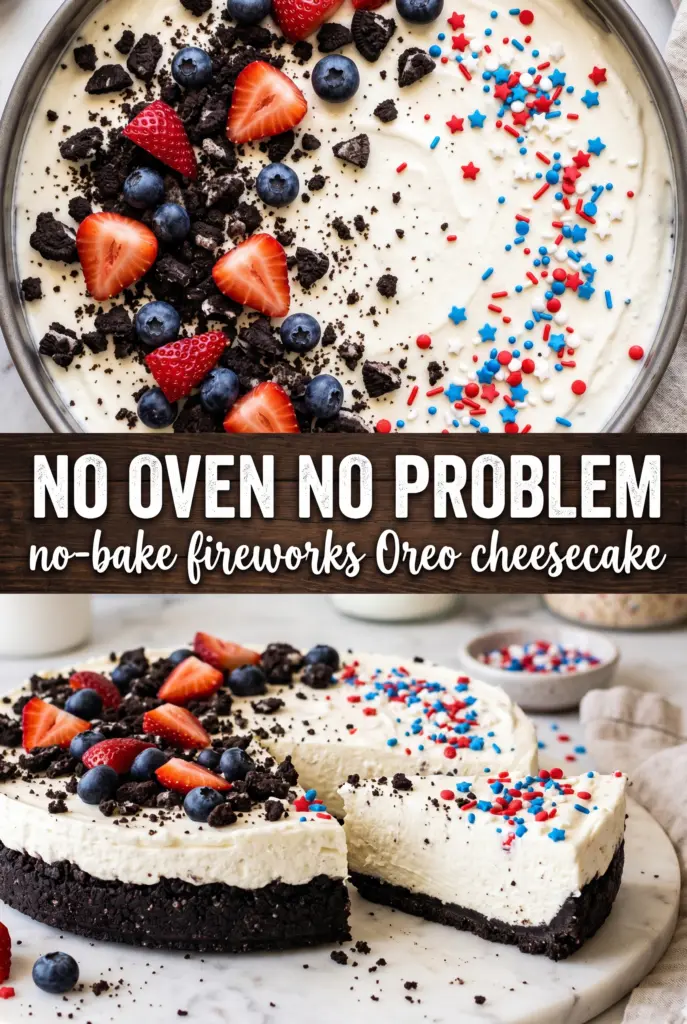
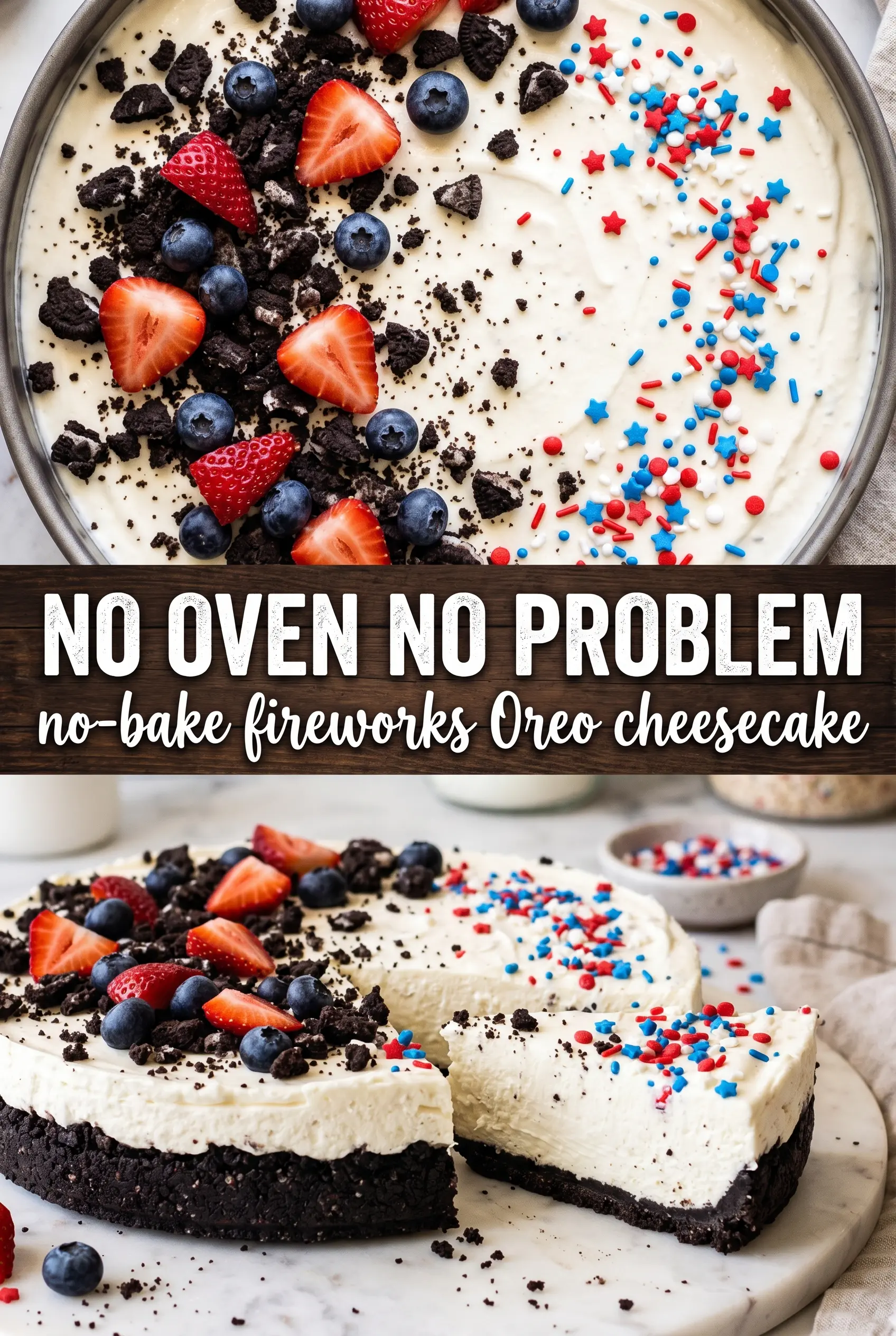
Crushed Oreos, a thick vanilla cheesecake filling, and a cold, clean set make this no-bake Fireworks Oreo Cheesecake the kind of dessert people ask about before the first slice is gone. The Oreo crust stays firm enough to hold a neat wedge, while the filling cuts like a proper cheesecake instead of slumping on the plate. That balance is what makes this one worth keeping in the rotation.
The trick is in the texture at every stage. The crust needs enough butter to pack tightly, but not so much that it turns greasy. The filling starts with softened cream cheese beaten until it’s silky, then whipped cream is folded in for lift without losing the dense, creamy body that makes no-bake cheesecake taste finished instead of fluffy and vague.
Below, I’ve included the timing that matters, the decoration order that keeps the top looking crisp, and the small swaps that still give you a clean slice when you need to make this ahead.
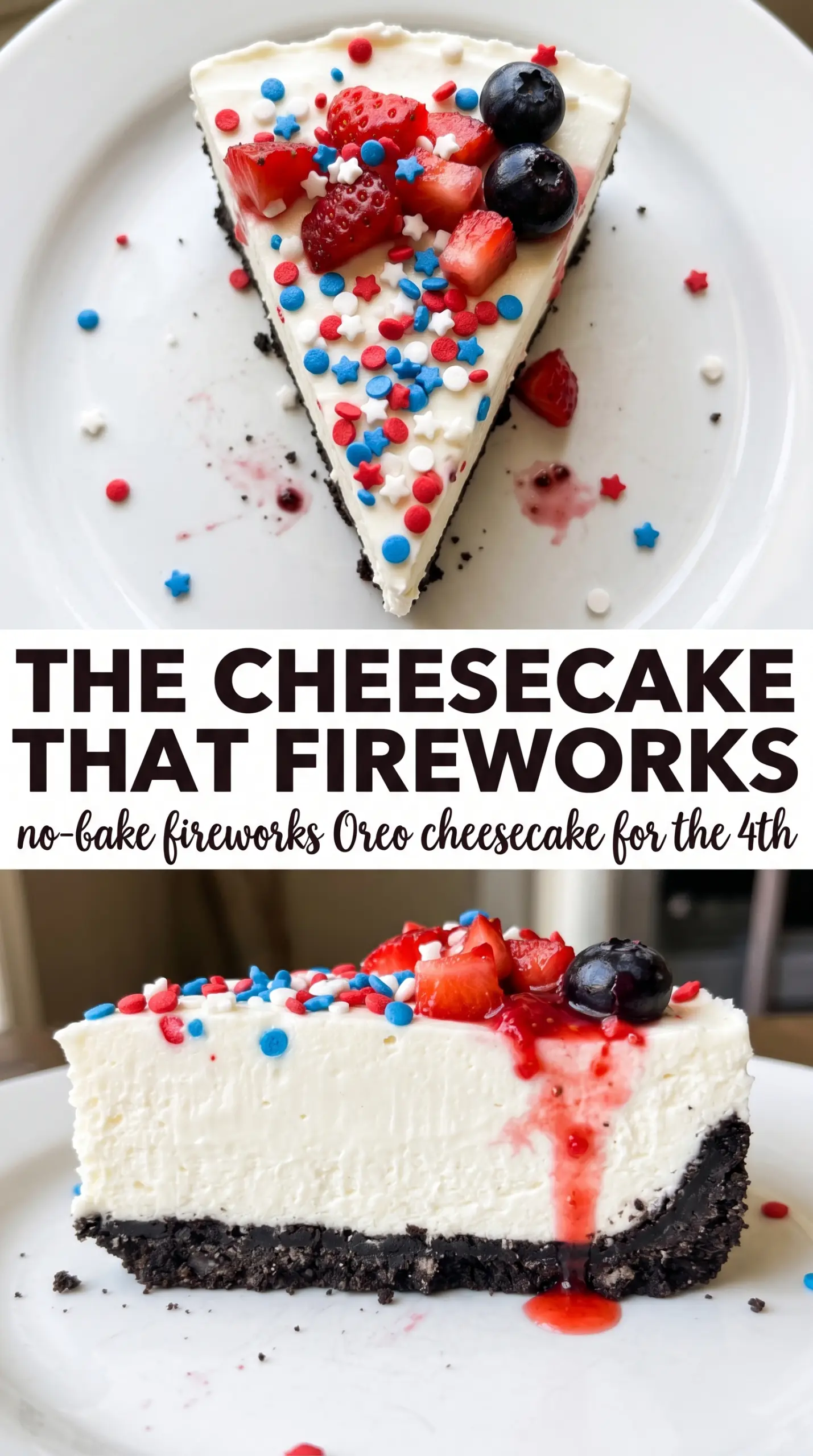
The filling set up beautifully overnight and sliced cleanly without sticking to the knife. I loved how the Oreo crust stayed firm and the sprinkles held their color on top.
Like this no-bake Fireworks Oreo Cheesecake? Save it to Pinterest for the dessert table when you want a chilled Oreo crust, creamy filling, and a red-white-blue finish.
The Part That Keeps No-Bake Cheesecake from Going Soft
The biggest mistake with no-bake cheesecake is underwhipping the cream or rushing the chill time. If the whipped cream is only at soft peaks, it won’t hold enough air to support the filling, and the cheesecake will cut loosely instead of standing tall. If the crust goes into the freezer or fridge but the filling doesn’t get the full set, the center will still look fine while the slice slowly relaxes on the plate.
This version avoids both problems by using a packed Oreo crust and a filling that’s thick before it ever hits the pan. The cream cheese gets beaten smooth first, which matters because any small lumps will stay lumps once the whipped cream goes in. After that, the whipped cream is folded in gently so the filling stays light but stable.
- Softened cream cheese — This needs to be fully softened or the filling will stay grainy. Room temperature cream cheese beats smooth much faster and keeps you from overmixing the cream later.
- Heavy whipping cream — This is what gives the cheesecake its structure without gelatin. Whip it to stiff peaks; anything looser will make the filling too soft to slice cleanly.
- Oreos — The cream filling stays in the cookies here, and that’s part of the crust’s binding power. A food processor gives the cleanest crumbs, but a sealed bag and rolling pin works if the crumbs end up fine and even.
- Butter — Use melted unsalted butter for the crust so you control the salt level. If the crumbs still look dusty after stirring, add a teaspoon more butter rather than guessing later with a crumbly base.
Building the Filling So It Sets in Clean Slices
- Crust — The Oreo crumbs and melted butter should look like wet sand and hold together when squeezed. Press them firmly into the pan with the bottom of a measuring cup so the crust doesn’t crumble when you cut the first slice.
- Cream cheese mixture — Beat the cream cheese, powdered sugar, and vanilla until the mixture looks glossy and completely smooth. If you stop early, little pockets of unmixed cream cheese will show up after chilling.
- Whipped cream — Whip to stiff peaks in a chilled bowl if you can. That extra cold helps it reach stable peaks faster and keeps the filling from loosening as you fold.
- Decorations — Add the whipped cream swirls, sprinkles, and crushed Oreos after the cheesecake is fully set. If you decorate too early, the toppings sink into the surface and lose that fireworks look.
The Chill Time That Makes the Whole Dessert Work
Pressing the Oreo Crust
Mix the crushed Oreos with melted butter until every crumb looks coated, then press the mixture firmly into a 9-inch springform pan. You want an even layer with a slight rim at the edge if you like cleaner slices, but the key is compression, not thickness. A loose crust falls apart when the knife goes in, while a tightly packed crust holds its shape from the fridge to the table.
Making the Creamy Base
Beat the softened cream cheese, powdered sugar, and vanilla until the mixture is smooth and light, scraping the bowl so no dense streaks stay hidden at the bottom. The filling should look satiny before the whipped cream goes in. If the cream cheese is cold, the mixture will stay lumpy and those lumps won’t disappear later.
Folding in the Whipped Cream
Whip the heavy cream to stiff peaks, then fold it into the cream cheese mixture in two additions. Use a wide spatula and cut down through the center rather than stirring in circles, or you’ll knock out the air that helps the cheesecake hold. Stop as soon as the mixture looks uniform; overmixing here softens the texture and can turn the filling loose.
Chilling and Decorating
Pour the filling over the chilled crust, smooth the top, and refrigerate for at least 6 hours, though overnight gives the cleanest slices. The center should feel fully set when you press it lightly; if it still jiggles like pudding, it needs more time. Decorate only after it’s firm, then pipe whipped cream around the edge and scatter the red and blue sprinkles with the crushed Oreos in the center for that fireworks burst look.
How to Adapt This Cheesecake Without Losing the Set
Gluten-Free Oreo Cheesecake
Use gluten-free sandwich cookies in place of regular Oreos. The method stays the same, but check that the cookies crush into fine crumbs, because some gluten-free versions are a little drier and may need an extra teaspoon of melted butter to pack firmly.
Dairy-Free Version
Use dairy-free cream cheese and a plant-based whipping cream that lists whipping or dessert topping performance. The texture will be a little softer and the flavor a touch less rich, so chill it overnight and slice with a warm knife for the cleanest result.
Chocolate-Forward Filling
Fold in 1/4 cup sifted cocoa powder with the powdered sugar if you want a darker, more Oreo-heavy filling. It tightens the mixture slightly, so stop folding as soon as it comes together and expect a denser, less vanilla-forward slice.
Storage and Reheating
- Refrigerator: Store covered for up to 4 days. The crust stays best in the first 2 days, but the filling holds nicely after that.
- Freezer: Freeze without the whipped cream topping for up to 1 month. Wrap the whole cheesecake or individual slices tightly, then thaw in the refrigerator overnight.
- Reheating: No reheating needed. Serve it chilled; warming this cheesecake will soften the filling and collapse the structure you worked to build.
Answers to the Questions Worth Asking
No-Bake Fireworks Oreo Cheesecake
Ingredients
Equipment
Method
- Mix the crushed Oreo cookies with the melted unsalted butter until the texture resembles wet sand. Press firmly into the bottom of a 9-inch springform pan and refrigerate.
- Refrigerate the crust until firm, about 10 minutes. Keep it chilled so the filling sets cleanly later.
- Beat the softened cream cheese, powdered sugar, and vanilla extract until completely smooth with no lumps. Scrape the sides and bottom as needed for an even texture.
- In a separate bowl, whip the heavy whipping cream to stiff peaks. Fold it gently into the cream cheese mixture in two additions to keep the filling airy.
- Pour the filling over the chilled crust and smooth the top with an offset spatula. Tap the pan lightly to release any large air bubbles.
- Cover and refrigerate for at least 6 hours or overnight until fully set. Chill until the center looks firm when gently shaken.
- Before serving, pipe whipped cream around the edge in a starburst pattern. This creates the fireworks rim effect.
- Scatter red and blue star sprinkles across the center in a burst. Dust with crushed Oreos in a fireworks burst pattern for contrast.