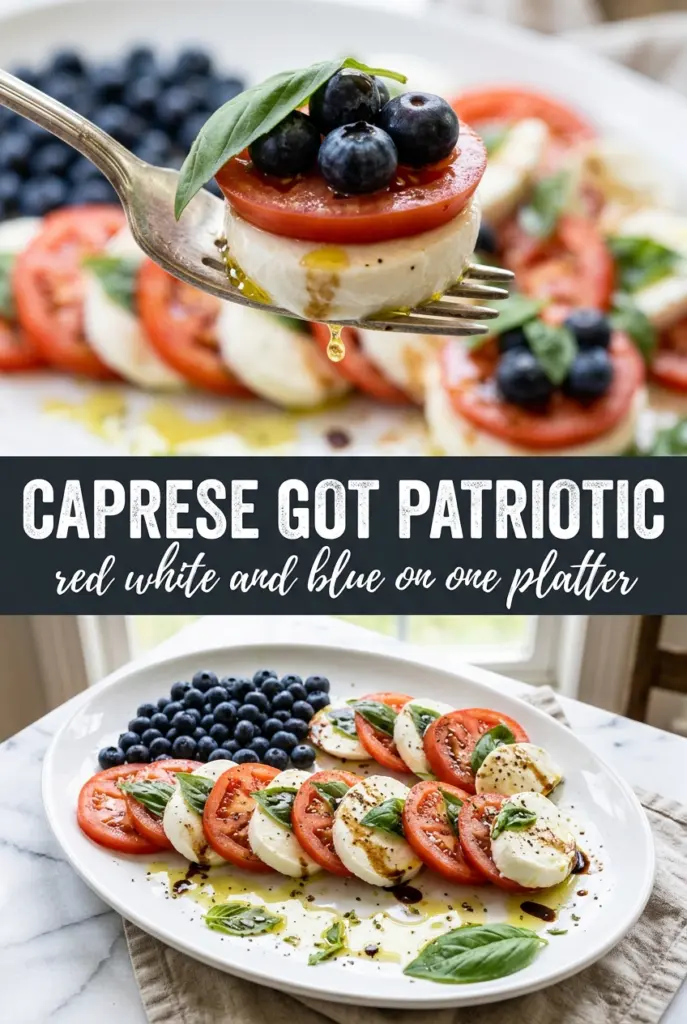
Juicy tomatoes, milky mozzarella, and sweet blueberries make this caprese salad feel festive without turning into a gimmick. The wreath-style presentation gives it that special-occasion look, but the real draw is the contrast in every bite: cool creaminess, bright acidity, and little pops of berry sweetness against basil and balsamic.
The key is using tomatoes that are ripe enough to taste like something and mozzarella that’s firm but tender, not wet and spongy. I also like to keep the blueberries whole so they stay plump and don’t bleed into the cheese. A light hand with the balsamic glaze matters here too; you want a finish that ties everything together, not a heavy dressing that drowns the platter.
Below, I’ll walk through the best way to build the wreath so it looks full and balanced, plus a few smart swaps for different diets and serving situations. If you’ve ever had a caprese salad that looked pretty but ate flat, this version fixes that problem.
The wreath stayed neat right up until serving, and the blueberries added the sweetest little pop against the tomato and mozzarella. I was worried the balsamic would make it soggy, but it held beautifully for our whole cookout.
Save this red, white & blue caprese salad for the next cookout when you want a wreath-style appetizer that looks polished and tastes fresh in 15 minutes.
The Trick to Keeping a Caprese Wreath From Looking Flat
Caprese salad can go limp fast if the slices are piled too tightly or the platter is too small for the amount of cheese and tomatoes. The wreath pattern solves that by giving every slice room to breathe, which keeps the presentation sharp and makes it easier to serve without the whole thing collapsing into one watery pile.
The other thing that matters here is layering order. Tomato and mozzarella go down first because they create the structure, then the blueberries and basil fill the gaps. If you start by scattering the loose ingredients, you end up chasing them around the platter and the finished salad looks scattered instead of intentional.
What Each Ingredient Is Actually Doing in This Salad
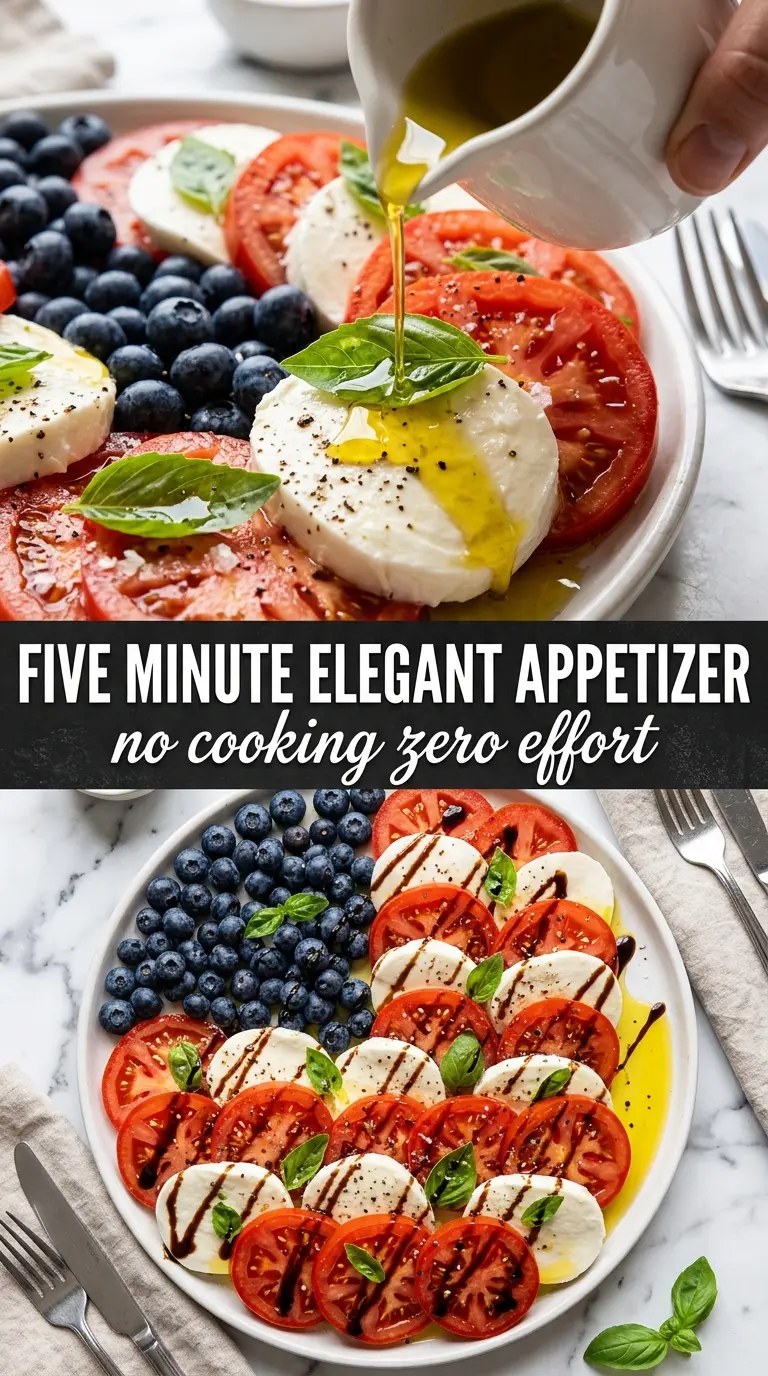
- Heirloom or beefsteak tomatoes — Use the ripest tomatoes you can find because they carry the whole salad. Firm, flavorless tomatoes make the dish taste hollow, and there’s no dressing strong enough to hide that. Slice them evenly so the wreath sits level.
- Fresh mozzarella — This gives you the creamy, milky balance that caprese needs. The pre-shredded stuff won’t work here, and even low-moisture mozzarella changes the texture too much. If you want cleaner slices, chill the cheese for 10 minutes before cutting.
- Blueberries — They add the blue color and a sweet burst that plays against the balsamic glaze. Fresh matters; frozen berries will weep and stain the cheese. Keep them whole so they stay plump and don’t bleed.
- Fresh basil — Basil is what keeps the salad tasting like caprese instead of a fruit-and-cheese board. Tear the larger leaves if they’re oversized, but leave the smaller ones whole so they don’t bruise and darken before serving.
- Balsamic glaze — Glaze clings better than straight balsamic vinegar, which would run off the platter and pool underneath. If you only have vinegar, simmer it down first until it coats a spoon. That’s what gives you the glossy finish without flooding the salad.
Building the Wreath So It Holds Its Shape
Start With the Outer Circle
Lay the tomato and mozzarella slices around the edge of the platter in alternating order, overlapping them by about a third. That overlap is what makes the wreath look full without needing a huge amount of cheese. If the slices are different sizes, tuck the larger ones toward the outside where the curve can hide the irregular edges.
Fill the Gaps With Blueberries and Basil
Once the circle is set, tuck the blueberries into the spaces between slices instead of scattering them on top. This keeps them from rolling off and gives the whole platter a balanced look. Add basil last so the leaves stay bright green; if you place them too early, they can wilt under the moisture from the tomatoes.
Finish With a Light Drizzle, Not a Flood
Drizzle the olive oil first, then the balsamic glaze in thin lines over the top. The goal is sheen and flavor, not saturation. If you pour too much glaze in one spot, it will pool and turn the bottom slices muddy before the platter even reaches the table.
Three Ways to Adapt This for Different Tables
Dairy-Free Version
Swap the mozzarella for thick slices of avocado or a dairy-free fresh cheese. You’ll lose the classic milky bite, but the salad still keeps its red, white, and blue look and feels just as polished on the platter.
Lower-Sugar Finish
Use a lighter hand with the balsamic glaze or swap in a very thin balsamic reduction. This keeps the salad brighter and more savory, which works well if your tomatoes are already sweet and juicy.
Making It Ahead for a Party
Slice the tomatoes and mozzarella a few hours ahead and keep them chilled separately, then assemble right before serving. The blueberries and basil should wait until the last minute so the herbs stay perky and the tomatoes don’t make the platter watery.
Adding Extra Protein
A few torn prosciutto ribbons or small pieces of cooked shrimp turn this into a more substantial appetizer. Keep the portions modest so the salad still reads as caprese, not a mixed platter.
Storage and Reheating
- Refrigerator: Best served immediately, but leftovers keep for 1 day. The tomatoes will release juice and the basil will darken, so the texture softens fast.
- Freezer: Don’t freeze this salad. The tomatoes, mozzarella, and blueberries all lose their texture once thawed.
- Reheating: No reheating needed. If you want to refresh leftovers, drain off excess liquid and add a few new basil leaves before serving cold.
Questions I Get Asked About This Recipe
Red, White & Blue Caprese Salad
Ingredients
Method
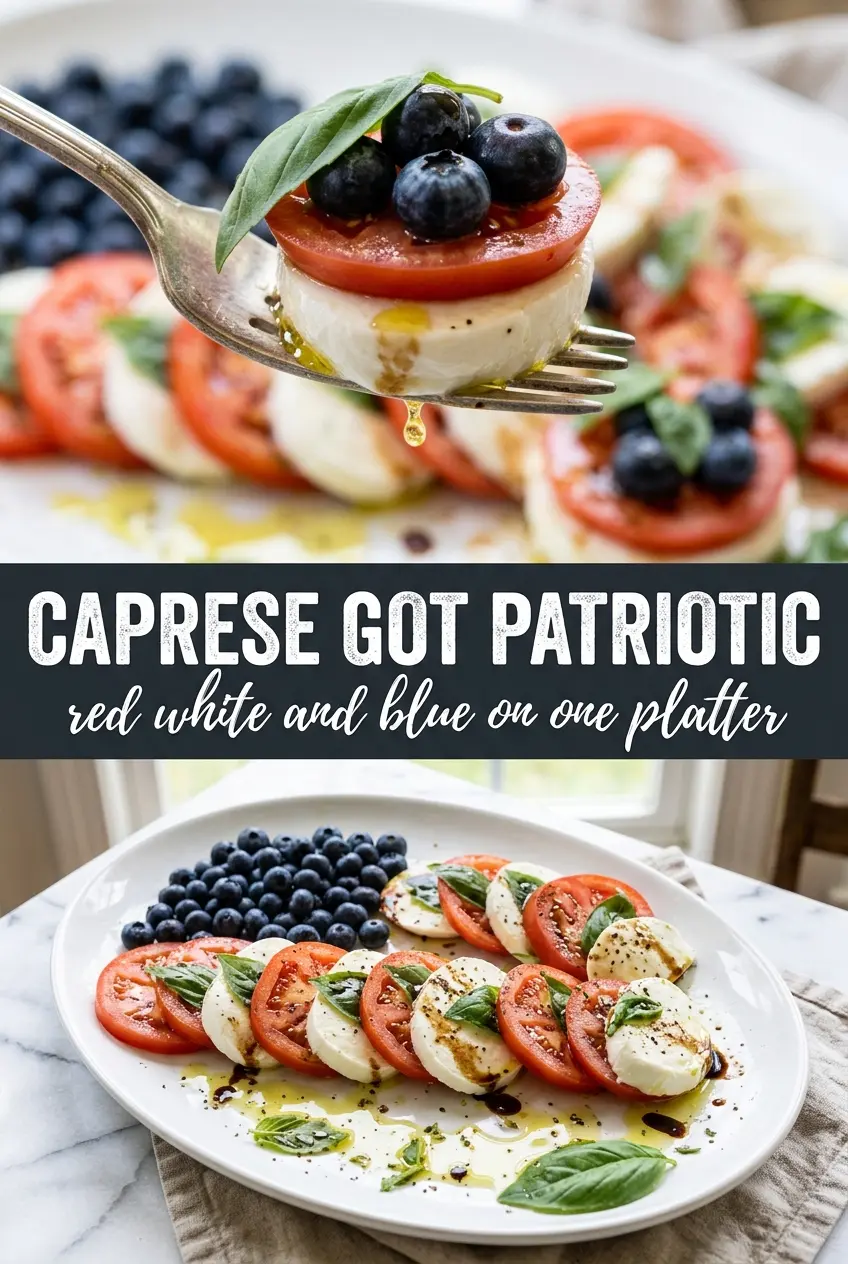
- Arrange alternating slices of tomato and mozzarella in an overlapping circle or wreath pattern on a large serving platter, keeping the layers even in thickness (about 1/4-inch). Visually check that the pattern creates a continuous ring with gaps left for the blue color.
- Tuck fresh blueberries in between and around the slices to fill gaps and add the blue element. Spread them so they’re visible throughout the wreath, not piled in one spot.
- Scatter fresh basil leaves throughout the wreath, tucking a few between tomato and mozzarella for better coverage. Aim for basil distributed across the top surface and along the edges.
- Drizzle extra virgin olive oil evenly across the whole platter so the salad looks lightly glossy. Follow with balsamic glaze in a thin, even layer over tomatoes, mozzarella, and blueberries.
- Finish with flaky sea salt and cracked black pepper to taste, then serve immediately. The final look should be vibrant red, white, and blue with visible basil and a sheen from the glaze.