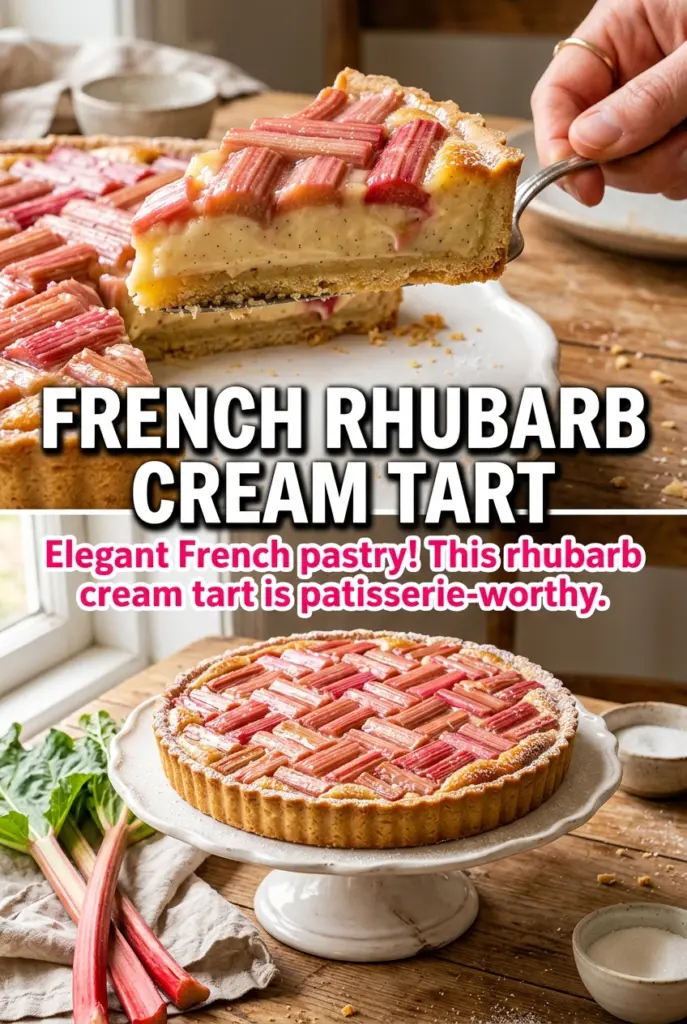
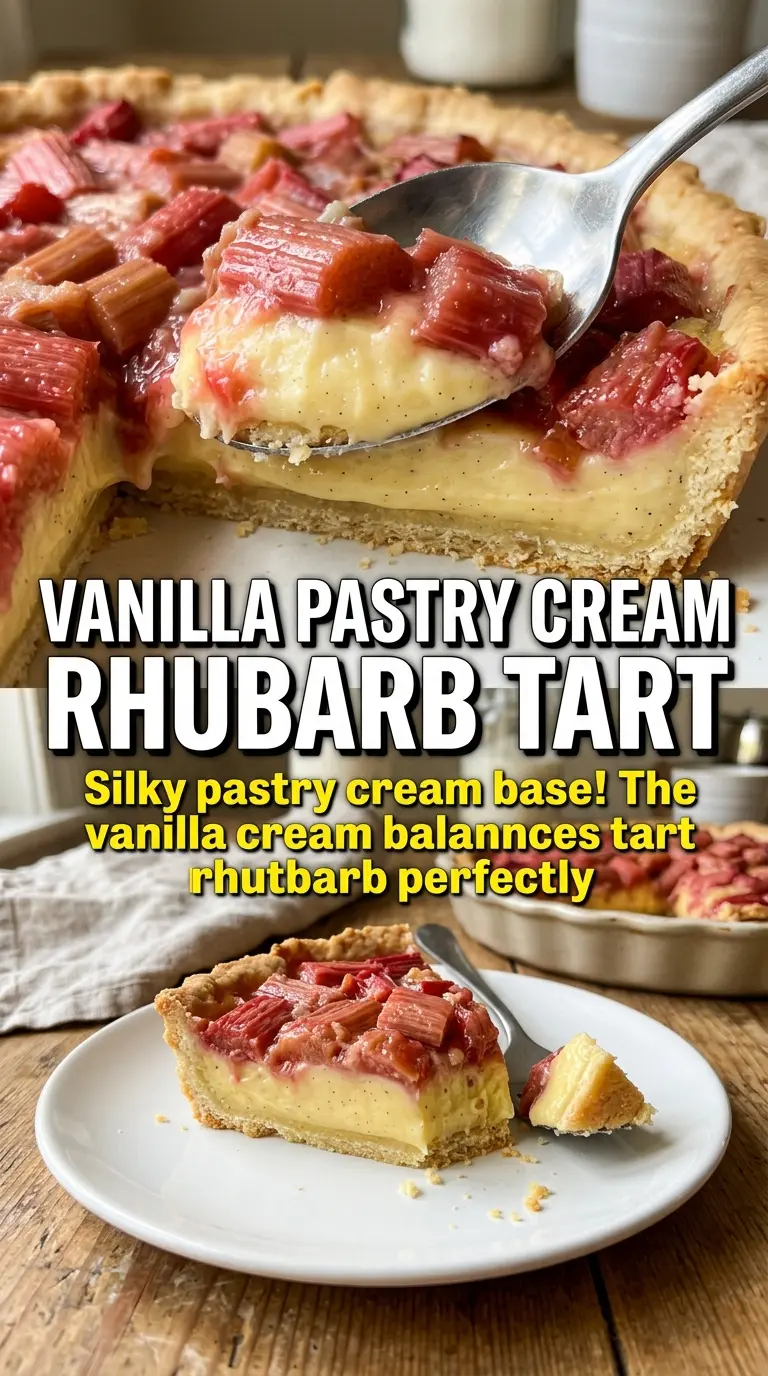
Buttery tart shell, vanilla pastry cream, and tender roasted rhubarb make this dessert feel polished without turning fussy in the kitchen. The crust stays crisp under the cream, the filling sets into a smooth layer that slices cleanly, and the rhubarb brings just enough sharpness to keep each bite from leaning too sweet.
What makes this version work is the balance of textures and the way each piece is handled separately before they come together. The tart shell gets baked first so it can hold up under the cream, the pastry cream is cooked until it’s thick enough to mound on a spoon, and the rhubarb is roasted instead of piled on raw, which softens it without washing out its color or turning the tart watery.
If you’ve ever had a cream tart go soggy or a custard that never quite set, the notes below will help you avoid both. I’ve included the little details that keep the shell crisp and the filling smooth, plus a few swaps if rhubarb is hard to find where you live.
The pastry cream set up beautifully and the roasted rhubarb kept its shape instead of turning mushy. I chilled it overnight and the slices held cleanly on the plate.
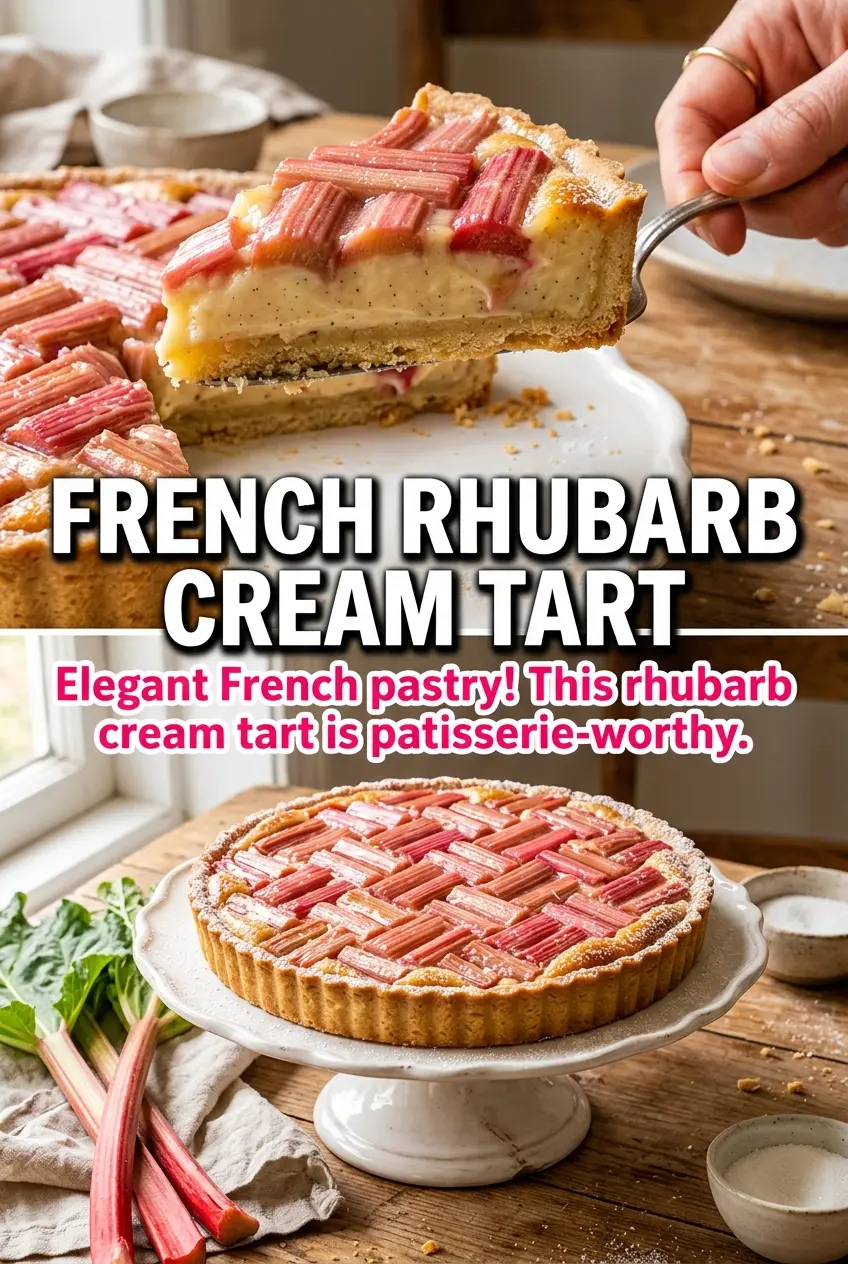
Rhubarb Cream Tart is the kind of dessert that slices cleanly, chills beautifully, and looks elegant with very little extra work.
The Part That Keeps the Tart Shell Crisp Under Cream
The mistake that ruins a cream tart is filling a shell before it’s truly baked and cooled. A partially baked crust looks fine for about ten minutes, then the pastry cream starts softening the bottom and you lose that clean, buttery snap when you cut into it. This shell needs to bake until it’s set and lightly golden at the edges, then cool completely before anything creamy touches it.
That extra cooling time matters just as much as the bake itself. If the shell is even slightly warm, the pastry cream loosens and the tart starts to slide when you arrange the rhubarb. A fully cool shell gives you a firm base, and the finished tart holds its shape after chilling instead of turning soft in the middle.
What Each Layer Is Doing in This Tart
- All-purpose flour — This gives the crust structure without making it tough. Pastry flour works too if that’s what you have, but all-purpose is plenty tender here as long as you don’t overwork the dough.
- Powdered sugar — It sweetens the crust and helps it bake up finer and more tender than a crust made with granulated sugar.
- Cold butter — Cold butter is what creates the flaky, sandy texture in the shell. Soft butter blends in too evenly and you lose that delicate crumb.
- Egg yolks — Yolks enrich both the crust and the pastry cream. In the cream, they’re what give you a lush set instead of a thin pudding texture.
- Cornstarch — This is the stabilizer. Flour won’t give the same smooth, clean slice, and the cream won’t firm up as neatly without cornstarch.
- Fresh rhubarb — Fresh stalks roast into tender pieces that still keep their shape. Frozen rhubarb tends to release too much liquid, so if you use it, thaw and drain it first.
- Honey — Honey rounds out the rhubarb’s sharp edge and gives the topping a glossy finish once it’s roasted.
Building the Tart So It Slices Cleanly
Pressing and Baking the Shell
Mix the flour and powdered sugar first, then cut in the cold butter until the mixture looks like coarse crumbs with a few pea-size pieces still visible. Those little pieces matter; they melt during baking and help the crust stay tender instead of compacted. Press the dough into the tart pan firmly enough that it holds together, but don’t grind it into a paste. Bake at 375°F until the shell looks dry and the edges are lightly golden, then let it cool all the way in the pan.
Cooking the Pastry Cream Until It Actually Thickens
Heat the milk and sugar until the milk is steaming and the sugar has dissolved, then whisk a little of that into the yolks and cornstarch before adding the yolk mixture back to the pan. That tempering step keeps the eggs from scrambling. Keep stirring over medium heat until the cream turns glossy and thick enough to leave a clear trail across the bottom of the pan when you drag a spoon through it. Pull it off the heat as soon as it reaches that point, then whisk in the butter and vanilla.
Roasting the Rhubarb Without Turning It to Jam
Toss the rhubarb with sugar and honey, then roast it at 400°F just until it’s tender at the edges and still has some shape in the middle. If it goes too long, it collapses and loses the clean look that makes the tart special. Let it cool on the tray so the juices settle a bit before you move it onto the cream. Warm rhubarb on a cold custard can make the surface weep.
Assembling and Chilling
Spread the cooled pastry cream into the tart shell in an even layer, then arrange the rhubarb on top in a pattern that looks intentional rather than crowded. Chill the tart for at least 3 hours so the cream can firm up and the flavors can settle together. If you cut it too soon, the filling will slump and the slices won’t hold their edges. A long chill is what turns this from a nice tart into a clean, polished dessert.
How to Adapt This Tart When Rhubarb Isn’t the Only Fruit on Hand
Strawberry-Rhubarb Version
Swap out one cup of the rhubarb for sliced strawberries and roast them together. The strawberries soften faster, so the topping tastes sweeter and a little less sharp, and you’ll get a jammy edge without losing the tart’s bright finish.
Gluten-Free Crust
Use a cup-for-cup gluten-free flour blend in the shell. The texture will be a little more fragile when you press it into the pan, but once baked and chilled, it still gives you a sturdy base for the cream.
Dairy-Free Adjustment
Use a rich unsweetened oat milk or coconut milk in the pastry cream and a good plant-based butter in both the crust and filling. The custard won’t taste exactly the same, but it will still set and slice cleanly if you keep the heat moderate and don’t rush the thickening.
Make-Ahead Timing
You can bake the shell and cook the pastry cream a day ahead, then assemble the tart the next day. Keep the cream pressed with plastic wrap directly on the surface so it doesn’t form a skin, and wait to add the rhubarb until you’re ready to chill the finished tart.
Storage and Reheating
- Refrigerator: Store covered for up to 3 days. The crust will soften a little over time, but the tart still holds its shape well.
- Freezer: I don’t recommend freezing the assembled tart. The pastry cream can separate after thawing and the rhubarb loses its clean texture.
- Reheating: Serve it cold straight from the fridge. This dessert is meant to be chilled, and warming it will loosen the custard and blur the tart’s clean layers.
Answers to the Questions Worth Asking
Rhubarb Cream Tart
Ingredients
Equipment
Method
- Mix all-purpose flour and powdered sugar, then cut in cold butter until the mixture looks sandy with small butter bits. If needed, squeeze a handful to confirm it clumps.
- Add egg yolk and cold water, then press the dough together until it forms a cohesive mass. Stop mixing once the dough holds shape.
- Press the dough evenly into a tart pan, then make sure the bottom is level and the sides are filled. Use firm, even pressure for a clean edge.
- Bake at 375°F for 20 minutes, until the crust is lightly golden at the edges. Look for a dry, set surface that doesn’t look wet.
- Heat milk and sugar in a pot over medium heat until steaming but not boiling. You should see small bubbles around the perimeter.
- Whisk egg yolks with cornstarch until smooth and pale. There should be no visible cornstarch lumps.
- Temper the egg mixture by slowly whisking in hot milk a little at a time. Continue until the mixture is well combined and silky.
- Cook the mixture, whisking constantly, until thick enough to coat the back of a spoon. Keep going until it reaches a pudding-like consistency.
- Stir in butter and vanilla extract until fully melted and glossy. The cream should look smooth and uniform.
- Cool the pastry cream by covering it with plastic wrap pressed to the surface. Prevent skin by ensuring the wrap touches the entire top.
- Spread the cooled vanilla cream into the baked tart shell. Fill evenly so the surface is level.
- Toss fresh rhubarb, sugar, and honey until every piece is coated. Arrange so the rhubarb has minimal clumping.
- Roast at 400°F for 15 minutes on a sheet pan until the rhubarb is tender. Watch for softened pieces and syrupy juices.
- Cool the roasted rhubarb to room temperature. It should be warm-not-hot before topping the cream.
- Arrange the rhubarb on top of the tart in an artful layer. Add more on the outer edge for a showpiece look.
- Refrigerate the tart for at least 3 hours before serving. The cream should be set and slice cleanly.