
Golden seared chicken breasts tucked into a silky lemon Parmesan sauce earn repeat-dinner status fast. The chicken stays juicy, the sauce lands somewhere between bright and rich, and the whole skillet feels like more effort than it actually takes. What makes this version work is the balance: enough lemon to lift the cream, enough Parmesan to thicken and deepen the sauce, and just enough butter at the end to give it that glossy finish that clings to the chicken instead of running off the pan.
The key is building the sauce in the same skillet after the chicken comes out. Those browned bits left behind carry most of the flavor, and deglazing them with wine or broth keeps the sauce from tasting flat. Freshly grated Parmesan matters here because pre-shredded cheese can turn grainy instead of melting into a smooth sauce. Once the cream goes in, the heat needs to stay gentle; high heat is the fastest way to break a dairy sauce.
Below, I walk through the sear, the sauce, and the small finishing choices that make the difference between a decent chicken dinner and one you’ll want to cook again next week.
The sauce thickened up perfectly and the lemon stayed bright instead of turning sharp. I used chicken broth and it still tasted rich, and my husband scraped the skillet clean.
Save this creamy Parmesan lemon chicken for the nights when you want a glossy skillet dinner with a bright, buttery sauce.
The Sear Is What Keeps the Chicken Juicy, Not the Sauce
A lot of skillet chicken turns dry because the pan gets crowded or the heat never gets high enough to build a proper crust. Here, the chicken should hit the pan hot enough to sizzle immediately, then stay put long enough for a deep golden surface to form. That crust does two jobs: it protects the meat from overcooking and leaves behind the browned bits that give the sauce its backbone.
If the chicken sticks when you try to move it too soon, leave it alone. Once it has browned properly, it releases more cleanly. The other common miss is slicing into it right away; let it rest while you build the sauce so the juices stay inside the meat instead of flooding the skillet.
What Each Ingredient Is Actually Doing in This Dish
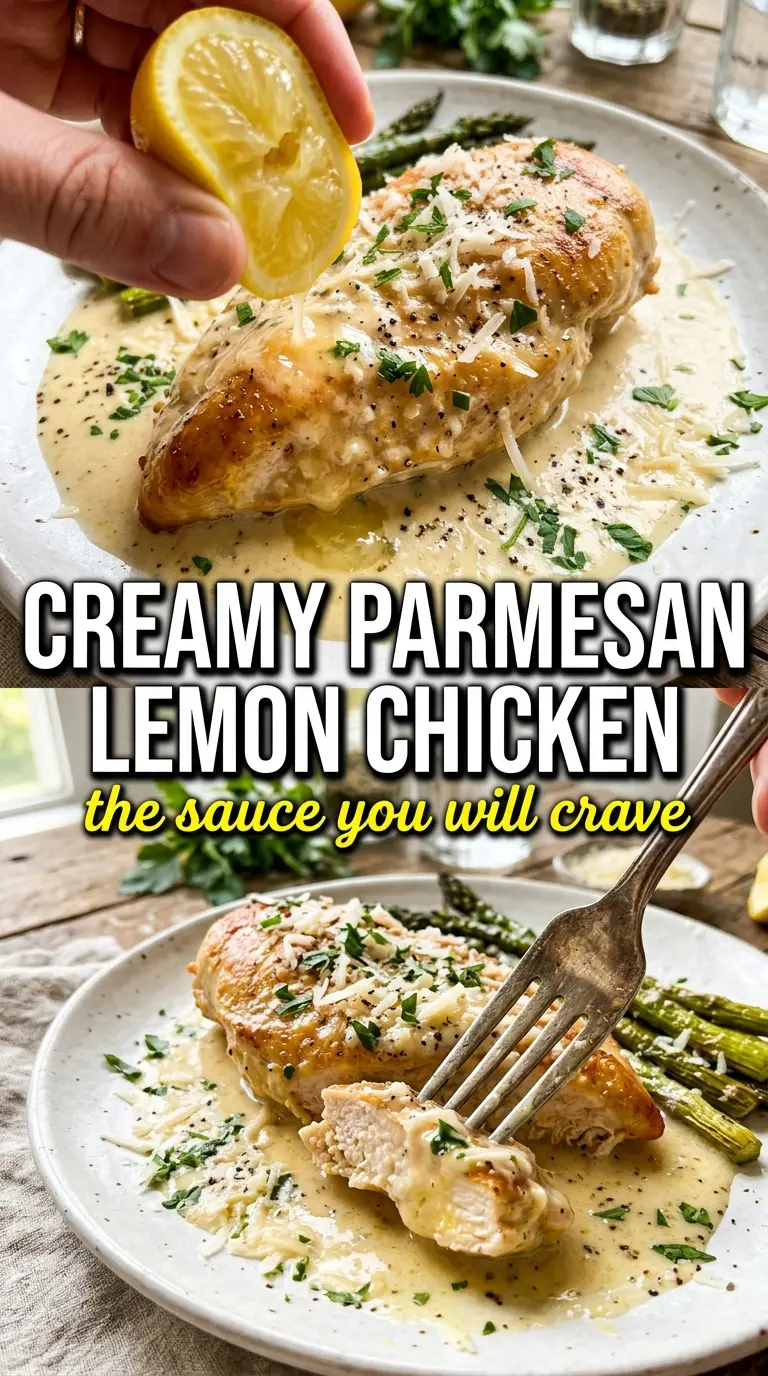
- Chicken breasts — Boneless, skinless breasts give you a clean canvas for the sauce and cook quickly enough for a weeknight. If yours are very thick, pound them to an even thickness so the thinner end doesn’t dry out before the center is done.
- Heavy cream — This is what turns the pan drippings into a sauce that coats instead of separates. Half-and-half can work in a pinch, but it won’t thicken as smoothly and is more likely to look thin after the Parmesan goes in.
- Freshly grated Parmesan — This is not the place for the shelf-stable powdery kind. Freshly grated cheese melts into the cream and gives the sauce body; the pre-shredded version often has anti-caking agents that leave the sauce gritty.
- Dry white wine or chicken broth — The liquid you use to deglaze the skillet lifts the browned bits into the sauce. Wine adds a little more depth, while broth keeps the flavor mild and still gets the job done.
- Lemon juice and zest — Juice brings the brightness, zest brings the fragrant lemon oil that makes the sauce taste fresh instead of flat. Use both; if you skip the zest, the lemon note gets quieter and less defined.
- Butter — Stirred in at the end, butter smooths out the sauce and gives it that glossy finish. It also softens the edge of the lemon so the sauce tastes balanced instead of sharp.
Building the Sauce So It Stays Silky
Season and Sear the Chicken First
Season the chicken generously on both sides so the meat itself tastes good, not just the sauce on top. Heat the olive oil until it shimmers, then lay the chicken in and let it cook without moving it for 5 to 6 minutes per side. You want a deep golden crust and an internal temperature of 165°F, but don’t push it much past that or the chicken starts losing the tenderness you worked for.
Wake Up the Garlic and Brown Bits
Once the chicken comes out, the skillet should still hold a little fat and a lot of flavor. Add the garlic and stir just until fragrant, about 30 seconds, because it burns fast and turns bitter. Pour in the wine or broth right away and scrape the bottom of the pan so those browned bits dissolve into the liquid instead of staying stuck.
Finish the Cream Sauce on Low Heat
Lower the heat before the cream, Parmesan, lemon juice, and zest go in. The sauce needs a gentle simmer, not a boil, so the dairy can thicken smoothly and the cheese can melt without turning grainy. If the sauce looks thin at first, give it a few minutes; it should coat the back of a spoon and leave a clear line when you drag a finger through it.
Return the Chicken and Gloss the Pan
Slide the chicken back into the skillet and spoon sauce over the top so it reheats gently in the sauce. A final swirl of butter gives the sauce a fuller body and a shine that makes the whole dish look finished. If the sauce tightens too much, add a splash of broth or cream and stir until it loosens again.
How to Adapt This for a Lighter Plate or a Different Pantry
Dairy-Free Version With a Different Finish
Use full-fat canned coconut cream in place of heavy cream and a dairy-free Parmesan-style substitute if you need to avoid dairy. The sauce will be a little less sharp and a touch sweeter, so keep the lemon juice bright and add it gradually until the balance tastes right.
Gluten-Free Without Any Extra Work
This recipe is naturally gluten-free as written as long as your broth is certified gluten-free. Nothing about the sauce depends on flour, so the texture stays silky instead of getting pasty.
Bone-In Chicken for More Flavor
Bone-in breasts or thighs bring a deeper chicken flavor, but they take longer and need a lower heat so the outside doesn’t overbrown before the center cooks. Use the same sauce, just plan on more time and check the temperature carefully.
Storage and Reheating
- Refrigerator: Store in an airtight container for up to 3 days. The sauce may thicken in the fridge, which is normal.
- Freezer: I don’t recommend freezing this one. Cream sauces can separate when thawed, and the texture of the chicken softens enough that it stops feeling fresh.
- Reheating: Warm gently in a covered skillet over low heat with a splash of broth or cream. High heat can break the sauce, so take your time and stir often until the chicken is hot through.
Answers to the Questions Worth Asking

Creamy Parmesan Lemon Chicken
Ingredients
Equipment
Method
- Season chicken breasts on both sides generously with salt, pepper, garlic powder, and Italian seasoning.
- Heat olive oil in a large skillet over medium-high heat until shimmering, then sear chicken for 5–6 minutes per side until golden and the internal temperature reaches 165°F; remove to a plate.
- Add garlic to the skillet and cook for 30 seconds until fragrant, then deglaze with white wine and simmer for 2 minutes.
- Stir in heavy cream, Parmesan, lemon juice, and lemon zest, then simmer for 4–5 minutes until the sauce thickens enough to lightly coat the back of a spoon.
- Swirl in butter until melted and glossy.
- Return chicken to the skillet, spoon sauce over each breast, and garnish with fresh parsley and lemon slices.