
Sheet-pan honey-balsamic pork chops land on the table with a sticky, dark glaze and vegetables that pick up every bit of the same caramelized finish. The pork stays juicy, the Brussels sprouts turn crisp at the edges, and the cherry tomatoes collapse into little bursts of sweet-acid juice that cut through the richness. It’s the kind of dinner that feels put together without asking for a pile of pans or a lot of hovering at the stove.
The key is giving the vegetables a head start before the pork goes in. Brussels sprouts need that extra time to brown, and the glaze needs enough heat to thicken and cling without burning, which is why the pork gets brushed with it near the end of roasting instead of from the start. Dijon helps the honey and balsamic stay emulsified, and the garlic cooks just enough to mellow into the sauce instead of tasting sharp.
Below, you’ll find the timing that keeps the chops tender, the one substitution that still gives the glaze good body, and a few ways to adjust the pan if your vegetables cook faster or slower than mine.
The glaze thickened right on the pan and coated everything instead of running off. My pork chops were juicy at 145°F, and the Brussels sprouts picked up all that sweet balsamic flavor from the edges of the pan.
Save these sticky honey-balsamic pork chops for the nights when you want a caramelized one-pan dinner with almost no cleanup.
The Trick to Keeping the Glaze Sticky Instead of Burning
Honey and balsamic can go from glossy to bitter fast if they sit under high heat for too long. That’s the mistake with a lot of sheet-pan pork dinners: the sauce goes in too early, the sugar scorches, and the pork finishes before the glaze ever has a chance to look deep and lacquered. Here, the vegetables start first, and the chops only get glazed once the pan is already hot enough to start the caramelization without drying everything out.
The other thing that matters is the cut. Bone-in pork chops, about 1 inch thick, hold up better in the oven than thin boneless chops and give you a little more cushion against overcooking. Pull the pan when the pork hits 145°F in the thickest part; any higher and the chops start losing that juicy bite that makes this dinner worth making.
What Each Ingredient Is Doing in the Pan
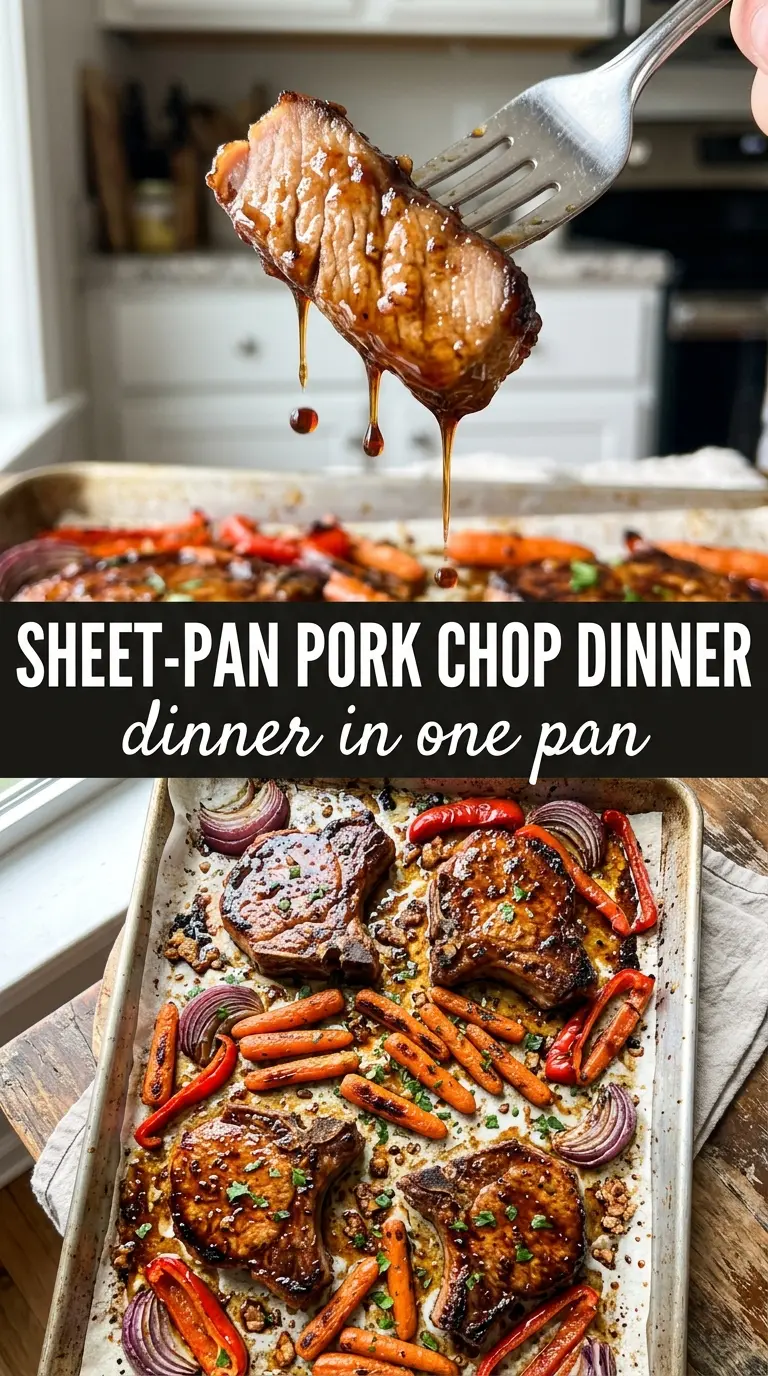
- Bone-in pork chops — The bone helps protect the meat from drying out, and the 1-inch thickness gives you time to build color without overcooking the center. Thin chops cook too quickly for this glaze to develop properly.
- Balsamic vinegar — This is the sharp, dark backbone of the glaze. Use a balsamic you’d actually eat on salad; the cheaper, harsher versions can taste thin once they reduce in the oven.
- Honey — It gives the glaze its shine and helps it cling to the pork and vegetables. Maple syrup can work in a pinch, but it will read a little deeper and less floral than honey.
- Dijon mustard — This is what keeps the glaze from tasting one-note sweet. It also helps the glaze emulsify so it brushes on smoothly instead of separating.
- Brussels sprouts — They need space and direct heat so the cut sides can brown. If they’re crowded, they steam and stay soft instead of turning crisp at the edges.
- Cherry tomatoes — They soften into juicy little pockets that balance the glaze. Add them with the sprouts so they blister instead of completely collapsing into the pan too early.
Building the Pan So Everything Finishes at the Same Time
Roasting the Vegetables First
Start the Brussels sprouts and cherry tomatoes on the sheet pan before the pork goes in. That first 10 minutes gives the sprouts a head start on browning, which they need because pork chops finish faster than most people expect. Spread the vegetables in a single layer, or you’ll trap steam and lose the caramelized edges.
Glazing the Chops at the Right Moment
Season the pork chops, push the vegetables to the sides, and place the chops in the center of the pan. Brush on the glaze generously, then spoon any extra over the vegetables so the honey and balsamic can catch the heat and darken a little. If you add all the glaze at the start, it can scorch before the pork reaches temperature.
Finishing for Color and Juiciness
Roast until the pork reaches 145°F, then check the glaze. It should look sticky and deep mahogany, not pale or wet. If the pan looks cooked but the glaze needs more color, a 2-minute broil does the job fast; just stay close, because honey burns in a hurry.
Use boneless pork chops if that’s what you have
Boneless chops work, but they cook faster and dry out sooner, so start checking them a few minutes early. You’ll still get the glaze, but you lose a little of the forgiveness that bone-in chops give you.
Swap the Brussels sprouts for green beans or broccoli
Green beans stay a little brighter and more delicate, while broccoli browns more aggressively and can pick up the glaze nicely. Either one needs less time than Brussels sprouts, so add them later if you don’t want them overly soft.
Make it gluten-free without changing the texture
This recipe is naturally gluten-free as written, as long as your Dijon is certified gluten-free. The glaze still thickens and clings the same way, so there’s no special adjustment needed.
Turn it into a lower-sugar dinner
Cut the honey back to 1 tablespoon and add a splash more balsamic for balance. The glaze won’t be quite as sticky, but it will still coat the pork and vegetables with a sharper, less sweet finish.
Storage and Reheating
- Refrigerator: Store leftovers in an airtight container for up to 3 days. The glaze will thicken and the vegetables will soften a bit, but the flavor stays good.
- Freezer: Freeze the pork and vegetables for up to 2 months, though the tomatoes will lose their texture after thawing. Wrap tightly and thaw overnight in the fridge before reheating.
- Reheating: Warm covered in a 325°F oven until heated through, or use short bursts in the microwave. Don’t blast it at high heat or the pork will tighten up and the glaze can turn sticky in the wrong way.
Questions I Get Asked About This Recipe

Sheet-Pan Honey-Balsamic Pork Chop Dinner
Ingredients
Equipment
Method
- Preheat the oven to 400°F. Get a large sheet pan ready so the vegetables can start roasting right away.
- Whisk balsamic vinegar, honey, Dijon mustard, minced garlic, and olive oil together in a bowl. Keep whisking until the glaze looks smooth and glossy.
- Toss Brussels sprouts and cherry tomatoes with olive oil, salt, and pepper on the sheet pan, then spread into an even layer. Roast for 10 minutes at 400°F, until the edges begin to brown.
- Season the pork chops with salt and pepper. Place them in the center of the sheet pan after pushing the vegetables to the edges.
- Brush the pork chops generously with the honey-balsamic glaze and drizzle any extra over the vegetables. Make sure the glaze coats the pork and lightly pools on the tray.
- Roast at 400°F for 18–22 minutes, until the pork reaches 145°F and the glaze is caramelized. Broil for 2 minutes for extra color, watching closely so the glaze darkens without burning.