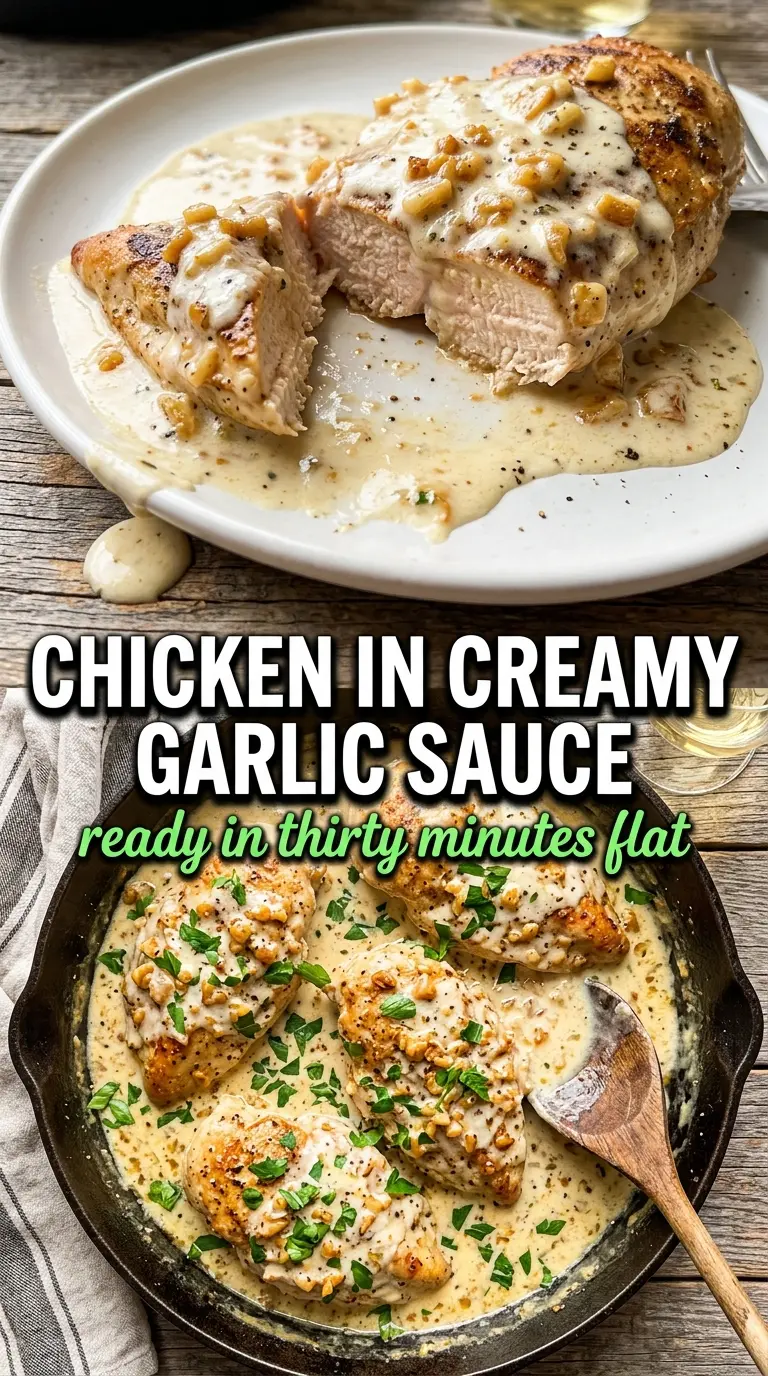
Juicy chicken breasts and a thick garlic cream sauce belong together when you want dinner to feel finished without turning into a project. The chicken gets a hard sear first, so the outside stays golden and the inside stays tender, then the sauce picks up every browned bit from the pan and turns it into something rich enough to coat the spoon. What lands on the plate is the kind of skillet dinner that looks polished but still comes together on an ordinary weeknight.
The trick here is balance. Garlic goes in after the butter, not before, so it softens and turns fragrant without burning, and the cream simmers long enough to thicken before the Parmesan goes in. That order matters. If you rush the sauce or crank the heat, it can turn greasy or grainy instead of velvety.
Below, I’ve included the part that changes everything when making creamy skillet chicken at home: how to keep the sauce smooth, how to know when it’s thick enough, and what to swap if you want to skip the wine or make it a little lighter.
The sauce thickened up exactly like you said and stayed smooth when I added the Parmesan. My chicken was still juicy, and my husband kept spooning extra sauce over the rice.
Save this creamy garlic chicken for the night you want a skillet dinner with a glossy sauce and almost no cleanup.
The Reason This Sauce Stays Velvety Instead of Breaking
The biggest mistake with creamy garlic chicken is pushing the heat too high once the cream goes in. Cream needs a gentle simmer, not a boil, and Parmesan should be added after the sauce has started to thicken. That gives the cheese enough liquid to melt smoothly instead of clumping or turning the sauce oily.
Searing the chicken first does more than brown the surface. It leaves behind fond, which is the dark, savory residue on the pan that makes the sauce taste like it cooked for hours. If your chicken is crowding the skillet, it will steam instead of sear, and you’ll miss the flavor base that makes the sauce worth eating.
- High heat for the sear — You want a deep golden crust before the chicken comes out of the pan. If the surface looks pale, keep cooking. Pale chicken means less flavor in the sauce.
- Butter after the chicken — Butter burns faster than oil, so it goes in once the chicken is out and the heat drops a little. That keeps the garlic sweet and fragrant instead of bitter.
- Gentle simmer for the cream — The sauce should bubble lazily around the edges, not roll aggressively. Fast boiling is what makes cream sauces split.
- Parmesan at the end — Stir it in once the sauce has thickened a bit. Cheese melts more cleanly in a slightly reduced sauce than in a thin one.
What Each Ingredient Is Actually Doing in the Pan
- Chicken breasts — Boneless, skinless breasts cook fast and slice cleanly, but they dry out if they’re uneven. If one side is much thicker, pound it gently or butterfly it so it cooks through before the outside overcooks.
- Olive oil and butter — Oil gives you the higher heat needed for browning, while butter adds flavor for the sauce. Use both. Substituting all butter makes the sear less reliable.
- Garlic — Eight cloves sounds like a lot, and it should. This sauce needs enough garlic to stay bold after the cream and Parmesan go in. Fresh minced garlic matters here; jarred garlic can taste flat and a little sour.
- Dry white wine or chicken broth — Wine adds acidity and helps lift the browned bits from the pan, which keeps the sauce from tasting heavy. Chicken broth works if you want to skip alcohol, though the sauce will be a little softer in flavor.
- Heavy cream — This is what gives the sauce body. Half-and-half can work in a pinch, but it won’t reduce as thickly and is more likely to look thin at the end.
- Parmesan — Grate it yourself if you can. Pre-grated Parmesan often has anti-caking agents that can make the sauce grainy instead of smooth.
- Cayenne and Italian seasoning — These don’t make the dish spicy; they keep the cream sauce from tasting one-note. Cayenne wakes up the garlic, and Italian seasoning adds a little herb background without taking over.
Building the Sauce Without Losing the Chicken
Seasoning and Searing the Chicken
Pat the chicken dry before it hits the pan. Moisture on the surface is the enemy of browning. Season both sides well with salt, pepper, and smoked paprika, then lay the chicken into hot oil and leave it alone until the first side releases cleanly and turns deep golden. If you keep nudging it, you tear the crust before it has a chance to form. Cook until the internal temperature reaches 165°F, then pull it out and let it rest on a plate while you build the sauce.
Cooking the Garlic Gently
Lower the heat and add the butter to the same skillet. Once it melts, stir in the garlic and keep it moving for about 2 minutes. You’re looking for a fragrant, lightly golden edge, not browned bits. If the garlic goes dark, the sauce takes on a bitter edge that doesn’t get fixed later. The pan should smell warm and savory, not sharp or burned.
Reducing the Cream and Finishing the Sauce
Pour in the wine or broth and scrape up every browned bit from the bottom of the pan. Let it cook for a minute or two so the liquid loses that raw edge, then stir in the cream and let it come up to a gentle simmer. Add the Parmesan, Italian seasoning, and cayenne, then keep the sauce at a lazy bubble until it turns glossy and thick enough to coat the back of a spoon. Slide the chicken back into the pan, spoon the sauce over the top, and let everything warm together for a minute or two before serving.
How to Adapt This Skillet Chicken for Different Kitchens and Different Nights
Skip the Wine and Use Broth
Chicken broth gives you the same deglazing step without the wine. The sauce loses a little brightness, so the garlic and Parmesan need to do more of the work, but it still finishes rich and spoonable.
Make It Dairy-Free
Use a full-fat unsweetened coconut cream or a dairy-free cooking cream and skip the Parmesan. The sauce won’t taste identical, but it will still get lush and coat the chicken well. Add a little extra salt and a squeeze of lemon if it tastes flat at the end.
Use Chicken Thighs Instead
Boneless thighs stay juicy and bring a little more richness to the skillet. They usually need a few extra minutes to cook through, but they’re more forgiving if you’re worried about dry chicken breast.
Lighten the Sauce a Little
You can replace part of the cream with whole milk, but the sauce will be thinner and less silky. If you go this route, simmer it a little longer before adding the cheese so it has time to reduce.
Storage and Reheating
- Refrigerator: Store leftovers in an airtight container for up to 3 days. The sauce will thicken as it chills.
- Freezer: I don’t recommend freezing this one. Cream sauces can separate after thawing, and the chicken texture turns less appealing.
- Reheating: Warm it gently in a skillet over low heat with a splash of broth or cream. High heat is the mistake that makes the sauce break and the chicken dry out.
Answers to the Questions Worth Asking

Chicken Breasts in Creamy Garlic Sauce
Ingredients
Equipment
Method
- Season the boneless skinless chicken breasts with salt, black pepper, and smoked paprika to taste. Heat the skillet with olive oil over medium-high heat and add the chicken.
- Sear the chicken for 5-6 minutes per side over medium-high heat, turning once, until golden and internal temperature reaches 165°F. Remove the chicken to a plate and keep it warm.
- Melt the butter in the same pan over medium heat, then add the garlic cloves minced and cook for 2 minutes, stirring constantly, until fragrant and starting to turn golden. Use the motion of frequent stirring to keep garlic from browning too fast.
- Deglaze with dry white wine or chicken broth and cook for 2 minutes, stirring to release browned bits from the pan. Scrape the bottom so the sauce will be smooth and deeply flavored.
- Stir in the heavy cream and bring it to a simmer over medium heat. Look for small bubbles that continue steadily at the edges.
- Add Parmesan cheese, Italian seasoning, and cayenne pepper, then simmer for 4-5 minutes until the sauce is thick and glossy. Spoon a little sauce on the back of a spoon; it should coat and cling.
- Return the chicken breasts to the pan and spoon garlic cream sauce over each breast. Coat the tops and let the chicken warm through in the sauce for a moment.
- Garnish with fresh thyme and fresh parsley. Serve immediately while the sauce is glistening and pooled around the base.